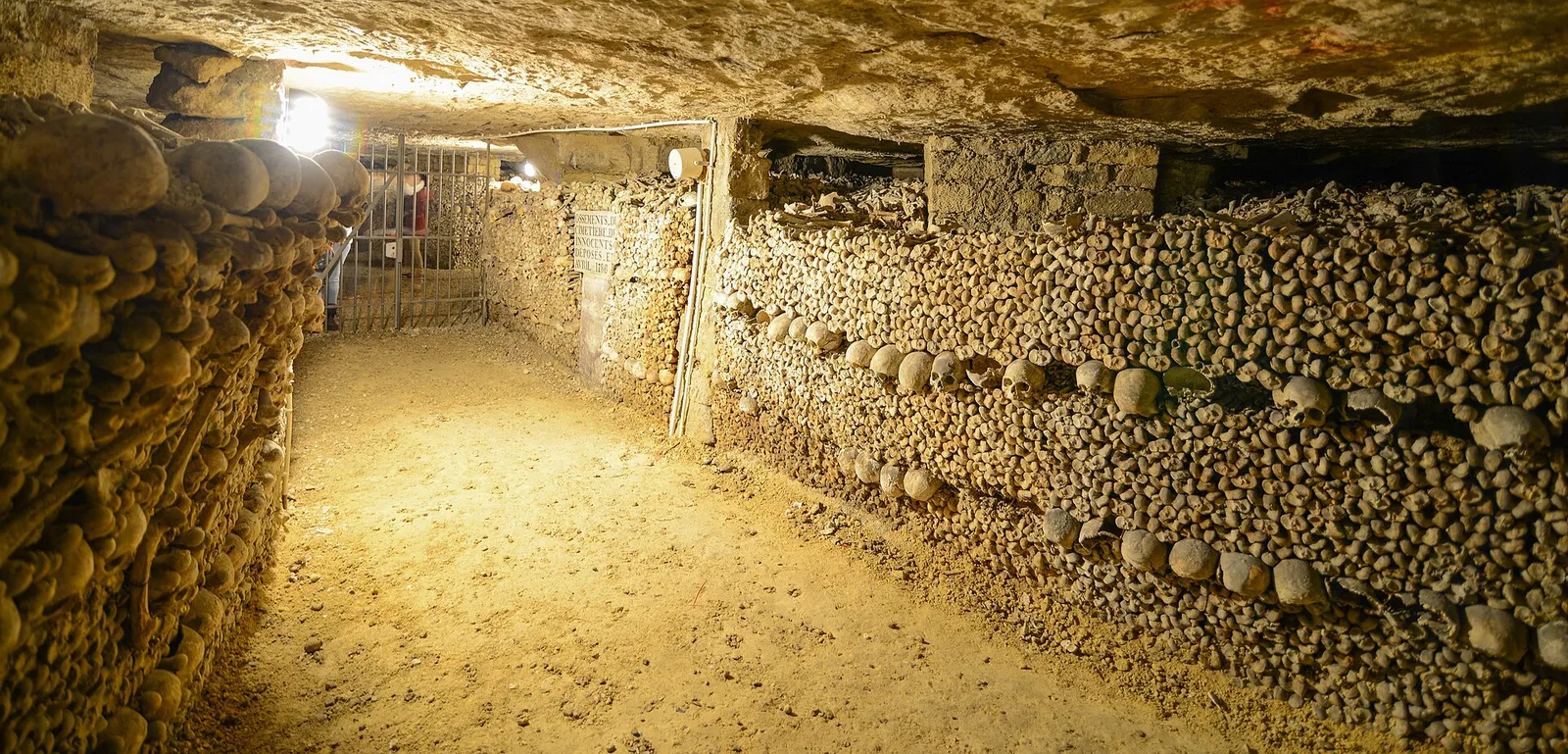
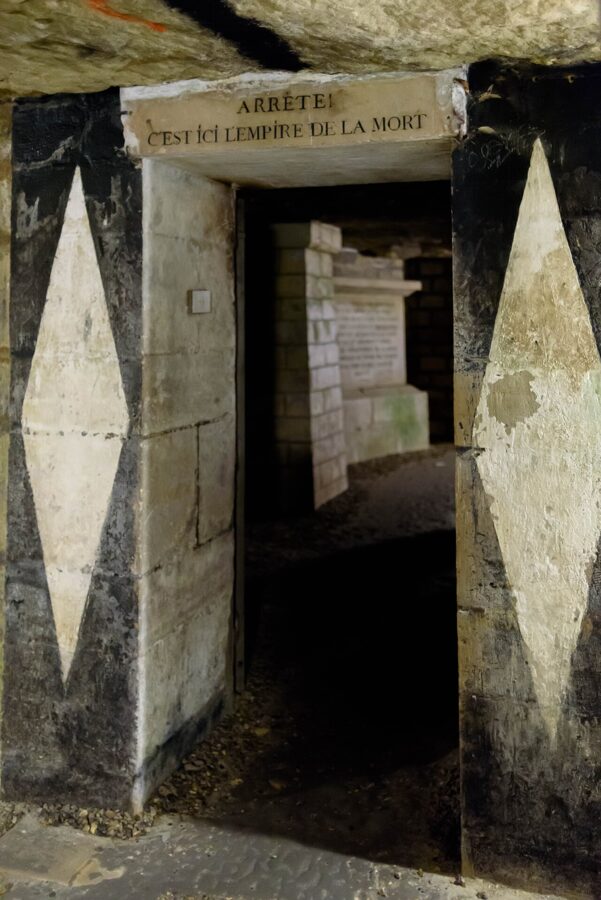
Twenty meters under the 14th arrondissement of Paris, a doorway framed in black and white diamonds carries one line of verse: “Arrête ! C’est ici l’empire de la mort.” Stop, this is the empire of death. Past it, for some 800 meters, the walls of the tunnels are made of people.
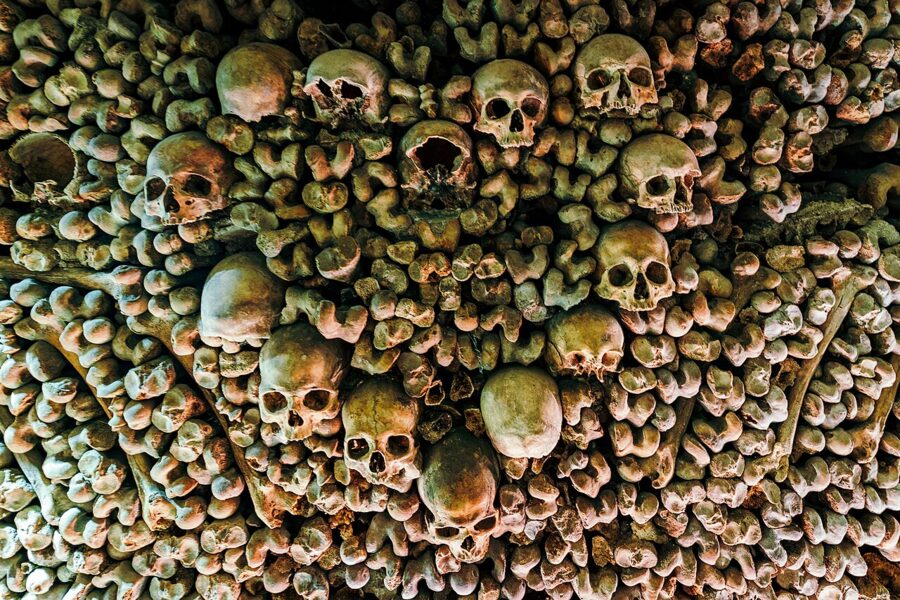
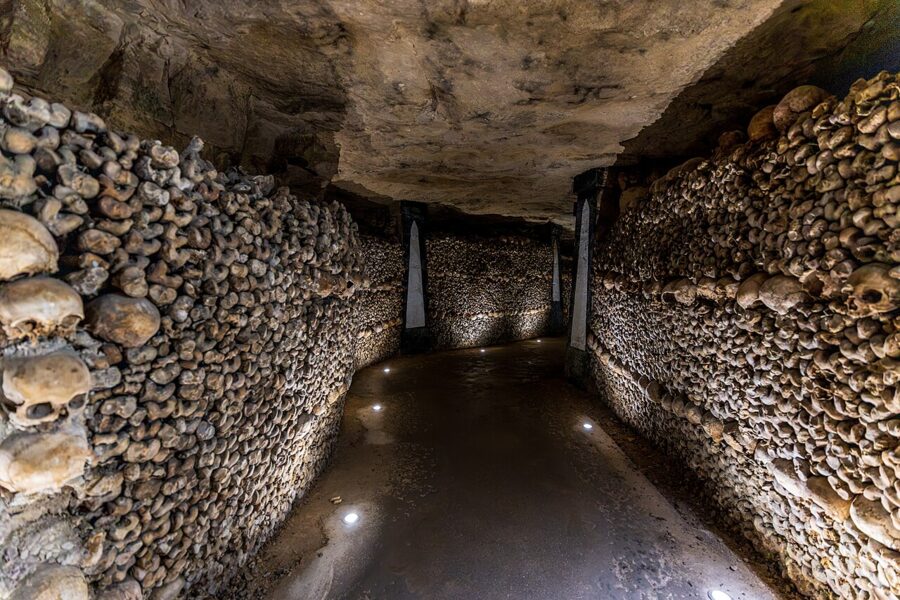
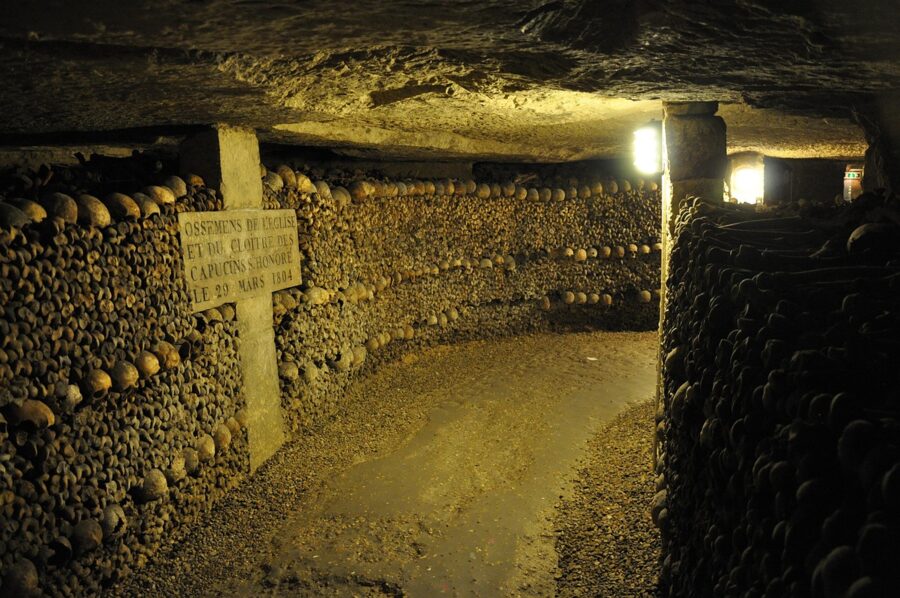
The number usually given is six million, the remains of Parisians who died between roughly the tenth and the eighteenth centuries and were carted here from the city’s emptied cemeteries between 1785 and 1860. The museum that runs the site is more careful and says “several million”, and nobody will ever count them. What you can count is the arrangement: 217 walls of bone, skulls set in bands across the faces of stacked thighbones, built by quarrymen who were told to make it look like a monument.
This is the Catacombs of Paris (Catacombes de Paris), an ossuary laid out in a small corner of the limestone quarries that run under the south of the city. It has taken visitors since 1809, and it reopened on 8 April 2026 after five months of the heaviest works in its history. I would go once, book the first slot of the morning, and give the inscriptions as much time as the skulls.


In this case9 parts
- IWhat the catacombs are, and what they are not
- IIThe quarries under the city
- IIIHow the dead came to Montrouge
- IVThe ossuary: walls of bone, lines of verse
- VNadar's photographs
- VIVisiting the catacombs in 2026
- VIIThe rest of the network is off limits
- VIIIThe Résistance and a German bunker
- IXOther underground Paris you can visit
What the catacombs are, and what they are not
The name is borrowed. Paris officials took the word “catacombs” from the early Christian burial galleries of Rome, which fascinated the eighteenth century, but nobody was ever buried here in the Roman sense. These are bones moved from somewhere else and stacked in an abandoned quarry, the Tombe-Issoire workings under what was then the plain of Montrouge, outside the city wall.
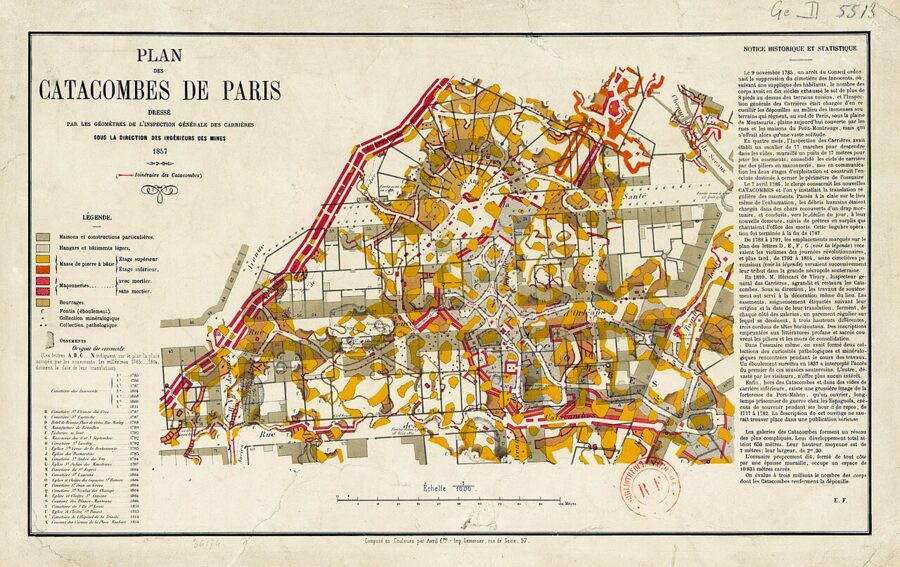
The quarries themselves are far bigger than the ossuary. The city’s quarry service counts about 280 kilometers (174 miles) of galleries under Paris, mostly under the Left Bank, and French speakers now call the whole network “les catacombes” by mistake. The ossuary covers about 11,000 square meters, and the visitor route is a one-way walk of 1.5 kilometers, most of it through bare quarry before the bones begin.
The quarries under the city
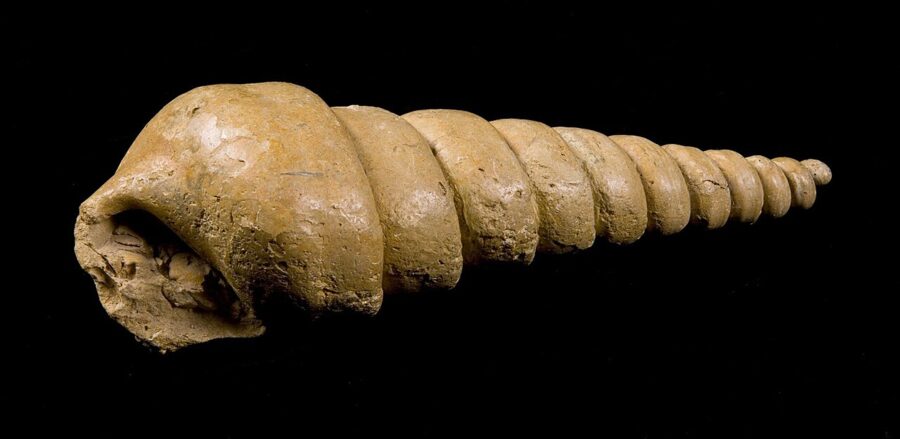
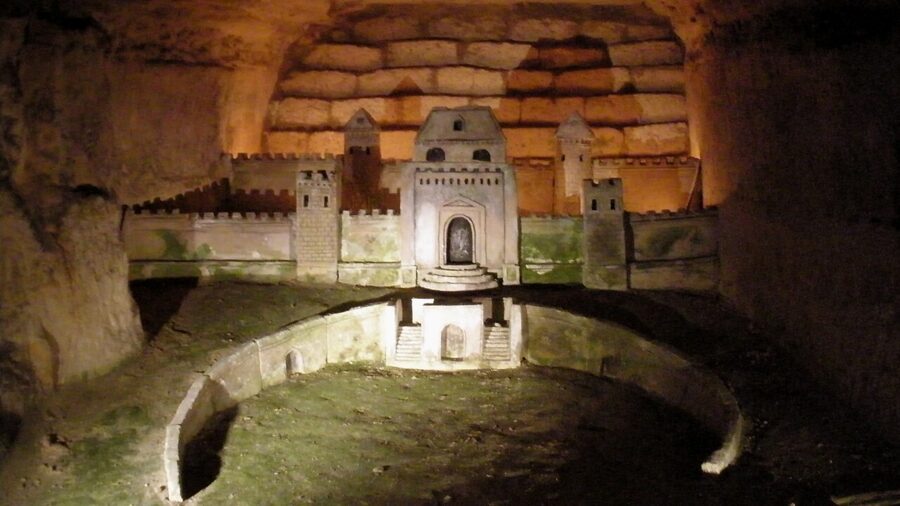
The ossuary floor is cut into rock about 45 million years old. The catacombs sit in the Lutetian limestone, laid down on the bed of a warm shallow sea between about 48 and 40 million years ago and named after Lutetia, the Roman name for Paris. The Paris Basin beds are the reference section for that whole stage of geological time, and the stone is full of fossil shells. One of them, the sea snail Campanile giganteum, grew to 70 centimeters (28 inches), the largest gastropod known.
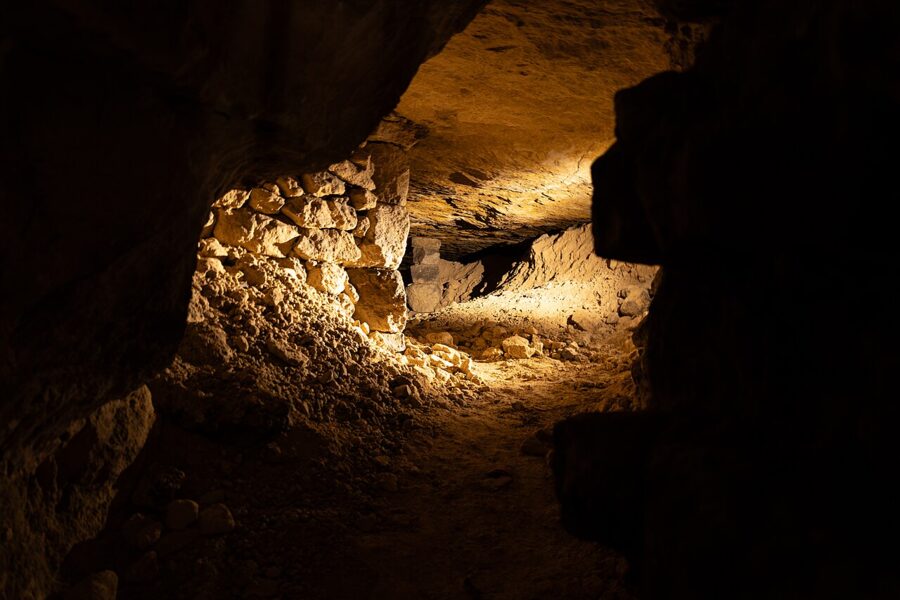
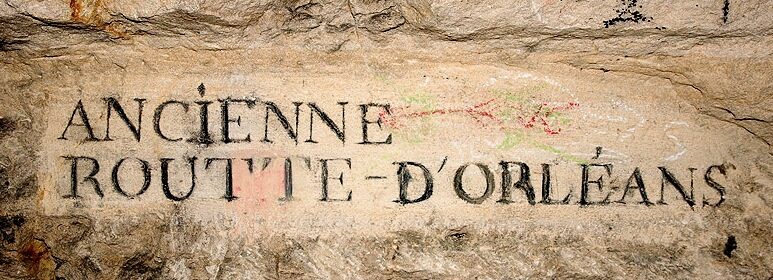
Builders took this “pierre de Paris” from the Roman period on, first in open pits along the Bièvre valley, then underground once the pits grew too deep. Medieval quarrymen left pillars of uncut rock to hold the roof. Later they took everything and built the roof’s supports by hand: stacked-stone pillars, with dry walls called hagues holding back the waste rubble between them. Those hagues are the model for the bone walls.

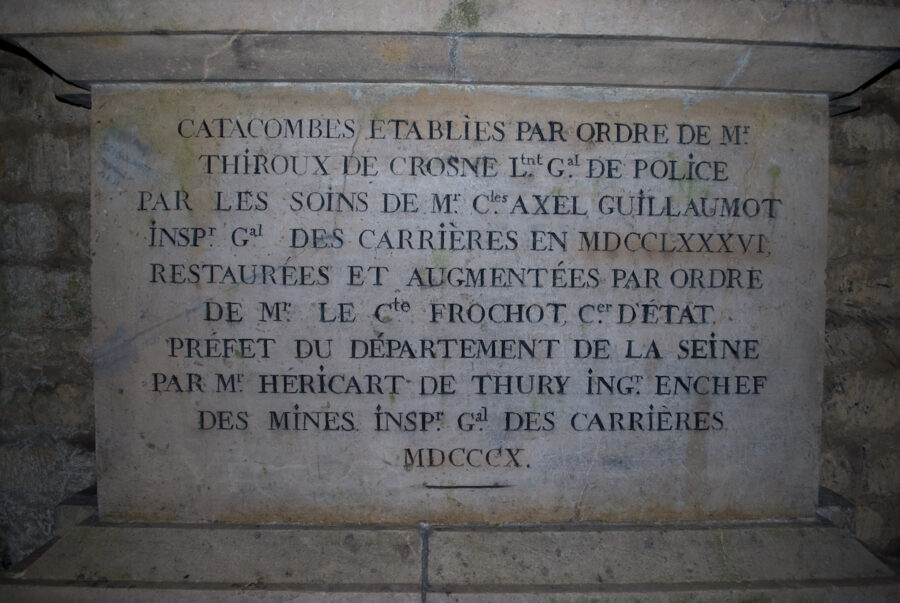
Nobody regulated where the galleries went, and the ground began to give way. On 17 December 1774 a stretch of the rue d’Enfer, today’s avenue Denfert-Rochereau, fell into the void, about 300 meters of street by the museum’s count. Louis XVI banned all quarrying under public roads on 15 September 1776, and on 4 April 1777 he created the Inspection Générale des Carrières, under the architect Charles-Axel Guillaumot, to map and prop up what was already dug.
That service still exists. The Inspection Générale des Carrières is now part of the City of Paris, covers the capital and the three surrounding departments, and has checked building permits over old quarries since 1881. By its own estimate about one Paris building in five stands above a former quarry.


How the dead came to Montrouge
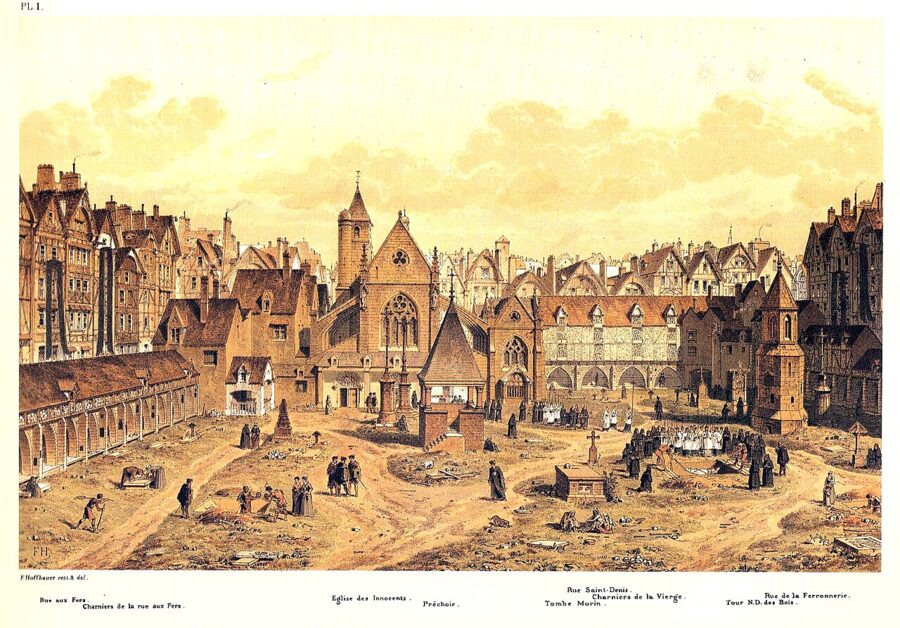
The bones began at the Cemetery of the Saints-Innocents, beside today’s Les Halles, which had taken the city’s dead for close to a thousand years. Its mass graves were opened, filled with up to 1,500 bodies and emptied again into charnel galleries around the walls. In 1780 the wall of a cellar on the rue de la Lingerie gave way under the weight of a neighboring pit, and the cemetery was closed that year.
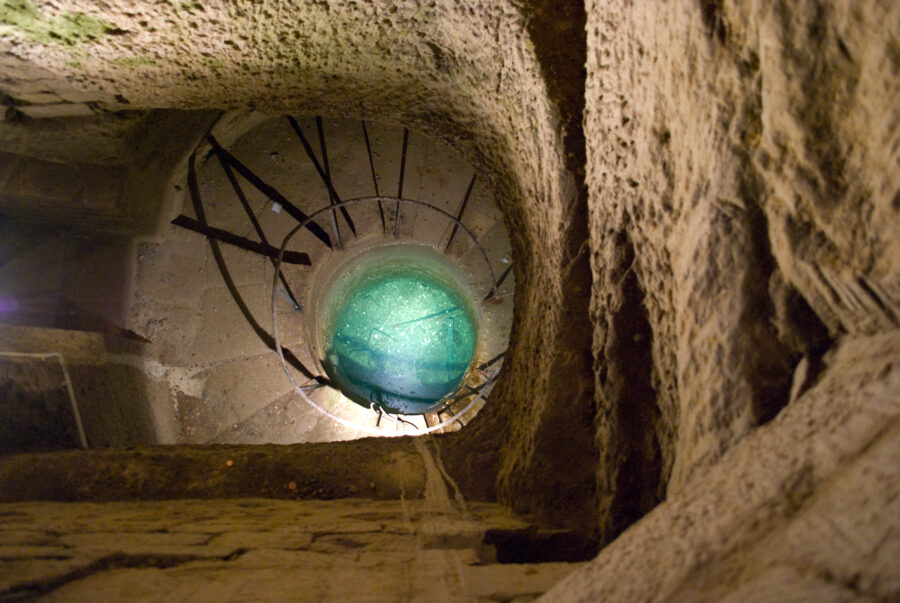
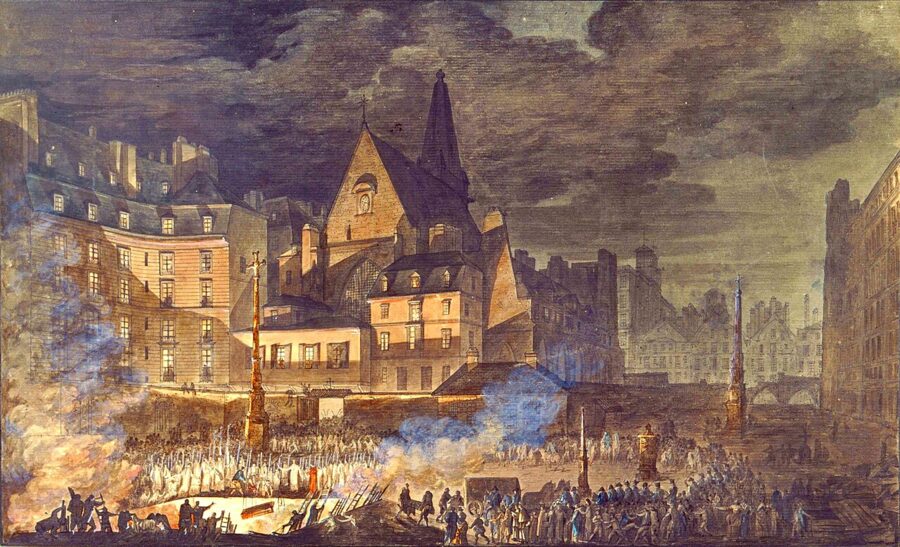
A royal council decision of 9 November 1785 ordered the cemetery emptied and turned into a market. The removals ran for fifteen months, at dusk and at night to avoid trouble from parishioners and clergy: covered carts under black cloth, priests singing the office of the dead, and at the end of the journey a quarry shaft down which the bones were simply tipped. That shaft stood at today’s 21 avenue René-Coty, where the visitor exit is now.
The quarry was blessed as the municipal ossuary on 7 April 1786. Other parish cemeteries followed until 1814, then more around 1840 under Louis-Philippe, and a last large wave in 1859 and 1860, when Baron Haussmann’s new boulevards cut through old burial grounds. Among those buried in the cemeteries emptied here were Rabelais, Racine and Pascal, and victims of the guillotine including Danton, Robespierre and Lavoisier. None of them can be picked out now.

The ossuary: walls of bone, lines of verse
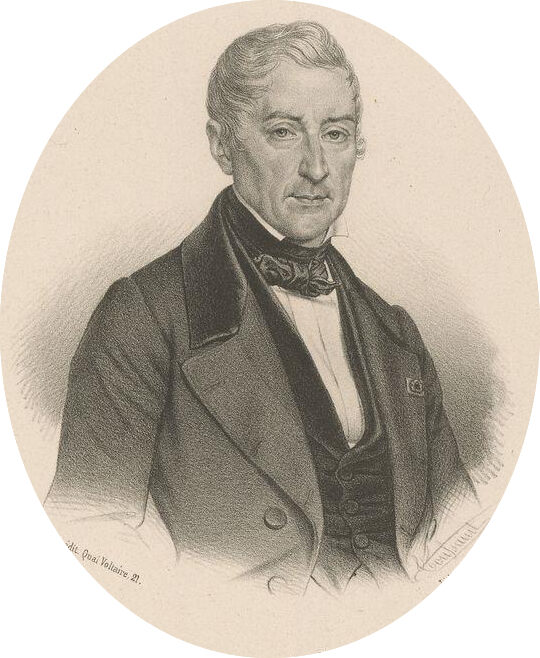
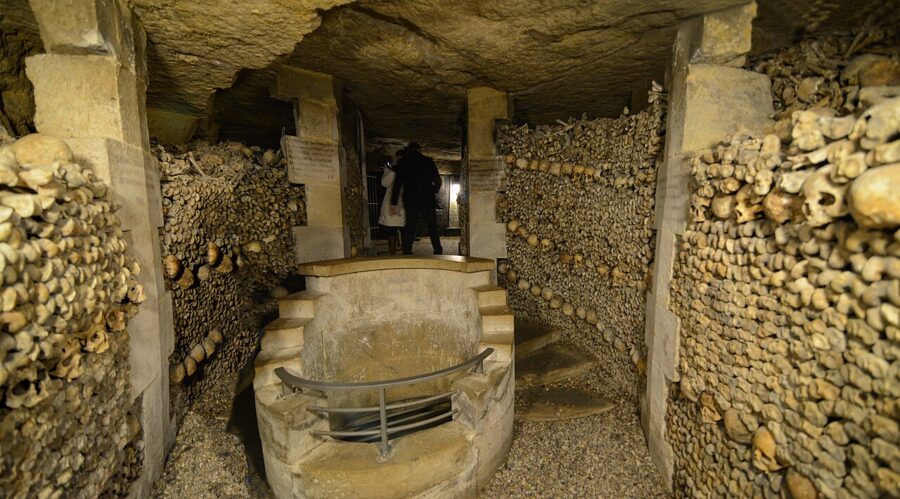
For twenty years the bones lay in heaps. The man who turned the heaps into a monument was Louis-Étienne Héricart de Thury, made inspector general of quarries in 1809. In 1810 and 1811 his workers sorted the long bones and skulls into facing walls on the pattern of the quarrymen’s hagues, built masonry altars and pillars in an antique and Egyptian taste, and fixed engraved plaques along the way.
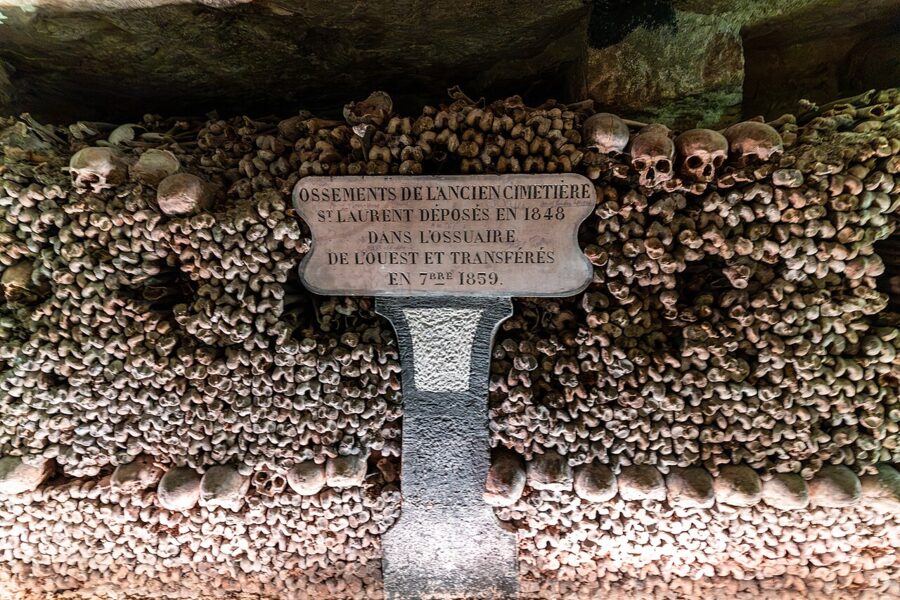
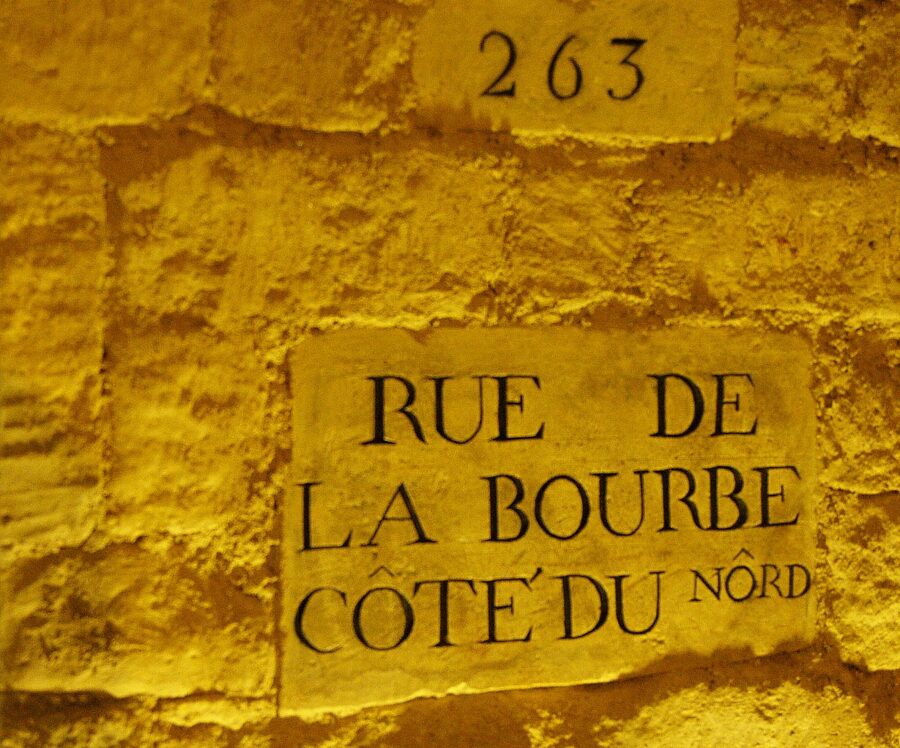
Every block of bones has a label. Plaques give the cemetery and the date of the transfer, and they are the most useful thing to read on the way round, because they turn an anonymous mass into a map of old Paris.

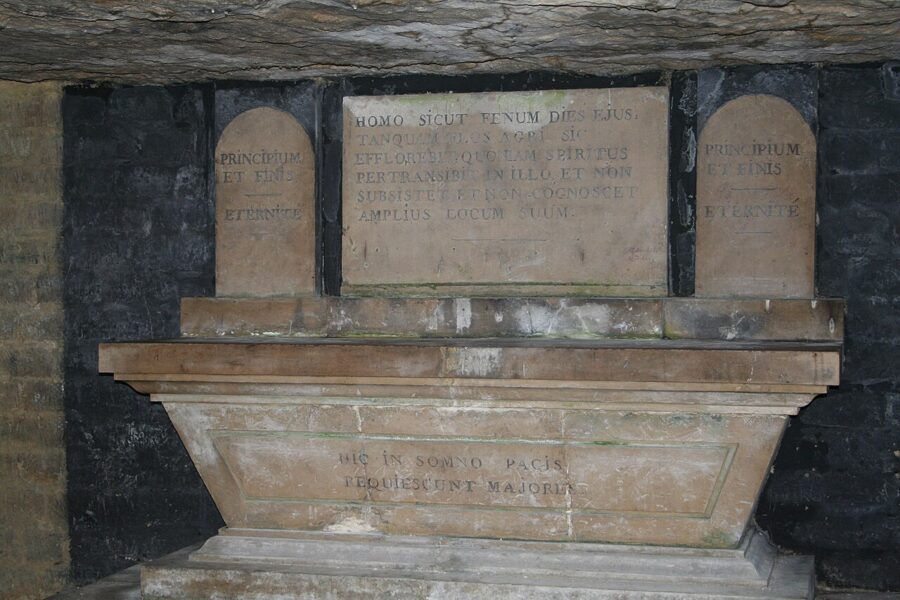
Several of the monuments are engineering in costume. The altar of the Crypte du Sacellum, copied from an antique tomb found beside the Rhône in 1807, is a roof support built after a fall in 1810. The sepulchral lamp, the first monument in the ossuary, held a fire that drew stale air through the galleries before ventilation shafts were sunk.

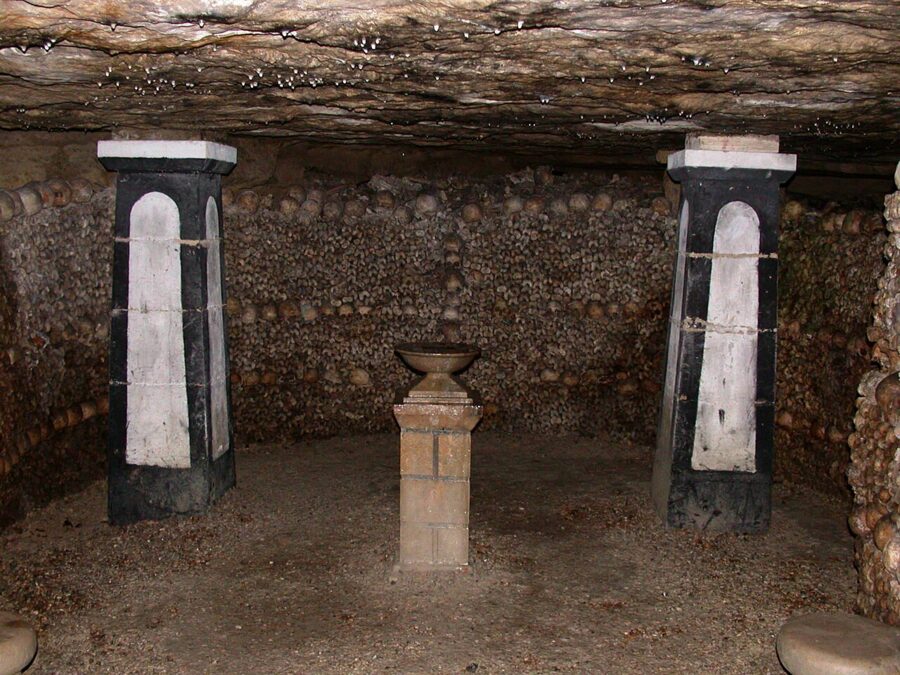

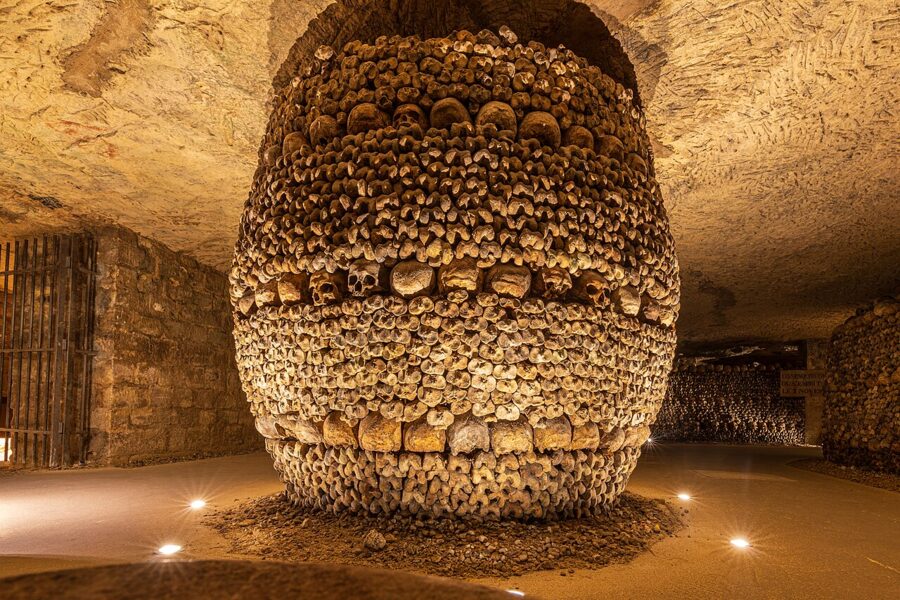
The Samaritaine fountain collects groundwater the workers struck in 1810, under the line from the Gospel of John that whoever drinks this water will thirst again. In 1813 Héricart put four goldfish in its basin, and records show they lived but never bred, and went blind. Further on, a column of tibias shaped like a barrel wraps a support pillar in the Crypte de la Passion. On the night of 2 April 1897, 45 musicians from the Opéra played Chopin’s funeral march and Saint-Saëns’s Danse macabre there for about a hundred invited guests, an event so talked about that bones were then stacked between the pillars to stop it happening again.


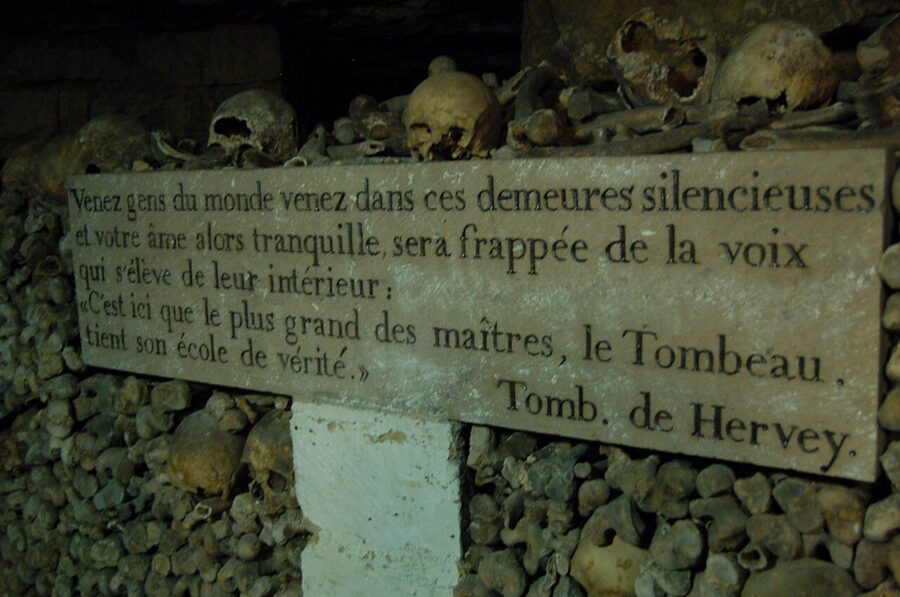
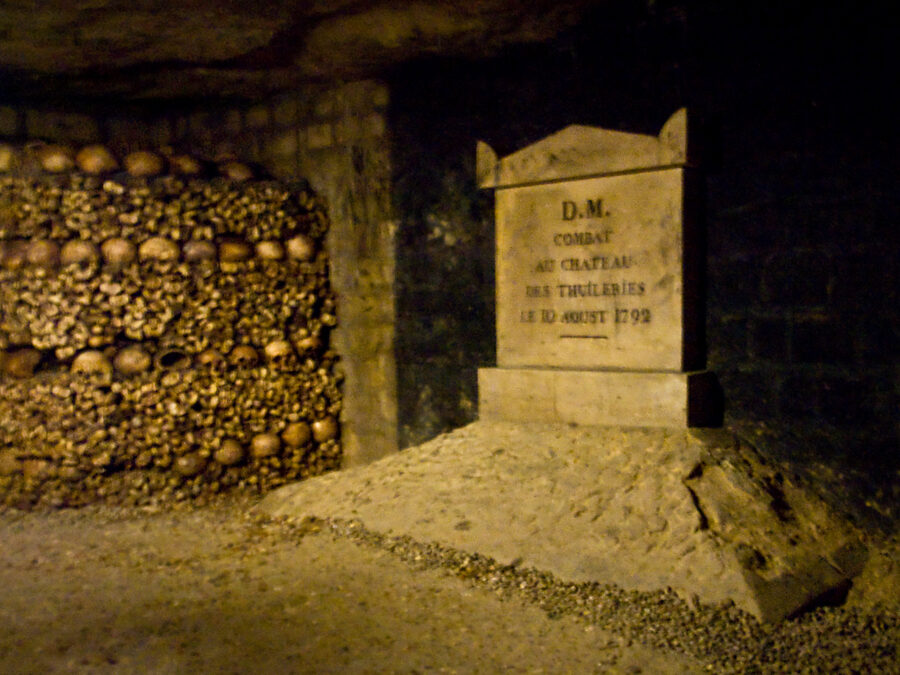
The plaques of verse are Héricart’s teaching aid, chosen to put visitors in a mood to think about death: scripture, philosophy and poetry in French and Latin, including the English cleric James Hervey in translation. Some mark the dead of a single day. Stones headed “D.M.”, for Dis Manibus, to the spirits of the dead, stand over those killed at the Tuileries on 10 August 1792.

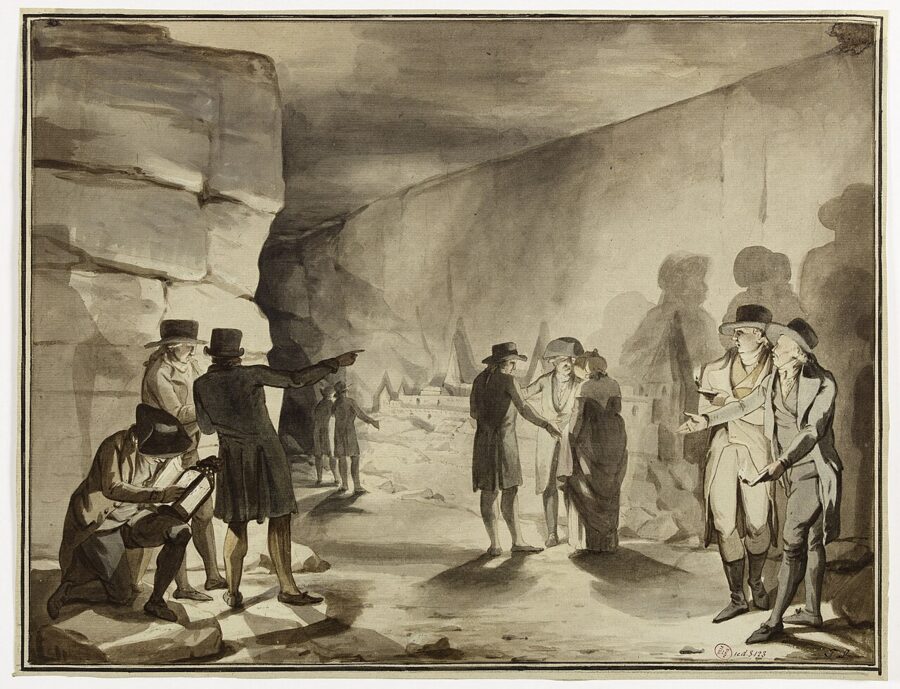
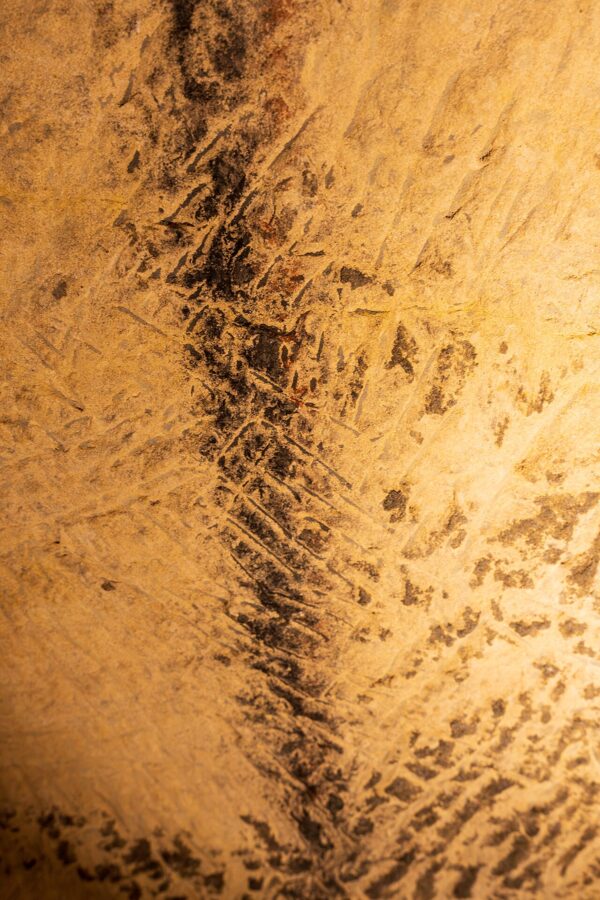
People came to look almost at once. The Count of Artois, the future Charles X, went down with ladies of the court in 1787, and when regular visits began on 1 July 1809 a register was opened for visitors’ comments. The new route ends with a digital version of that guestbook. Héricart also painted a black line along the ceiling so visitors could find their way back, and you can still follow it overhead.

Nadar’s photographs
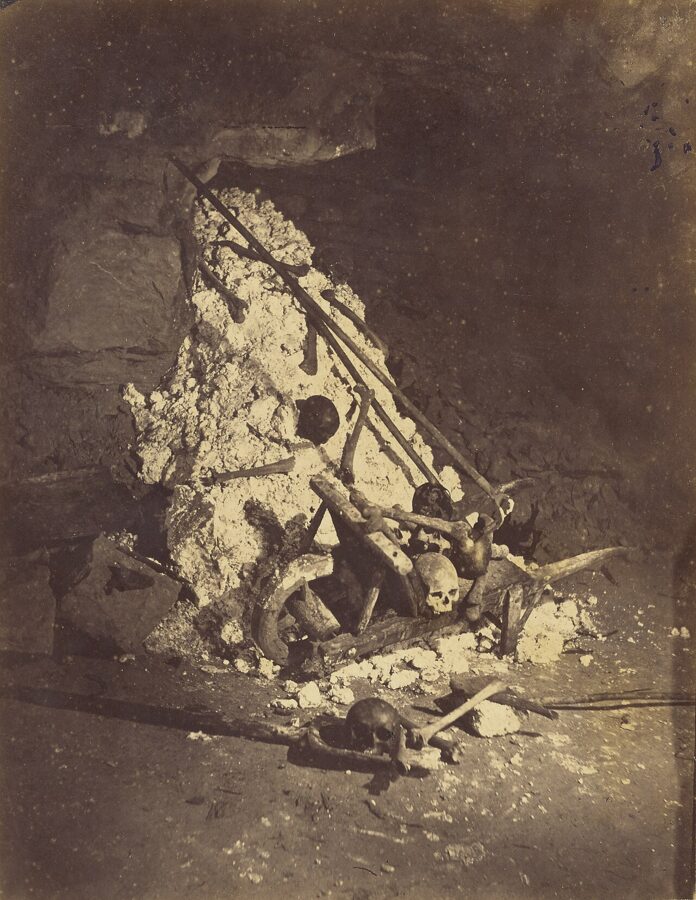
The first photographs of the catacombs were a stunt and a breakthrough at once. The portrait photographer Félix Tournachon, known as Nadar, patented a method of photographing by electric light in 1861. Ernest Lamé-Fleury, the inspector in charge of the catacombs, invited him to try it underground, and in 1862 Nadar spent three months working 20 meters down. The museum’s own pages give 1861 in one place and 1862 in another; the patent is 1861 and the underground campaign 1862.
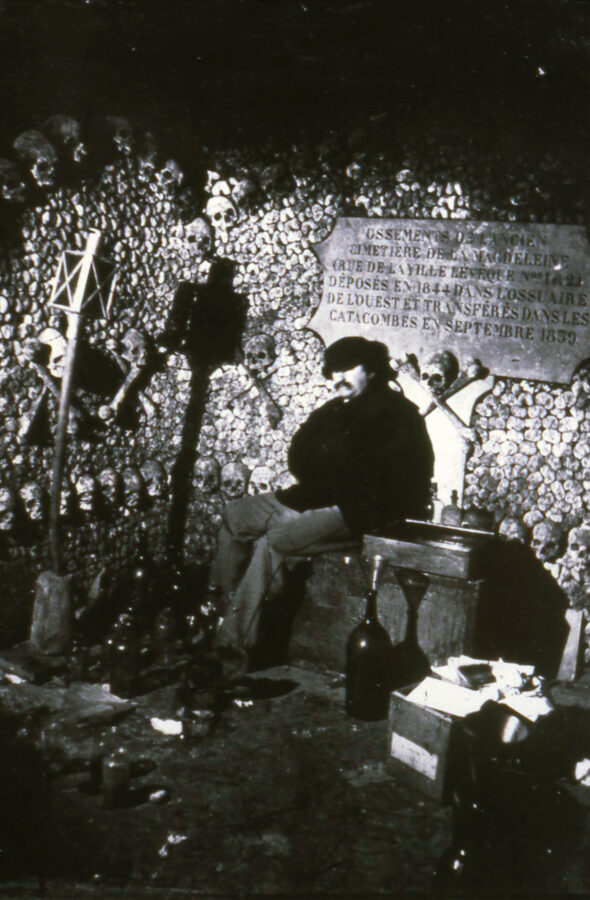
His timing was good: the Haussmann transfers of 1859 and 1860 had just filled new galleries, and Nadar photographed the fresh bone walls and the men building them. Paris Musées bought about twenty of his prints in 2023. Until 31 January 2027, the exhibition Nadar: inventer Paris, des profondeurs au ciel shows about fifteen reproductions in the entrance pavilion, along with his 1865 sewer photographs and his 1868 balloon views of Paris. It is included in the ticket.
Visiting the catacombs in 2026
The site closed on 3 November 2025 and reopened on 8 April 2026 after a 5.5-million-euro renovation: new air handling and lighting for the bones, new fire and intrusion systems, and a rebuilt visit. The audio guide is now headphones that trigger about twenty sequences automatically, narrated by an actor playing Héricart de Thury, in French, English, Spanish and German, with a French audio-described version. The reopening program also brought projections and tactile models, including a cast of a bone wall.

Getting there, hours and the exit
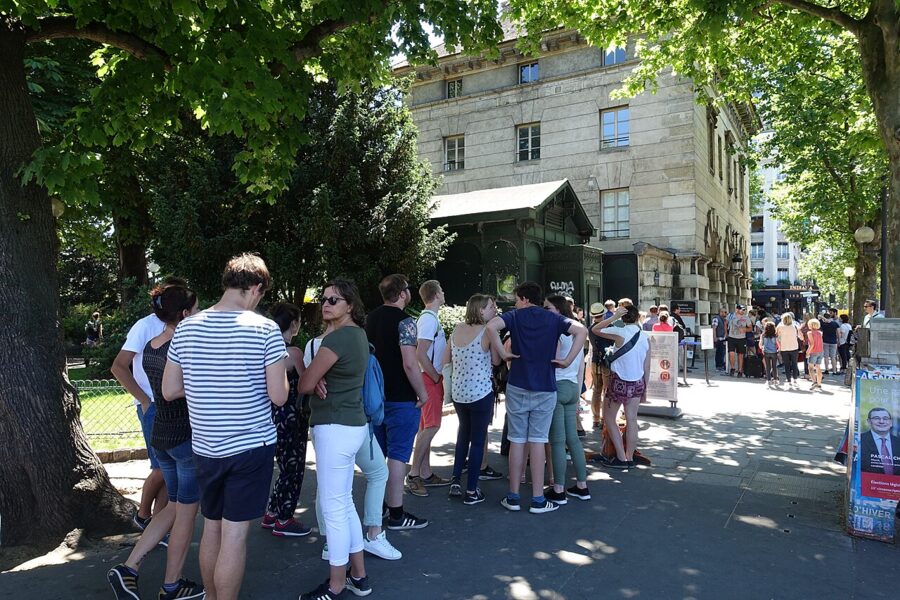
The entrance is at 1 avenue du Colonel Henri Rol-Tanguy, on Place Denfert-Rochereau, served by Métro lines 4 and 6, RER B and buses 38 and 68, all at Denfert-Rochereau. The exit is at 21 bis avenue René-Coty, about 700 meters south. Older guides give rue Rémy-Dumoncel; that exit was replaced in 2017.
As of 2026, the official hours are Tuesday to Sunday, 9:45 a.m. to 8:30 p.m., with last entry at 7:30 p.m. It is closed on Mondays and on 1 January, 1 May and 25 December, and open on Ascension Thursday, 14 July, 15 August, 1 November and 11 November unless they fall on a Monday. Plan on an hour underground.
Tickets and prices
Timed tickets go on sale online seven days ahead, and only free-entry tickets are issued at the door on the day. No more than 200 people are allowed inside at once, and around 2,000 go through on an ordinary day. The museum also publishes a list of authorized resellers after fake tickets circulated.
| Ticket (as of 2026) | Price | Audio guide |
|---|---|---|
| Full price | €31 (about US$36) | Included |
| Reduced (ages 18–26, students, teachers and others with proof) | €25 (about US$29) | Included |
| Ages 8–17 | €15 (about US$17) | Included |
| Under 8, and other free categories with proof | Free | €5 (about US$6) at the desk |
The full list of discounts and free categories is on the individual prices page. As of November 2026 the museum lists its French-language guided tours as unavailable.
The rules, and who should skip it
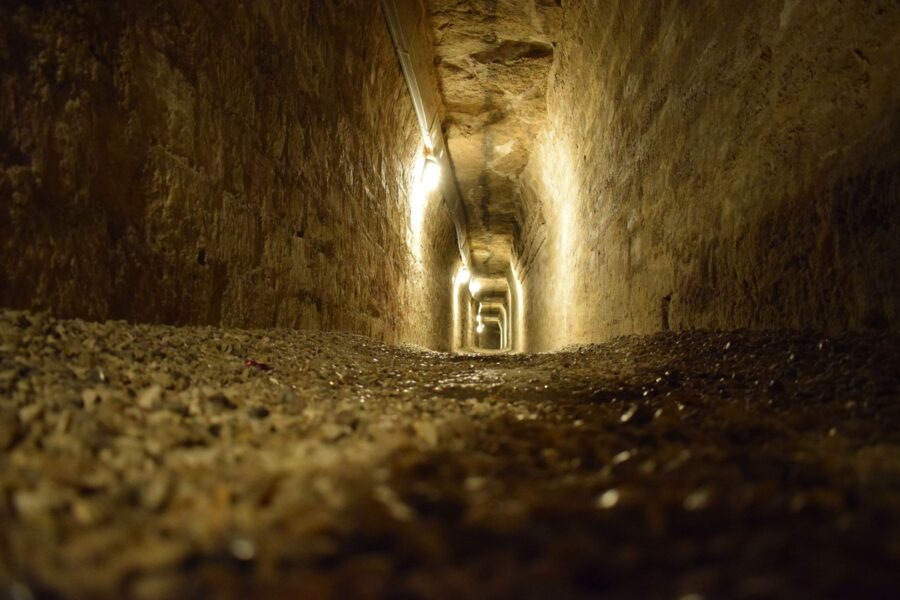
There are 131 steps down and 112 up, and no lift. The floor is uneven and can be slippery, the passages are narrow and dim, and the site is closed to wheelchairs and walkers. The museum advises against the visit for anyone with heart or breathing problems or claustrophobia, and children under 14 must be with an adult (one official page says 13).
The visitor rules are strict because there is no cloakroom, the exit being 700 meters from the entrance. Bags up to 40 x 30 x 20 cm (about 16 x 12 x 8 inches) are allowed, carried in front or by hand. Suitcases, large bags, motorcycle helmets and strollers are refused, so bring a baby carrier; food, drink, alcohol and animals other than guide dogs are not allowed.

The rest of the network is off limits
Everything beyond the visitor route is closed. A prefectoral order of 2 November 1955 bars anyone without authorization from the quarries under Paris, and a police unit has patrolled them since the early 1980s. The people who go anyway call themselves cataphiles, and they have mapped, painted and partied in the southern network for decades.
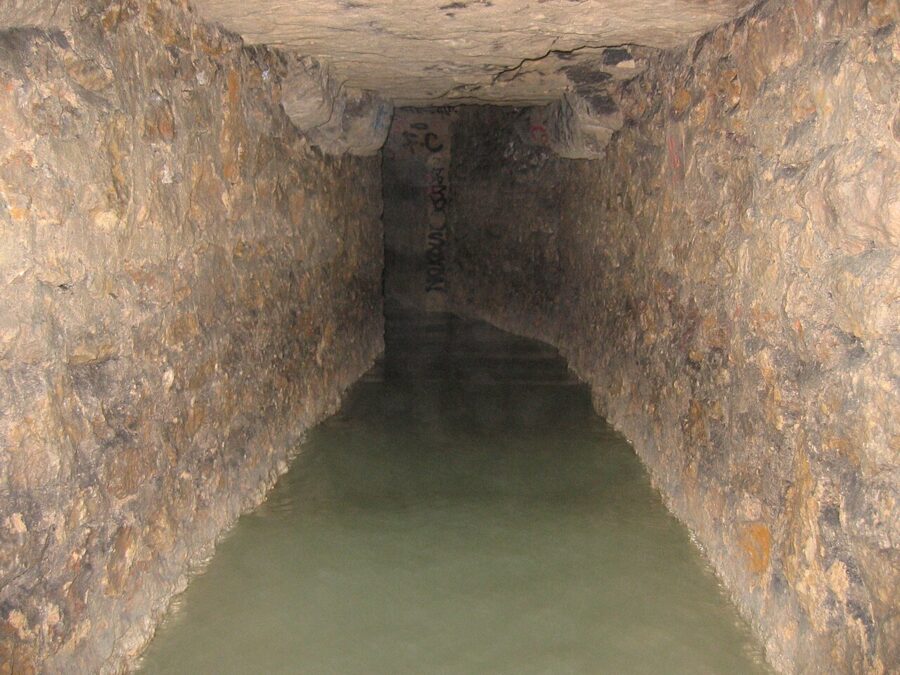

I would not go, and I would tell anyone else not to. The galleries are unlit, there is no phone signal, some passages are flooded or end at wells, and the quarry service fills sensitive sections with concrete, so a map from a few years ago can lead to a dead end. The fines are the least of it.
The network does keep its secrets well. In August 2004 police on a training exercise under the Trocadéro found a fitted cinema in a cavern, with a screen, projection gear and electricity tapped from the grid; a group called La Mexicaine de Perforation later claimed it. The older story of Philibert Aspairt, a doorkeeper said to have got lost in 1793 and been found eleven years later, rests on a tomb in the quarries and a reconstructed death record of 2 May 1804, and may owe much to a quarry inspector’s sense of humor.


The Résistance and a German bunker
In 1937 and 1938 the city turned an old quarry 19 meters under Place Denfert-Rochereau into an air raid shelter of about 600 square meters, built for 1,200 people. It never appeared on the quarry service’s plans, and the Germans never learned of it. From 20 to 25 August 1944 it was the command post of Colonel Henri Rol-Tanguy and the staff of the French Forces of the Interior during the uprising that freed Paris, with a phone network the occupiers could not tap.
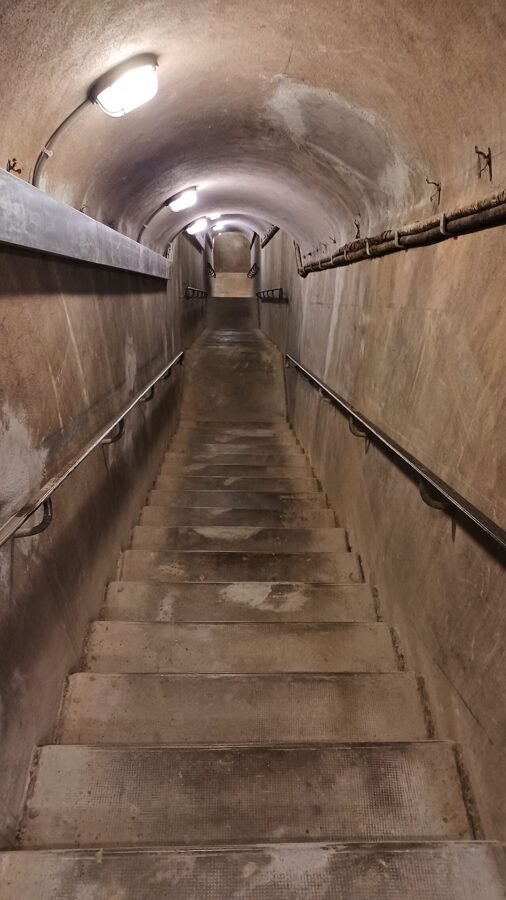

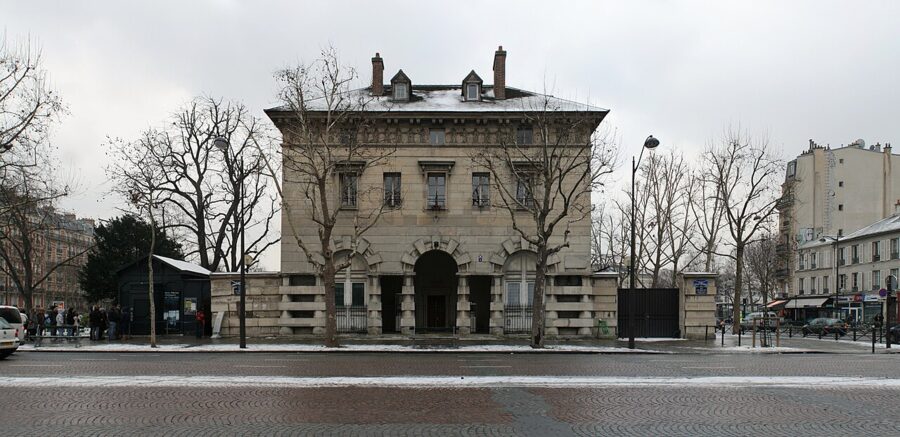
The shelter is now part of the Musée de la Libération de Paris, musée du Général Leclerc, musée Jean Moulin, in Ledoux’s west pavilion across the square from the catacombs entrance. Its permanent collection is free, like those of the other City of Paris museums. Confirm its hours, and how the shelter is shown, before you go.
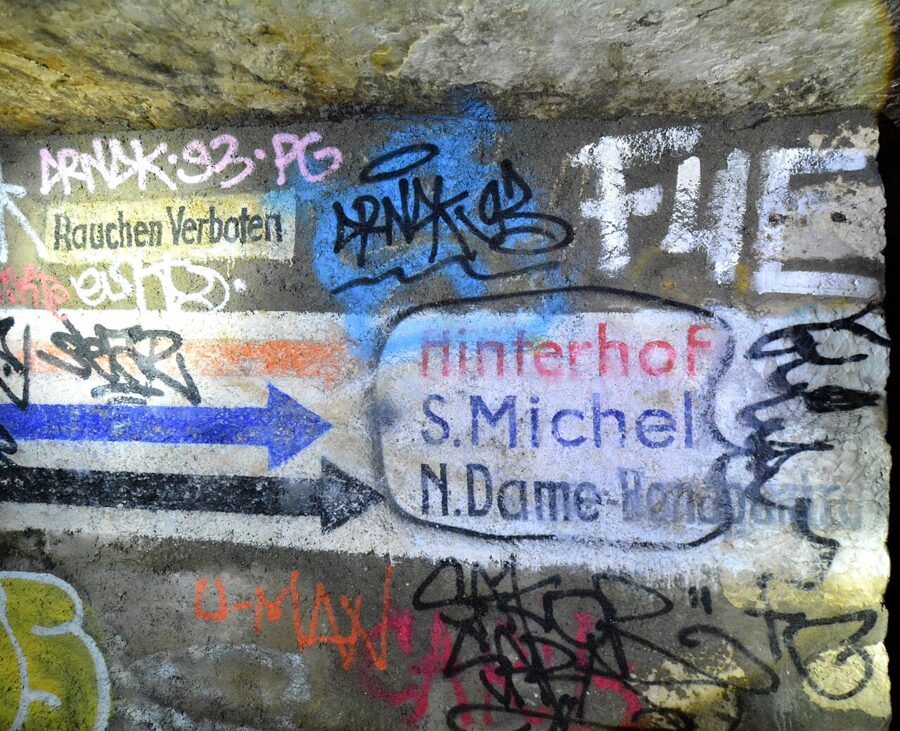
The Germans built their own shelter in the quarries under the Lycée Montaigne, beside the Luxembourg Garden, walling it off from the network with concrete and fitting armored doors, power and phones. It seems to have served only for air raid defense, and its German signs are still on the walls. There is no regular public access.

Other underground Paris you can visit
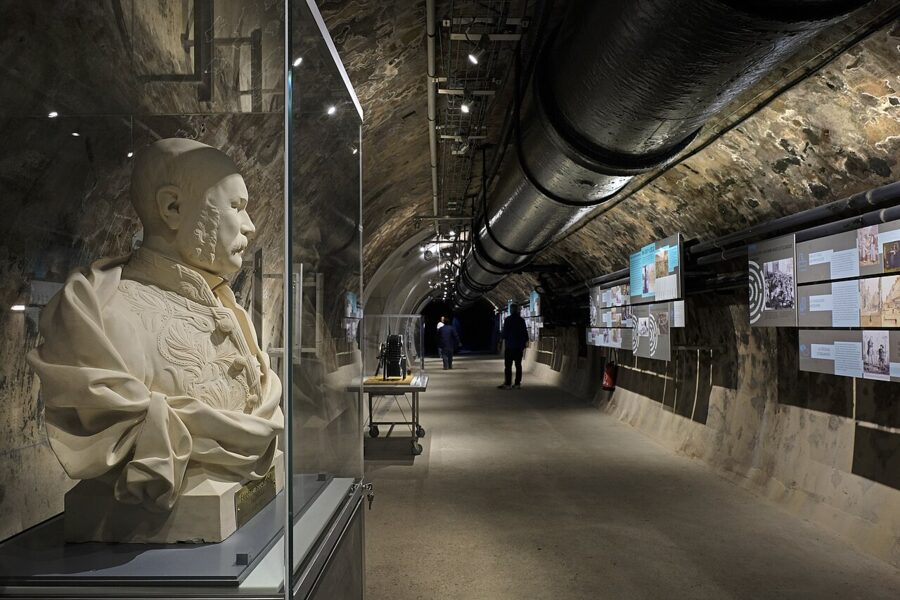
The Musée des Égouts walks you through a working stretch of the city sewers from the Pont de l’Alma, on the esplanade Habib-Bourguiba in the 7th arrondissement. As of 2026 it opens Tuesday to Sunday, 10 a.m. to 5 p.m. (last entry 4 p.m.), and closes on 1 May, 25 December and the first fifteen days of January. Tickets are €9 (about US$10), reduced €7, and the route is wheelchair accessible, smells as you would expect, and closes without refund when the water rises.

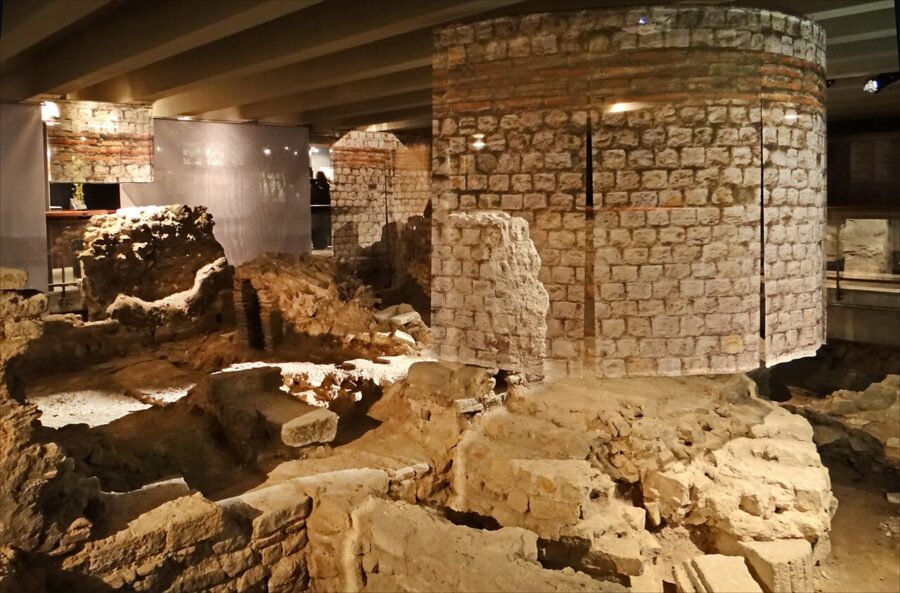
Under the square in front of Notre-Dame, the Crypte archéologique de l’île de la Cité shows the foundations of Roman and medieval Paris, including small fourth-century baths. It is run by Paris Musées, like the catacombs, and as of 2026 opens Tuesday to Sunday from 10 a.m. to 6 p.m., with the ticket desk closing at 5:30 p.m. Entry is €11 (about US$13), reduced €9, and free for under-18s.

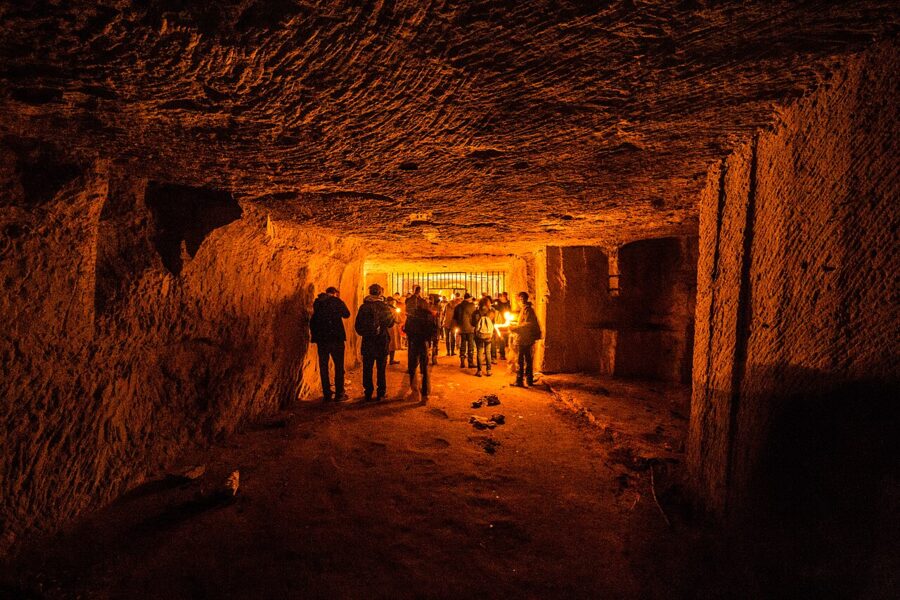
Real quarries open mostly through associations, and mostly on set days. For the European Archaeology Days each June, the catacombs and the association OCRA have opened the Port-Mahon quarry, a listed medieval working next to the ossuary that the city bought in 2021; it is otherwise closed. In November 2026 the sewer museum ran evening visits by carbide lamp with the association SEHDACS. The Carrières des Capucins under the Hôpital Cochin, restored by volunteers of the SEADACC, are not open to the public, but the association has taken small groups by reservation.

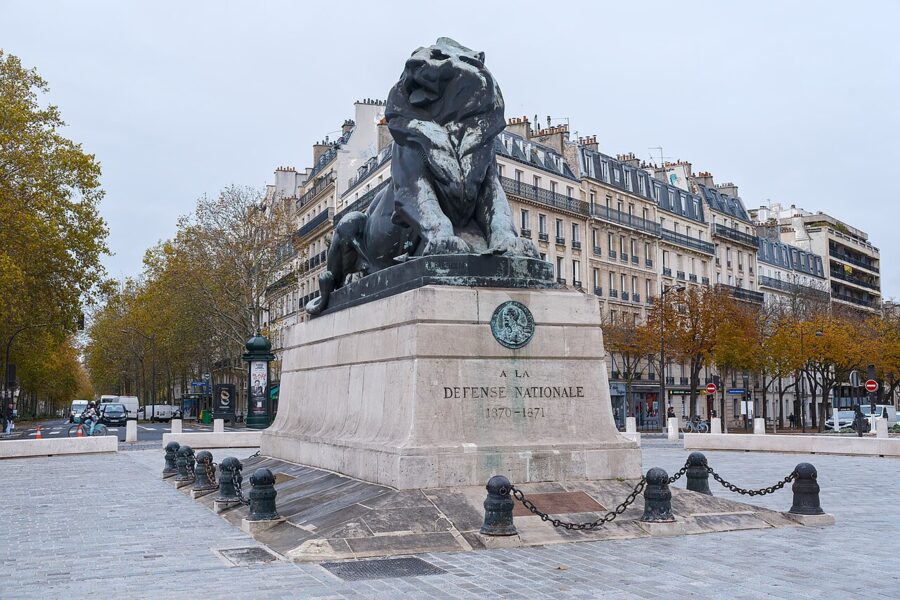
Back on Place Denfert-Rochereau, Bartholdi’s bronze lion sits a few steps from the old shelter, and Ledoux’s tax-gate pavilions still face each other across the road. The verse down below says stop, and in the first slot of the morning, with the galleries nearly empty, you will. Bring a sweater and read the stones on the way through.