
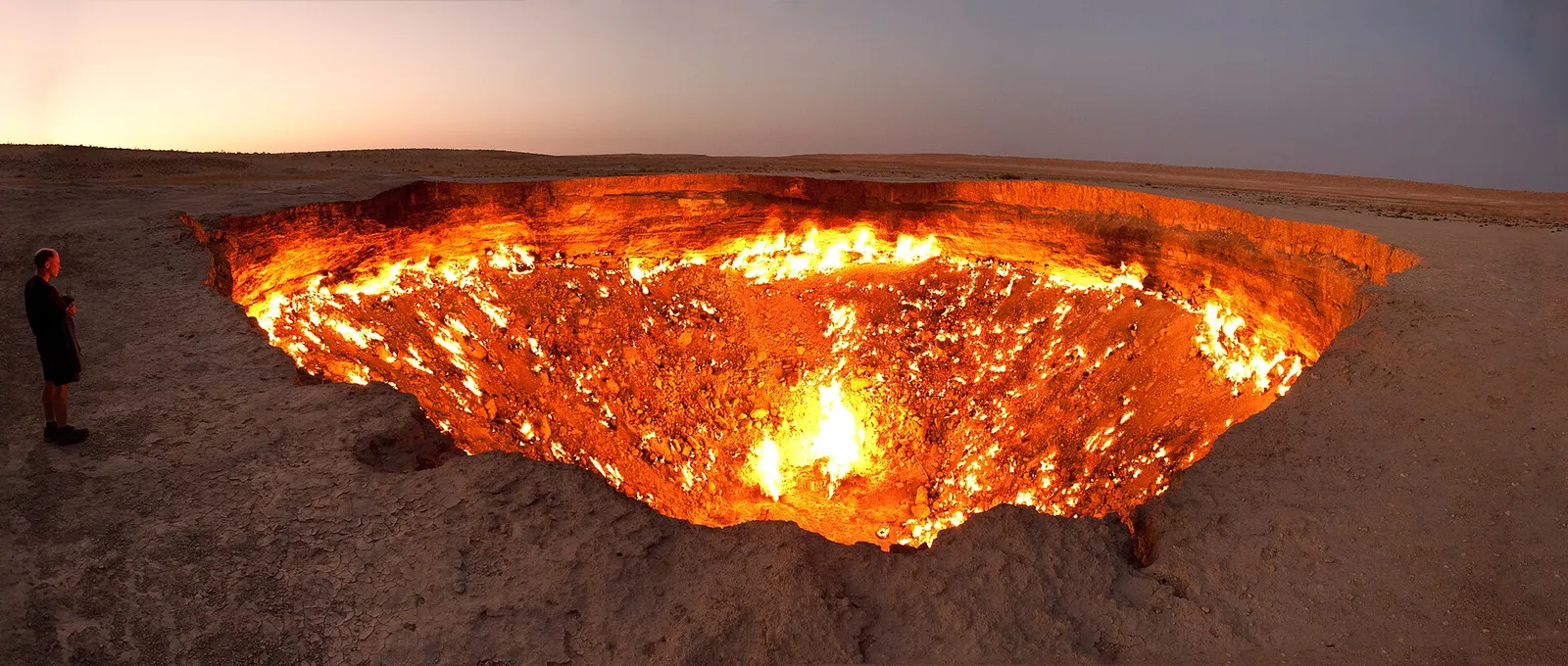
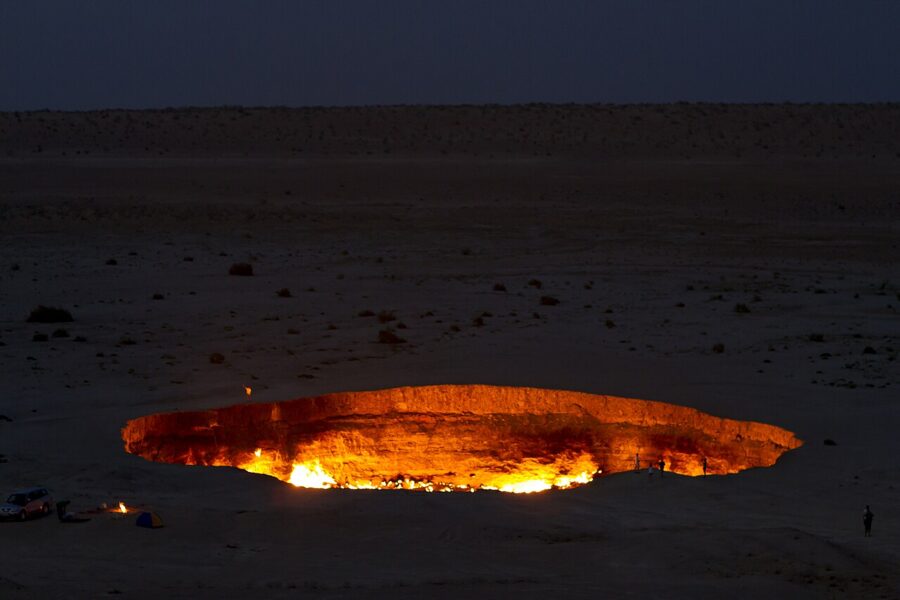
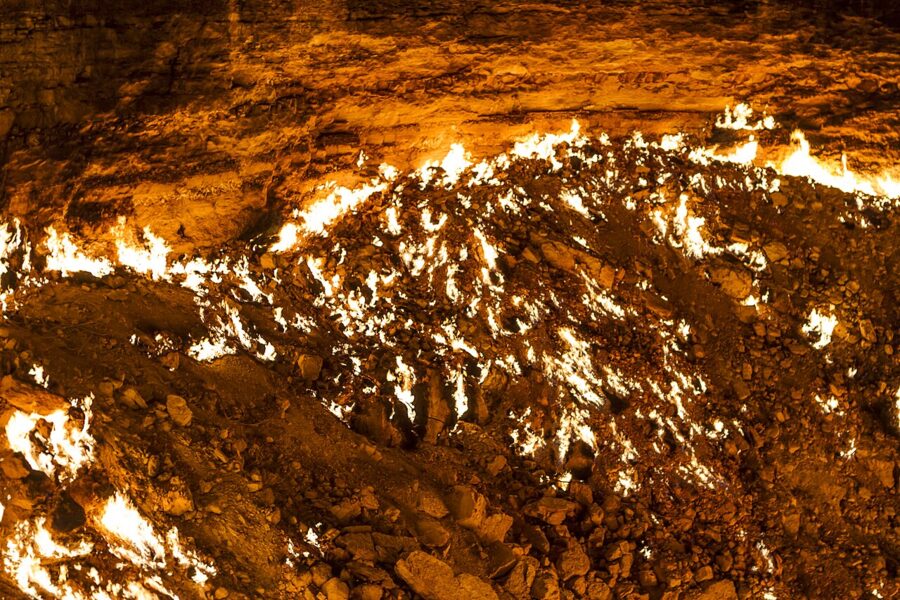
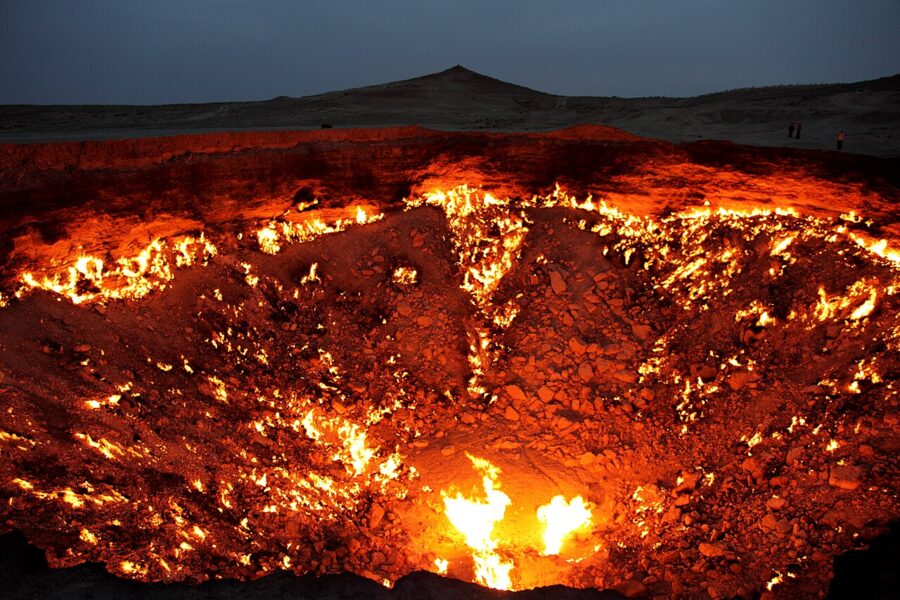
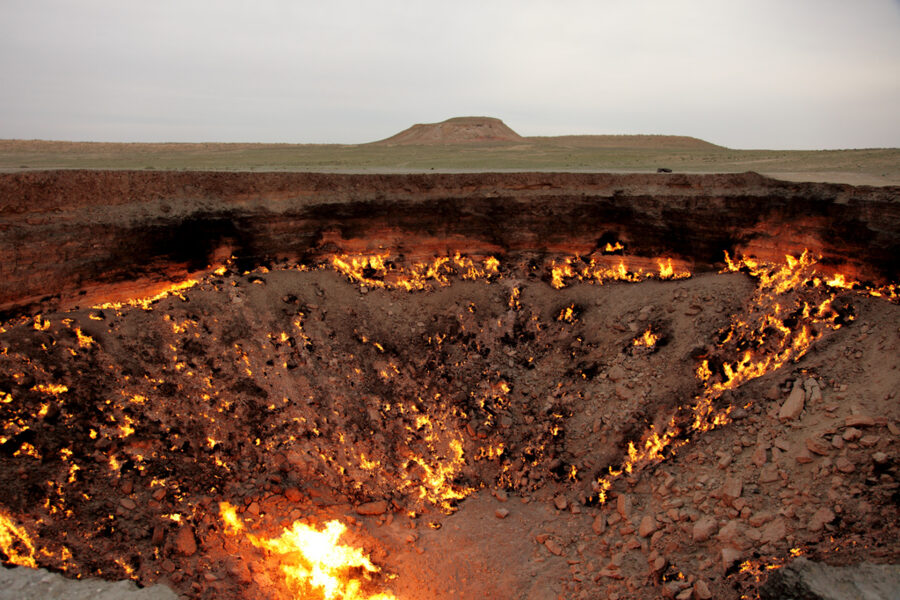
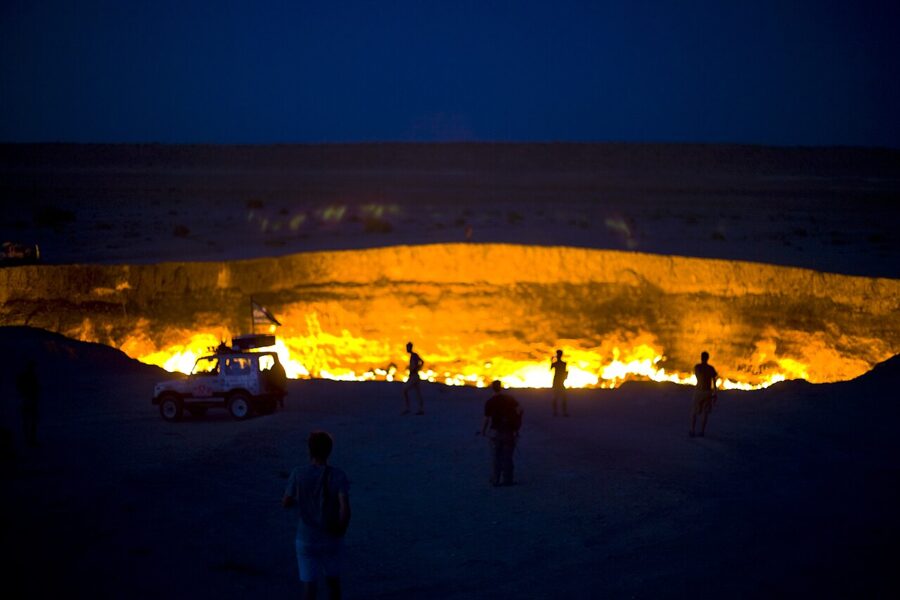
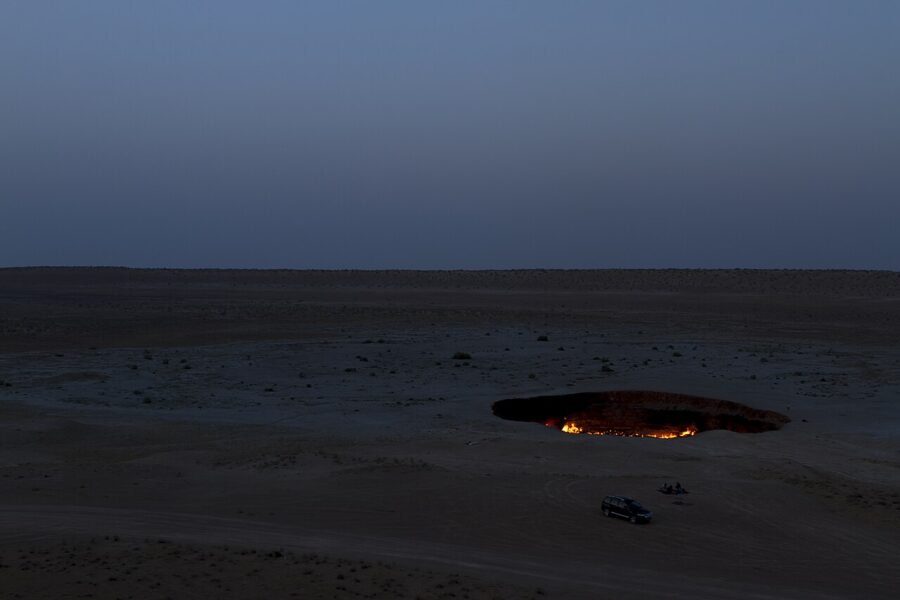
Walk up to the Darvaza crater after dark and you feel it before you understand it. A pit about 70 meters (230 feet) across opens in the sand of the Karakum Desert, and its walls are pricked with gas flames, some no bigger than a candle, some as tall as a person. On the downwind side the heat is strong enough to make you turn your face away. Nobody wrote down the night it was lit.
That last fact is the strangest thing about the most famous fire in Central Asia. The date everyone repeats is 1971. Turkmen geologists have given other decades, and a 2026 study of old satellite pictures puts the first flames in the winter of 1987 to 1988. Meanwhile the fire is fading: in 2025 the state gas company said it had cut the burning to about a third, and travelers began coming home from the long drive north with photos of a dark bowl dotted with small fires.
It is still worth the trip, with the right expectations and the right paperwork. Turkmenistan only lets tourists in through a licensed travel agency, the road north from the capital is cracked and potholed, and the best of Darvaza happens after sunset, so you sleep beside it.

What you are looking at is natural gas, mostly methane, leaking up through the floor and walls of a collapsed hole and burning where it meets the air. Each flame marks a crack or a seep. The fire has no single source, which is one reason it has been so hard to put out.

The government’s name for it is Garagum ýalkymy, the Shine of Karakum. Everyone else calls it the Door to Hell or the Gates of Hell, nicknames that came from the glow that used to be visible for kilometers across the flat desert at night.

In this case7 parts
What the crater is, and why it burns
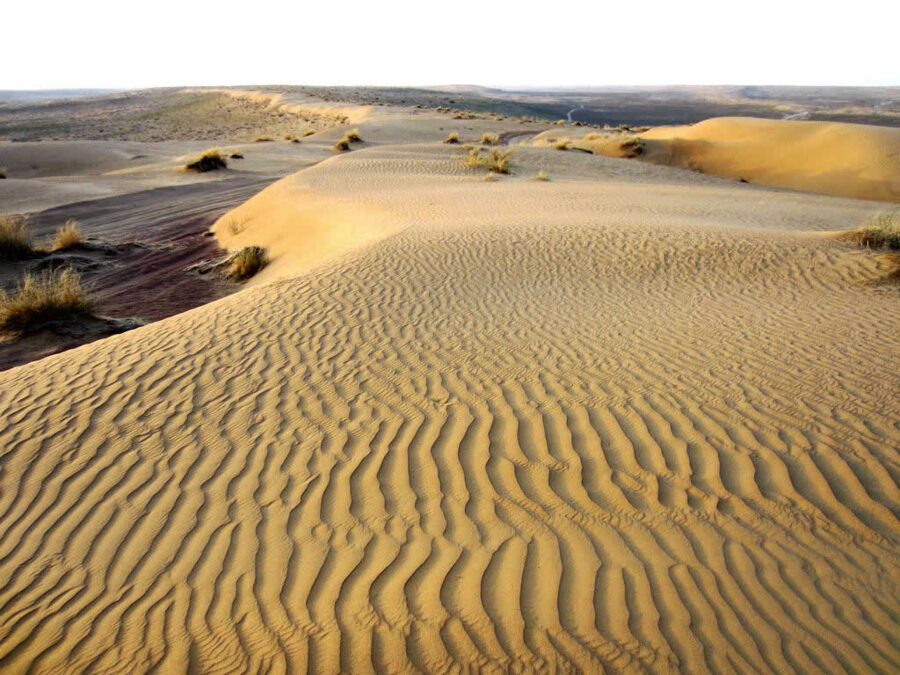
The crater lies in the Karakum, the “black sand” desert that covers most of Turkmenistan, about 260 kilometers (160 miles) north of the capital, Ashgabat. Its coordinates are roughly 40.25° N, 58.44° E. It takes its name from Darvaza (Derweze in Turkmen), a small settlement that stood nearby until 2004, when the government of President Saparmurat Niyazov cleared it; “darvaza” means “gate” in Persian.
Measurements vary. George Kourounis’s 2013 expedition gave 69 meters (225 feet) across and 30 meters (99 feet) deep, while Russian-language references give about 60 meters wide and 20 meters deep. Nobody has published a formal survey, so take 60 to 70 meters across and 20 to 30 meters deep as the working range.
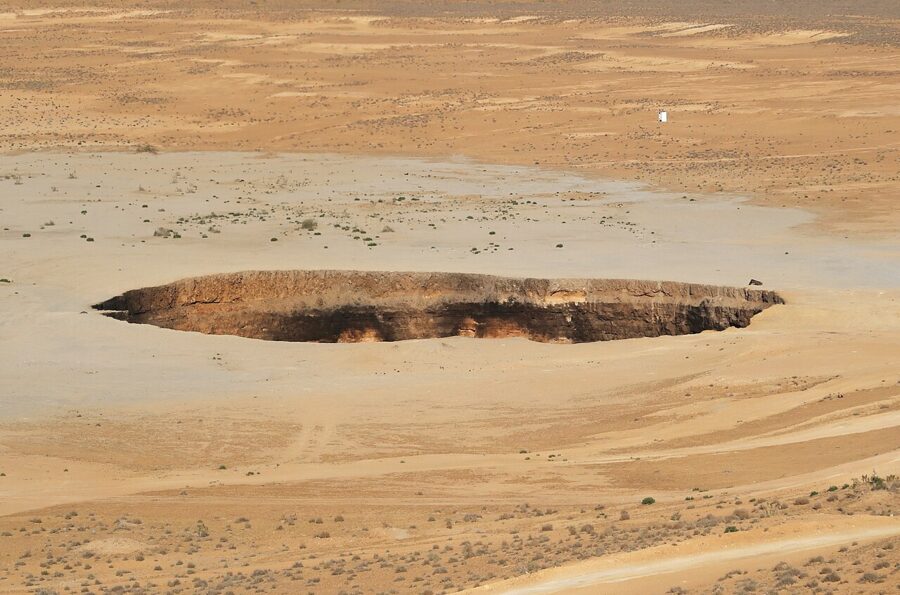

Why does it keep burning? Because the gas keeps coming. Turkmenistan sits on some of the largest gas reserves in the world, and the ground under Darvaza holds gas close to the surface. Engineers at Turkmengaz, the state gas company, have described the subsurface here as many thin gas-bearing layers separated by dense, water-bearing strata, so there is no single pocket to empty and no single pipe to cap.
In 2013 the area around the crater was declared a state nature reserve, which protects the desert on paper while the main attraction remains an uncontrolled gas leak.
How it came to burn: the story and the records
The story goes like this. In 1971 Soviet geologists drilling an exploratory well near Darvaza punched into an underground cavity full of gas. The ground gave way, and the drilling rig, its equipment and vehicles dropped into the hole; nobody was hurt. To stop the gas poisoning people and livestock, the crew set it alight, expecting it to burn off in a few days.
Anatoly Bushmakin, a Turkmen geologist now in his nineties, gave that version to AFP reporters in 2025: the geologists lit it “hoping that it would soon burn out.” It is the account in most Russian-language references and almost every travel guide. What it lacks is paper. No drilling log, crew list or report on the collapse has been published, and the early records are missing, classified or simply out of reach.
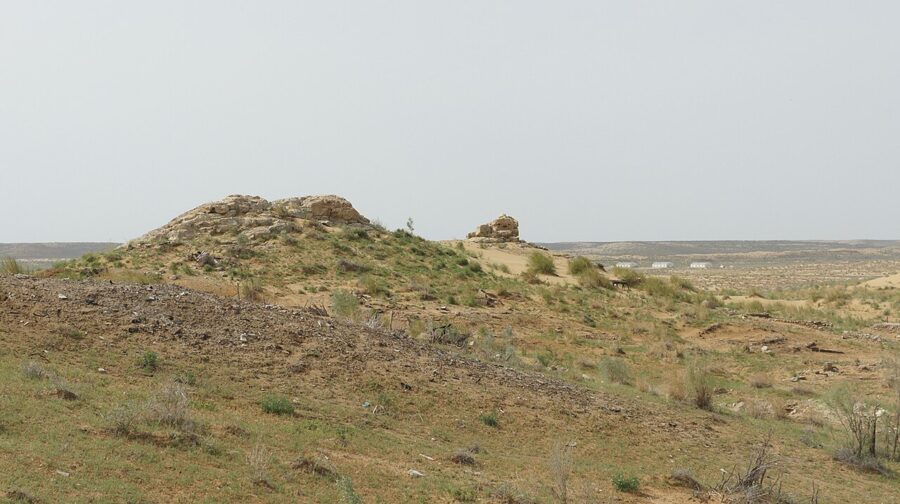

Kourounis heard a different version on the ground. Local geologists told him the collapse may have happened in the 1960s and that the hole was left unlit until the 1980s. He also noted that nobody could show him a record confirming any of the dates.
Records show something now, from orbit. In 2026 a team led by Adriana Valverde, with the methane specialists Itziar Irakulis-Loitxate and Luis Guanter, went back through the Landsat satellite archive and published the result in Geophysical Research Letters. The pictures show combustion beginning between late 1987 and early 1988. The crater itself formed in 1963 or 1971; the satellite record cannot settle which.
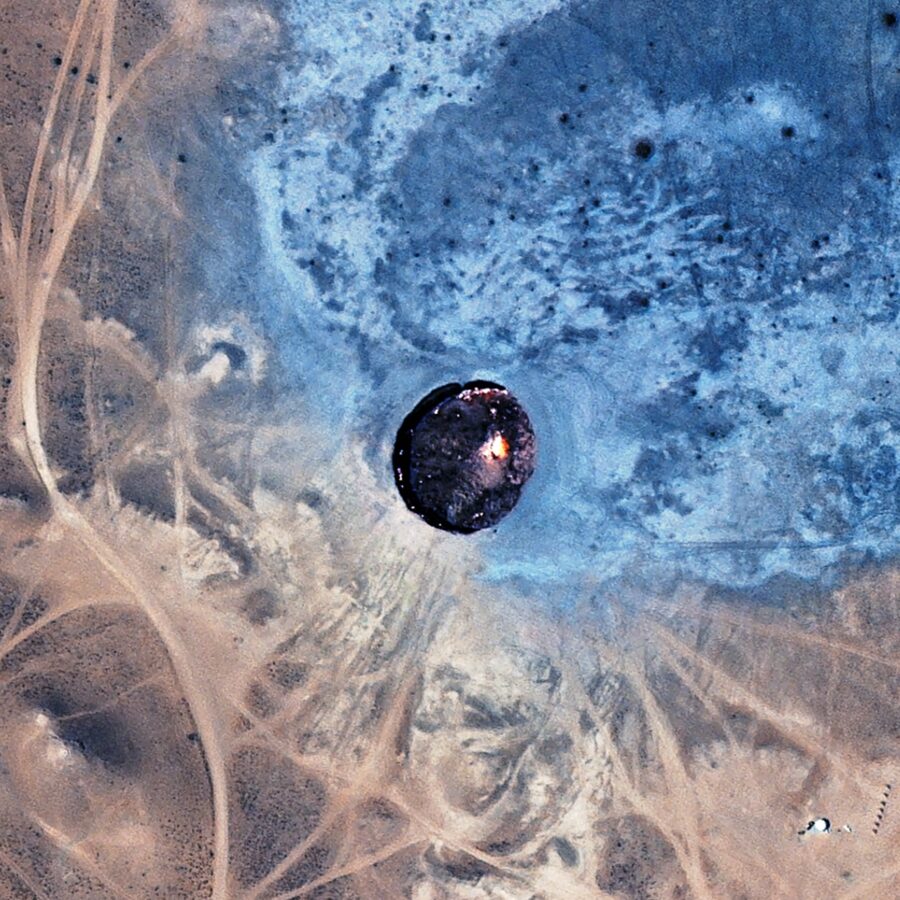


So the best answer to “how long has it been burning?” is about 38 years, not 55. For somewhere between 16 and 24 years before that, it seems to have been an open hole quietly venting methane into the air.
Who finally lit it, and why, is not on any published record. If the satellites are right, the 1971 drilling crew of the popular story did not light it, or at least not in 1971.

George Kourounis goes down, November 2013
Only one person is known to have stood on the crater floor. George Kourounis, a Canadian explorer, made the descent in November 2013 with government permission, on an expedition partly funded by National Geographic.
He wore an aluminized heat-reflective suit and a self-contained breathing apparatus, hung from Technora ropes and a custom harness made of Kevlar, because an ordinary climbing harness would have melted. The team rehearsed the rope rigging over a river gorge before trying it over fire. He described the view from inside as “a coliseum of fire.”
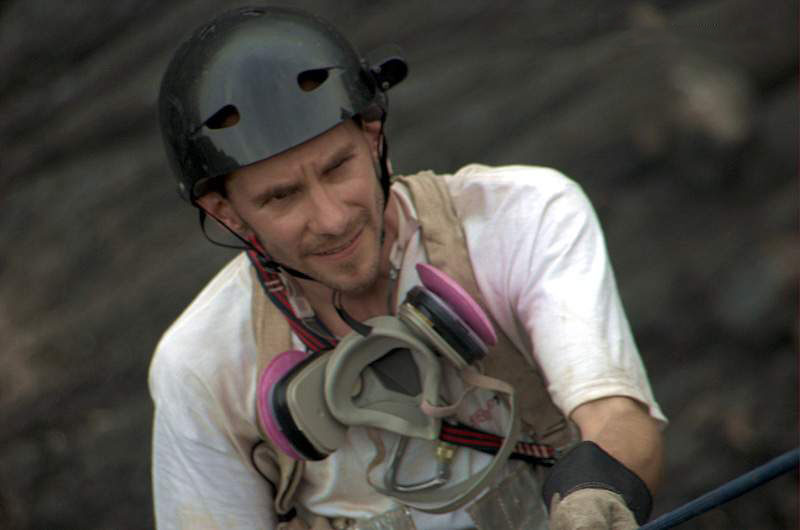

The point of the trip was science. Kourounis collected soil samples from the bottom for a study of life in extreme places, later part of the Extreme Microbiome Project. Back in the lab, the samples held heat-tolerant bacteria that did not turn up in the soil around the crater: a small, sparse ecosystem living on a burning floor.

Is it going out?
Yes, slowly, and not only because the government says so. Turkmenistan’s leaders have been talking about the crater for more than a decade. In 2010 President Gurbanguly Berdimuhamedov visited and told officials to limit its effect on the development of nearby gas fields. In January 2022 he went further, instructing Deputy Prime Minister Shahym Abdrahmanov to gather scientists, and foreign specialists if needed, to find a way to put the fire out.
His reasons were the environment, the health of people living nearby, and money: every cubic meter burning in the desert is gas that could be sold abroad. A commission was formed. Then came the wells. According to the government, two wells drilled near the crater in 2024 now draw gas out of the same deposit before it can reach the flames.
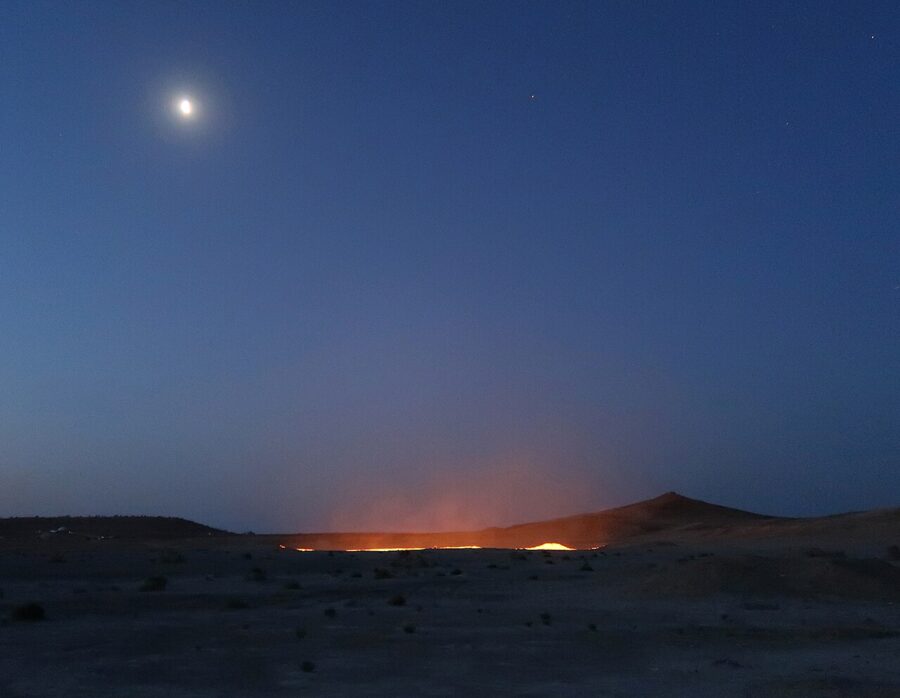

In June 2025 Irina Luryeva, a director at Turkmengaz, told a conference in Ashgabat that the fire had been cut nearly threefold. The glow used to be visible from several kilometers away, she said, and only a faint source of combustion remained. When AFP reporters reached the rim that August, they found a charred cauldron with only a few pockets of small fire, and a visitor from Ashgabat who admitted she was disappointed after five hours on the road.
Independent measurements agree on the trend. Capterio, a British consultancy that works on cutting gas flaring and reads satellite data on it, told The New York Times in May 2026 that the crater’s heat intensity had dropped by more than 75 percent over three years. It also said the decline began before the 2024 wells, which leaves room for the deposit itself to be weakening.
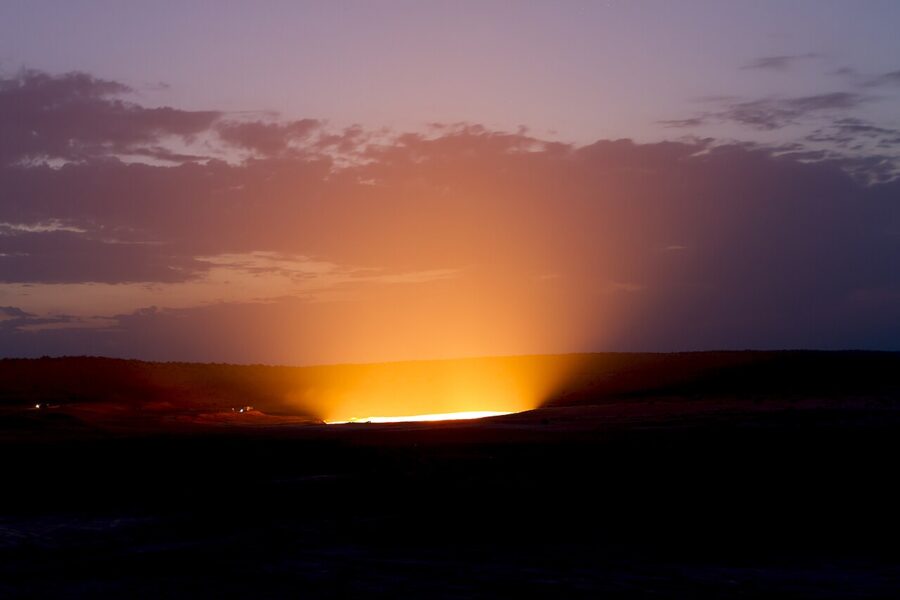

None of this is simple for the climate. Burning turns methane into carbon dioxide, which traps far less heat; methane is roughly 30 times more potent over a century. The Valverde team detected 44 methane plumes from the crater between 2020 and 2025, at 1 to 3 tonnes an hour, adding up to about 71,000 tonnes in five years. They found the flaring declining but no matching drop in the methane.
Carbon Mapper, another satellite monitoring group, put the average at about 1,300 kilograms an hour between 2022 and 2025, rising to 1,960 kilograms an hour in October 2025. A crater that stops burning but keeps leaking would be worse for the atmosphere, not better. The plan Turkmengaz has described is to drain the gas through wells first and only then seal the surface.
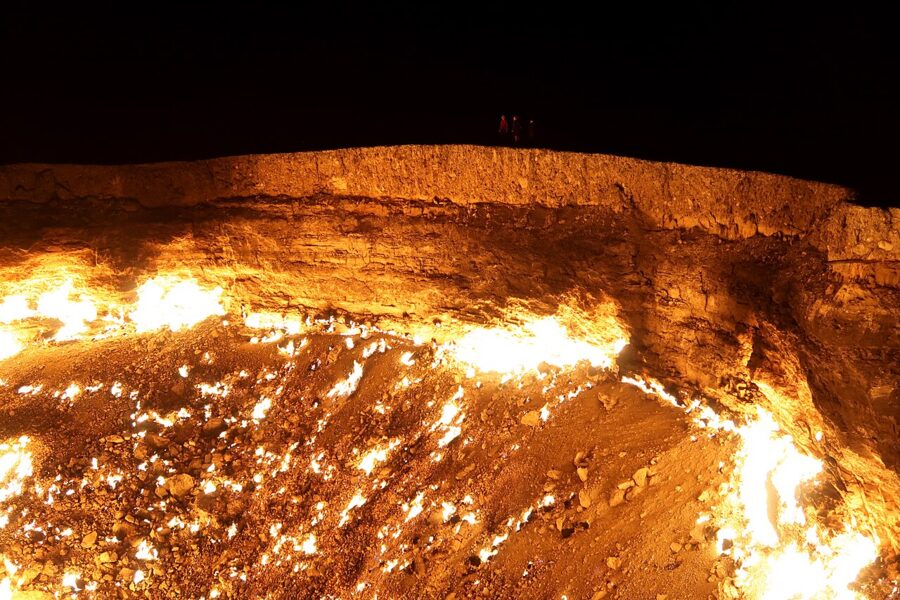

So is the crater still burning? As of the latest reports, from 2025 and mid-2026, yes: small fires remain. Nobody has announced that it has gone out. Like the underground coal fire beneath Centralia, it may simply dwindle rather than end on a date anyone marks.
Getting into Turkmenistan in 2026
This is the hard part, and it comes before the desert. Turkmenistan is one of the most closed countries in the world, and almost every visitor needs a visa. For tourists, that visa only comes through a travel agency licensed in Turkmenistan.
The agency applies for a letter of invitation on your behalf. Approval depends on a booked itinerary with a guide who stays with you, hotels for every night, and transport arranged by the agency; agencies quote anywhere from about a week to three or four weeks, and refusals come without explanation. With the letter approved, the visa is stamped at a Turkmen embassy, at Ashgabat airport, or at an approved land border.
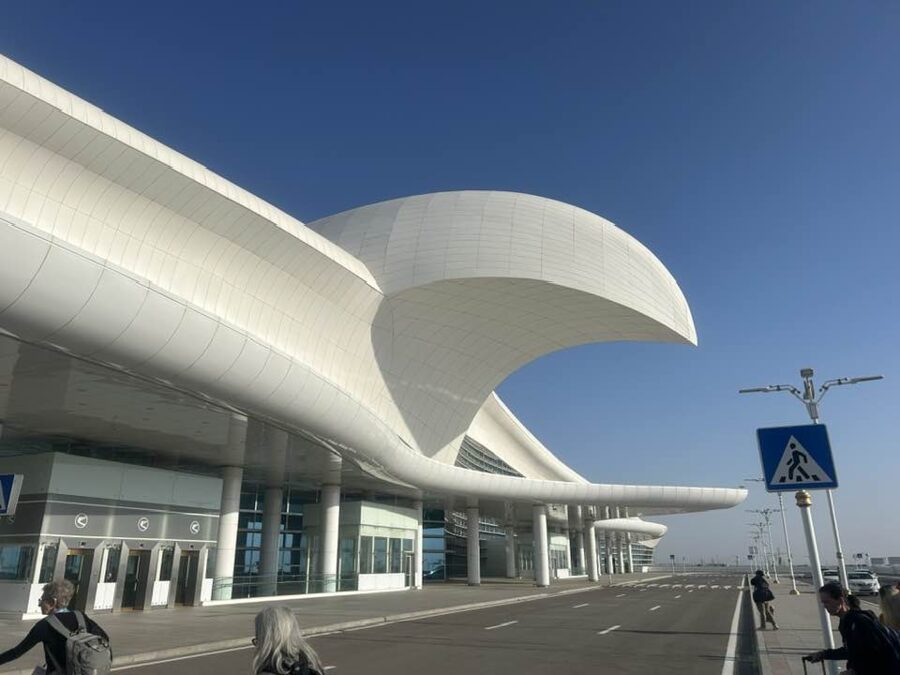

In October 2026 Turkmenistan began issuing visas electronically. As reported by travelers that month, the e-visa still has to be requested through an agency, arrives by email, and is checked at the border by scanning its QR code. The same reports put the agency’s visa price at about US$80, with no difference by nationality; ask your agency for its own figure in writing.
Behind the agency price sits the Foreign Ministry’s schedule of consular fees, quoted in US dollars: US$20 for a single-entry visa of up to 10 days, US$30 for up to 20 days and US$40 for up to a month, plus a processing charge that depends on where the visa is issued. Urgent processing doubles the fee. On arrival, tour operators also list a migration tax of US$14 (as of 2026).
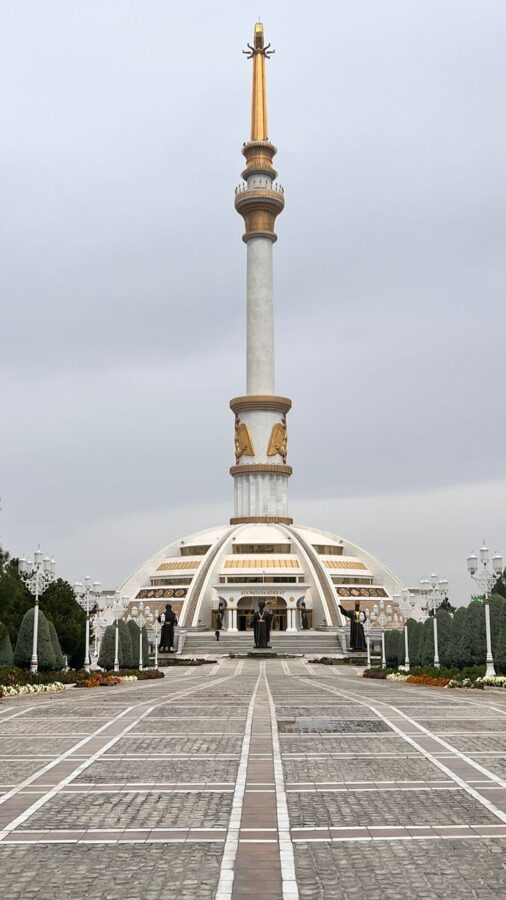
What about the transit visa? The Foreign Ministry’s schedule still lists one, single entry for up to five days at US$20, and for years it was the only way to cross the country without a guide. Travelers report that some embassies issued them in 2024 and 2025, but nobody they know of has succeeded in 2026. I would not build a trip around one.
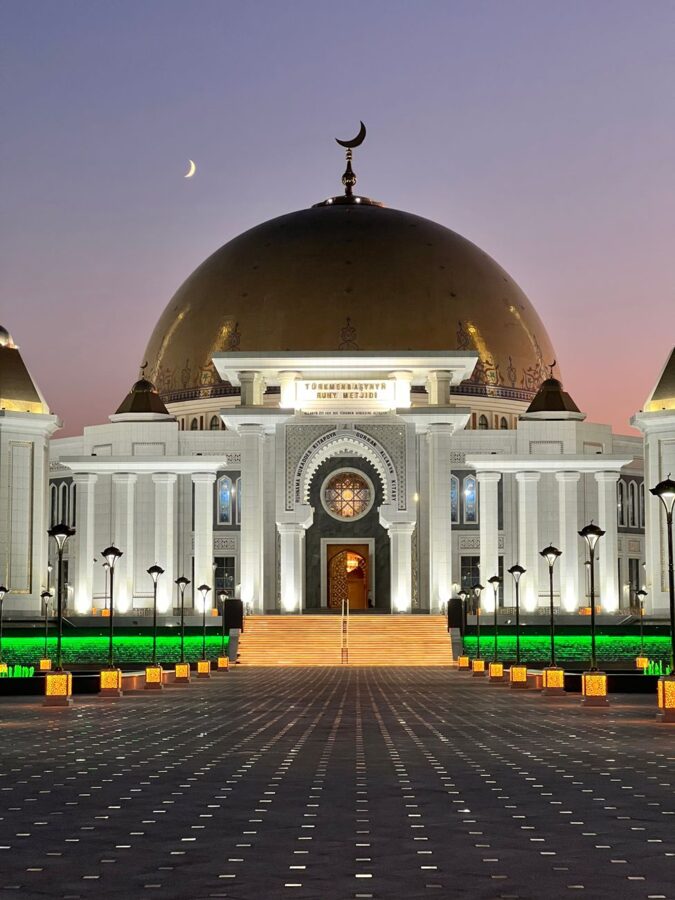
From Ashgabat to the rim
The crater is about 260 kilometers north of Ashgabat along the highway toward Dashoguz. Agencies quote three to four hours; a visitor AFP met at the crater in 2025 said her drive took five. The road is cracked and potholed, and drivers weave around holes and drifting sand at speed. The last stretch leaves the asphalt and crosses sand, which is why agencies use four-wheel-drive vehicles.
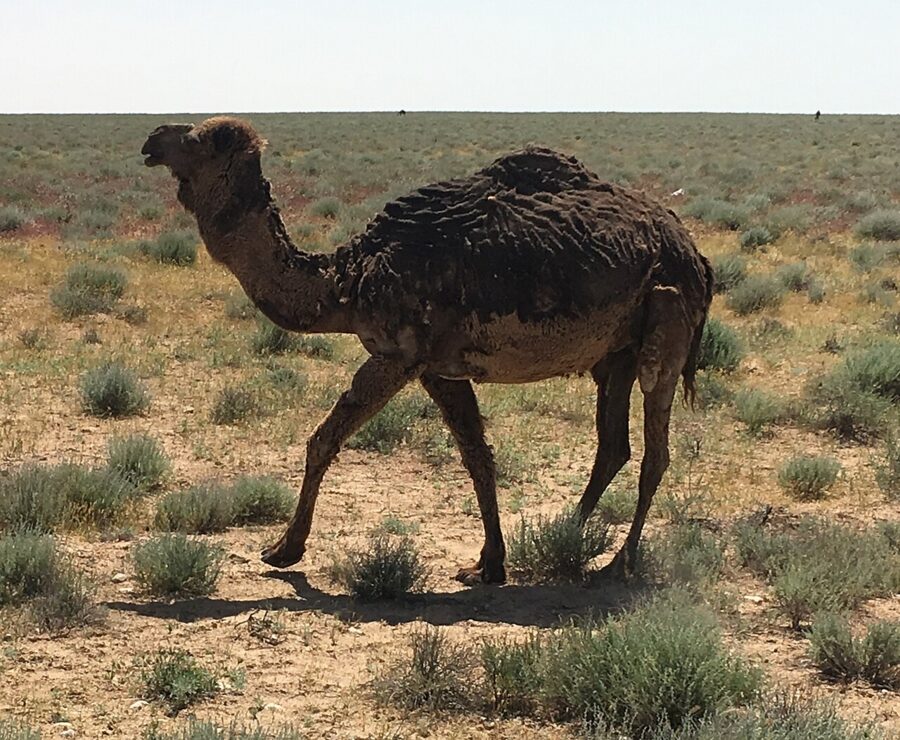

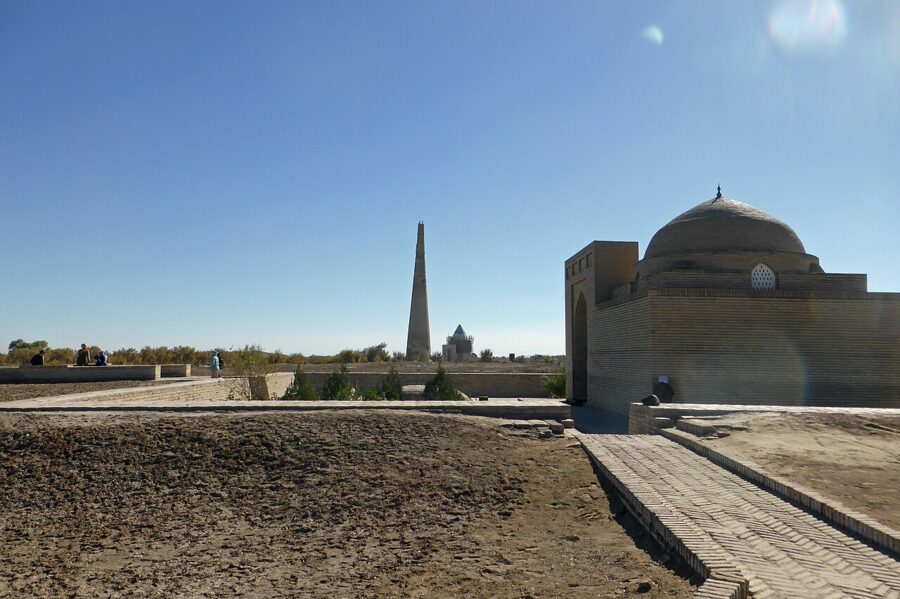
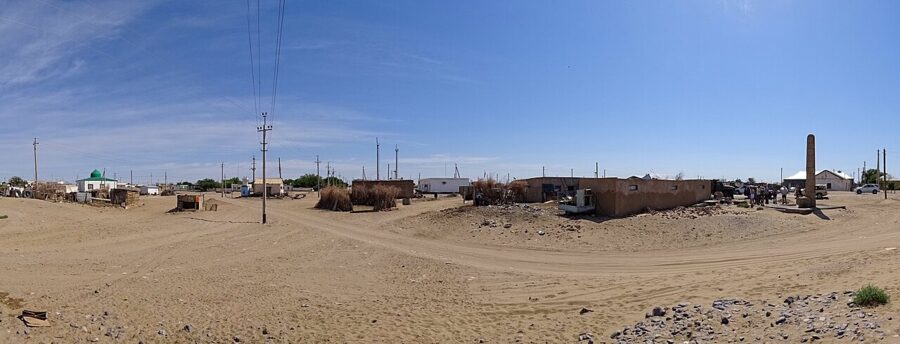
The nearest village is Erbent (Yerbent), around 90 kilometers away by road. Some tours come from the other direction, starting in Dashoguz or at the ruins of Kunya-Urgench in the north and reaching the crater by evening, which suits anyone crossing from Uzbekistan.

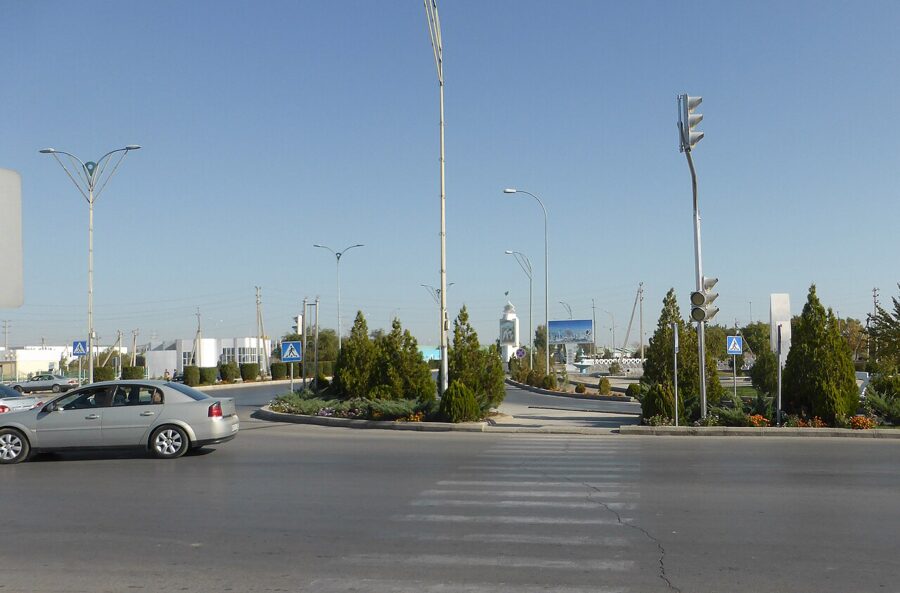



A day trip is possible: four hours out, about two at the crater, four hours back to Ashgabat, arriving around midnight. I would not do it. The point of Darvaza is the dark, and the crater is at its best after the day-trippers have gone.
Camping and the yurt camp
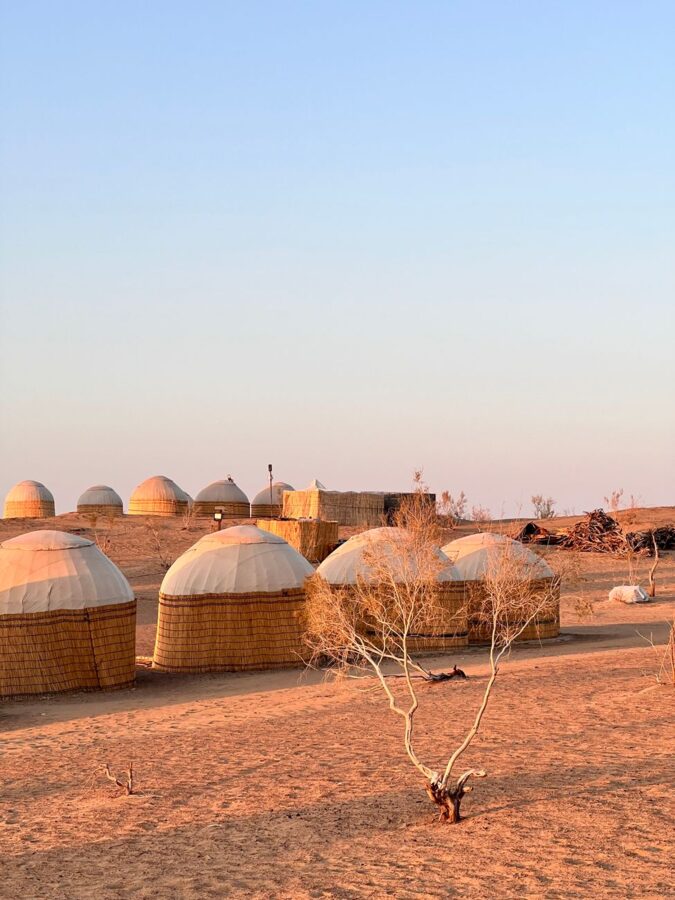
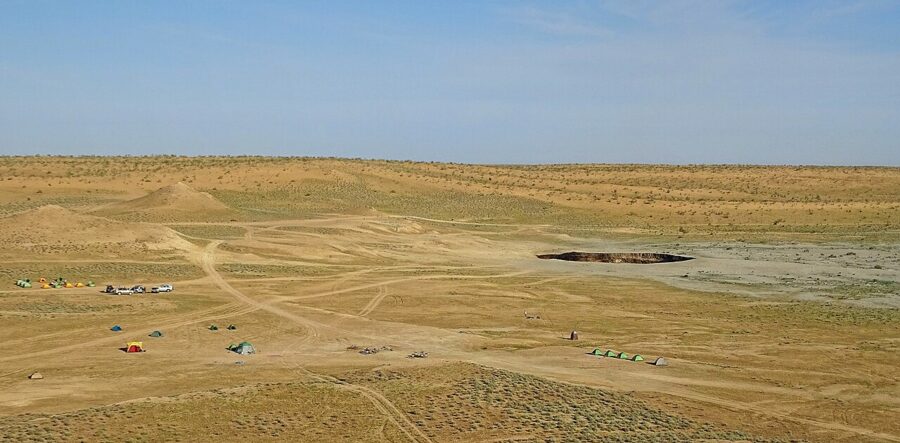
There are two ways to spend the night. Tour groups have long pitched tents on open ground a couple of hundred meters south of the crater. There is also a yurt camp about 500 meters east, with six four-bed yurts, toilets, showers and a dining area, booked through agencies.
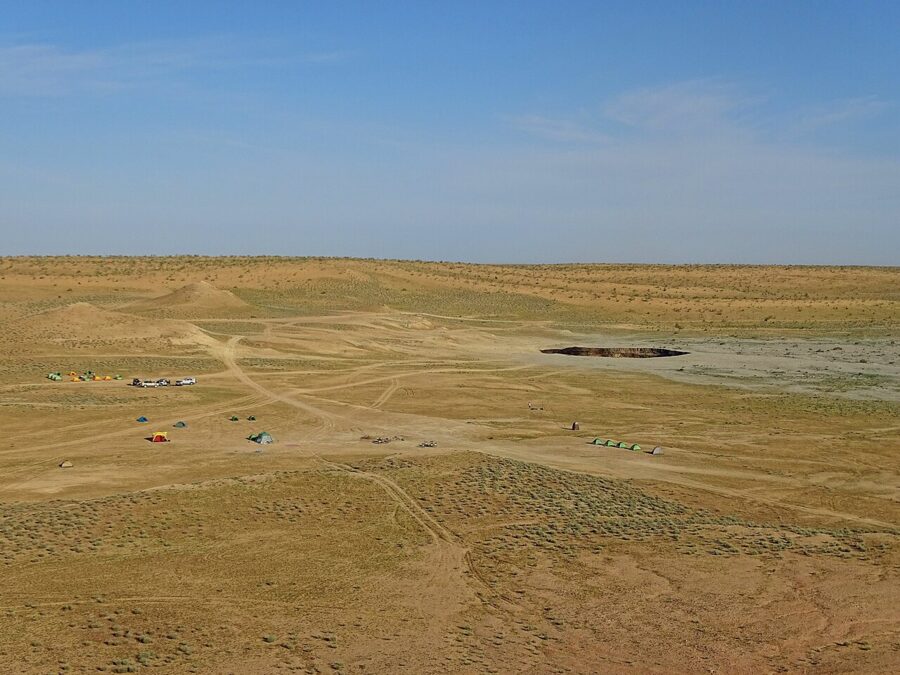

Facilities are basic either way. Some itineraries note that toilets and washing are outdoors, and agencies supply sleeping bags and mats. Bring a warm layer even in October: a traveler who stayed in one of the yurts that month wrote that once the stove went out, a thick cotton sleeping bag was barely enough.

The rules at the rim
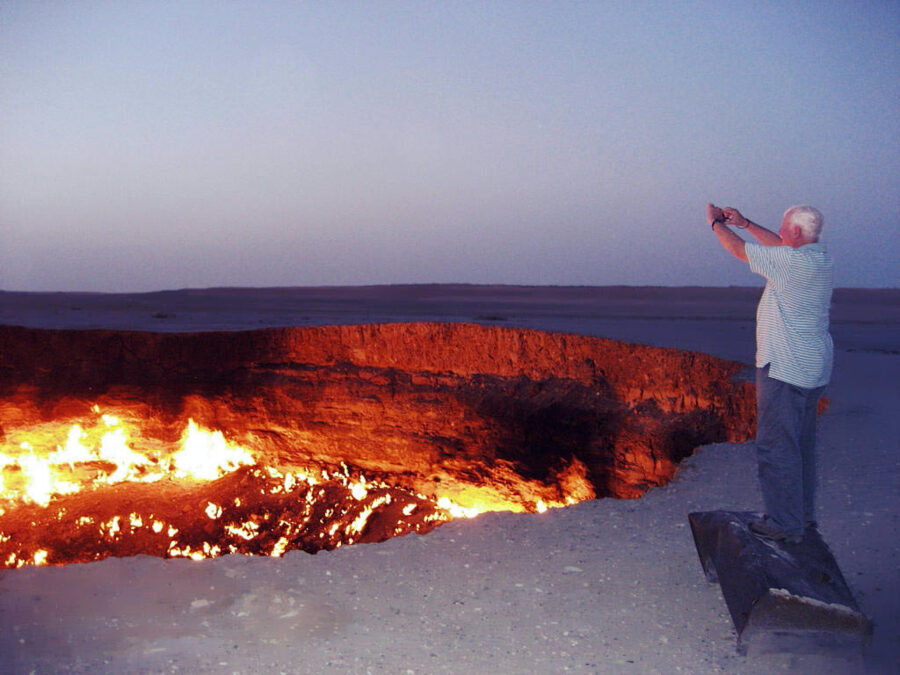
There is no fence, no rail, no ticket booth and no ranger at the crater, as of the most recent operator descriptions. So the rules are the ones your guide sets, and they are sensible. Keep back from the edge: the rim is loose sediment over a 20- to 30-meter drop. Stay upwind, where the heat and any unburned gas blow away from you.
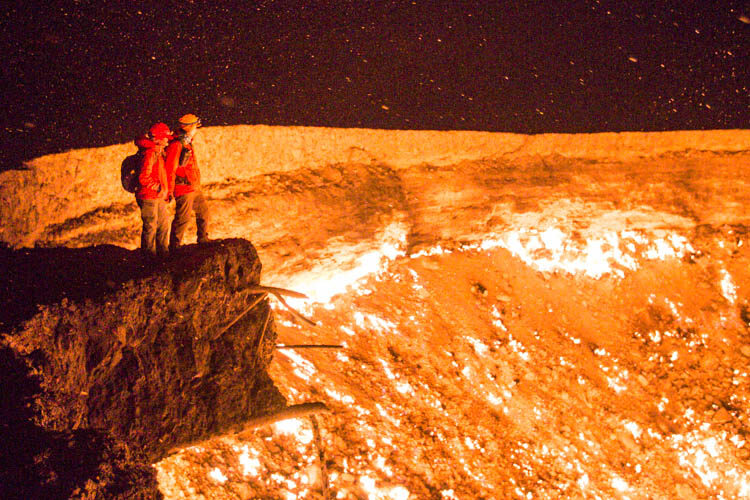

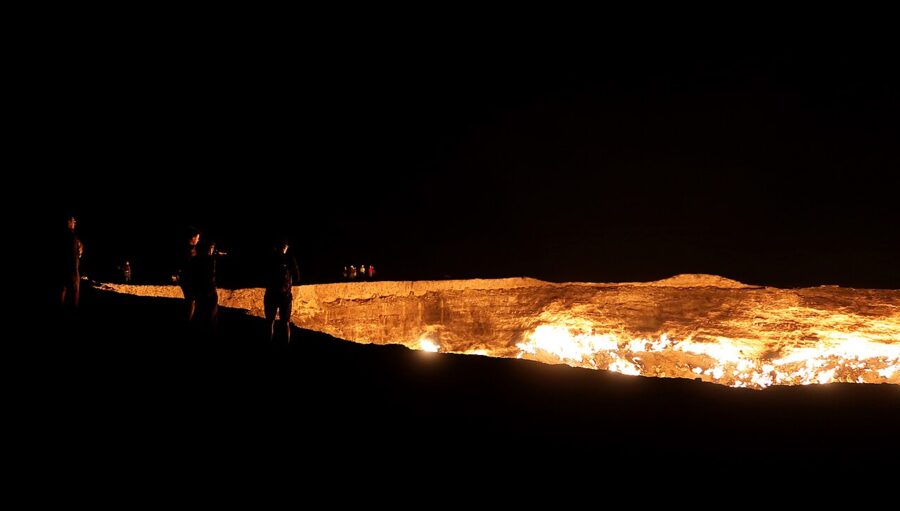

Do not drive close to the crater, and do not throw anything in. Going down into it is out of the question: Kourounis needed official permission, custom equipment and a team. Between May and September, check your shoes and bags in the morning for scorpions and spiders, which agencies warn are active in the warm months.

The water crater and the mud crater
Darvaza is not alone. Two more collapse craters of the same origin lie close to the main road, neither burning; the gas pressure there is much weaker. Many tours stop at one or both on the way, before sunset.
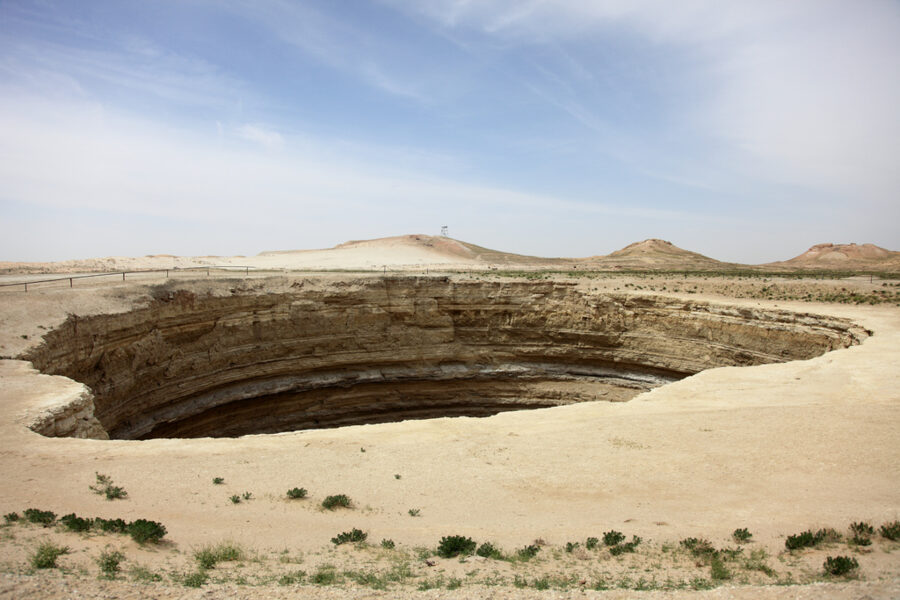
The mud crater lies about 11 kilometers south of the gas crater, some 200 meters off the highway. It is roughly 70 meters across and 20 meters deep, with layered pale walls and a pool of light gray mud at the bottom that bubbles as gas escapes through it.

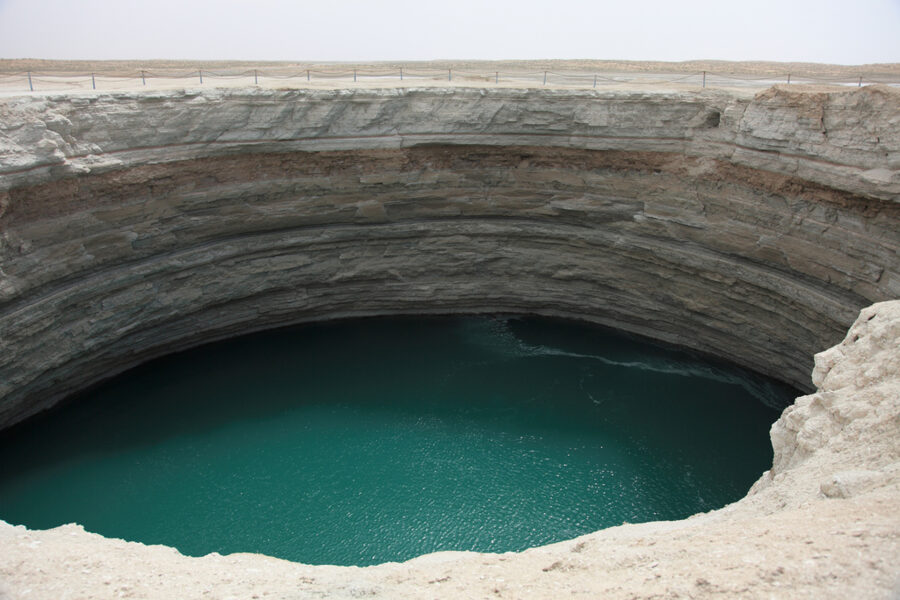
About 24 kilometers further south is the water crater, around 50 meters wide, 150 meters from the road, with steep walls dropping some 15 meters to a turquoise pool. Gas bubbles through the water. Swimming is off limits, both for the gas and because there is no easy way out.
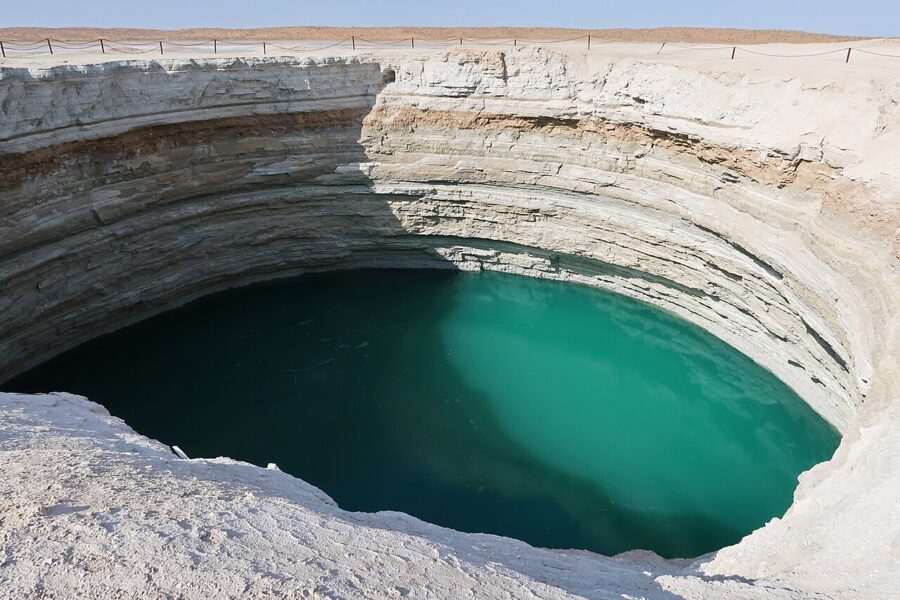

Russian-language references add a detail the travel pages leave out. Specialists consider two of the three deposits still worth exploiting, with capped Soviet wells and old wellhead fittings standing near the burning crater, but where water has met the gas under the turquoise pool, extraction is thought to be impossible.

When to go, and what it costs
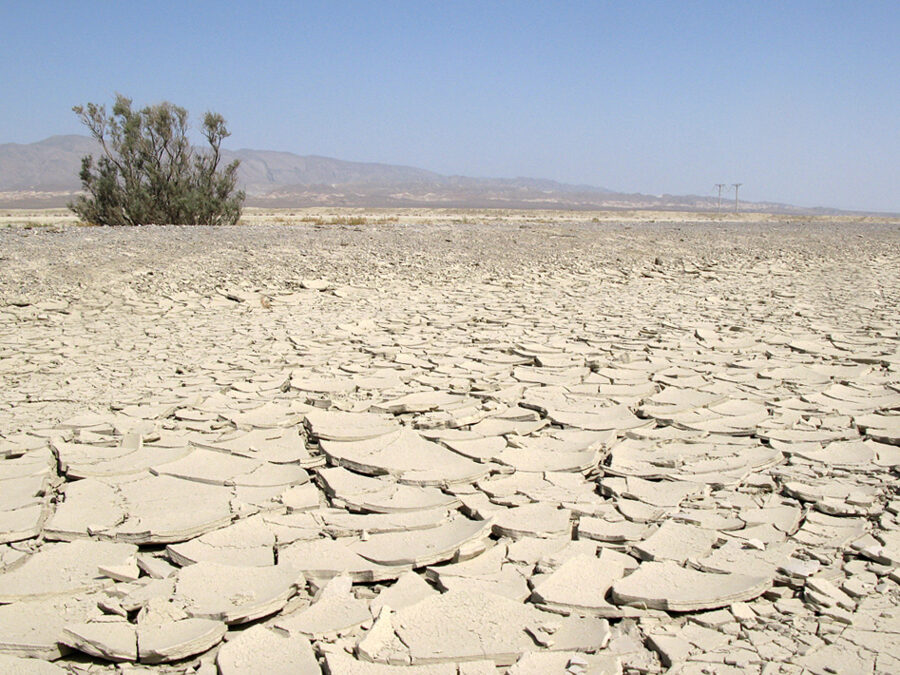
April and October are the months agencies recommend, and I agree with them. May and September run around 35°C (95°F). In June, July and August the desert climbs past 50°C (122°F), and winter can bring about minus 20°C (minus 4°F). At least one operator runs its crater tours April through November, with only limited trips in July and August.

Whatever the month, time your arrival for an hour before sunset. Fewer flames now means the crater needs darkness more than it used to, and a moonless night helps.
Turkmen agencies and the Foreign Ministry quote fees in US dollars. The costs as of 2026:
| Item | Cost (as of 2026) |
|---|---|
| Tourist visa through an agency (reported, October 2026) | about US$80 |
| Consular fee, single entry up to 10 days / 20 days / 1 month | US$20 / US$30 / US$40 |
| Surcharge for a visa issued at Ashgabat airport | US$50 |
| Migration tax on arrival | US$14 |
| Two-day private tour with one night at the crater, per person | US$990 alone to US$600 each for five |
The tour figure is one operator’s 2026 price for a private two-day trip with a flight to Dashoguz, a stop at Kunya-Urgench and a night at the crater. It includes the guide, the camp, dinner and breakfast, and visa support. Tips and travel insurance are extra, and prices for a shorter trip from Ashgabat are quoted on request.
Book the agency first, and the rest follows: the letter, the visa, the guide, the drive north and the night at the rim. The fire will go on until the gas runs out or the wells drain it. When it does go dark, a satellite will record the date, which is more than anyone managed when it was lit.