
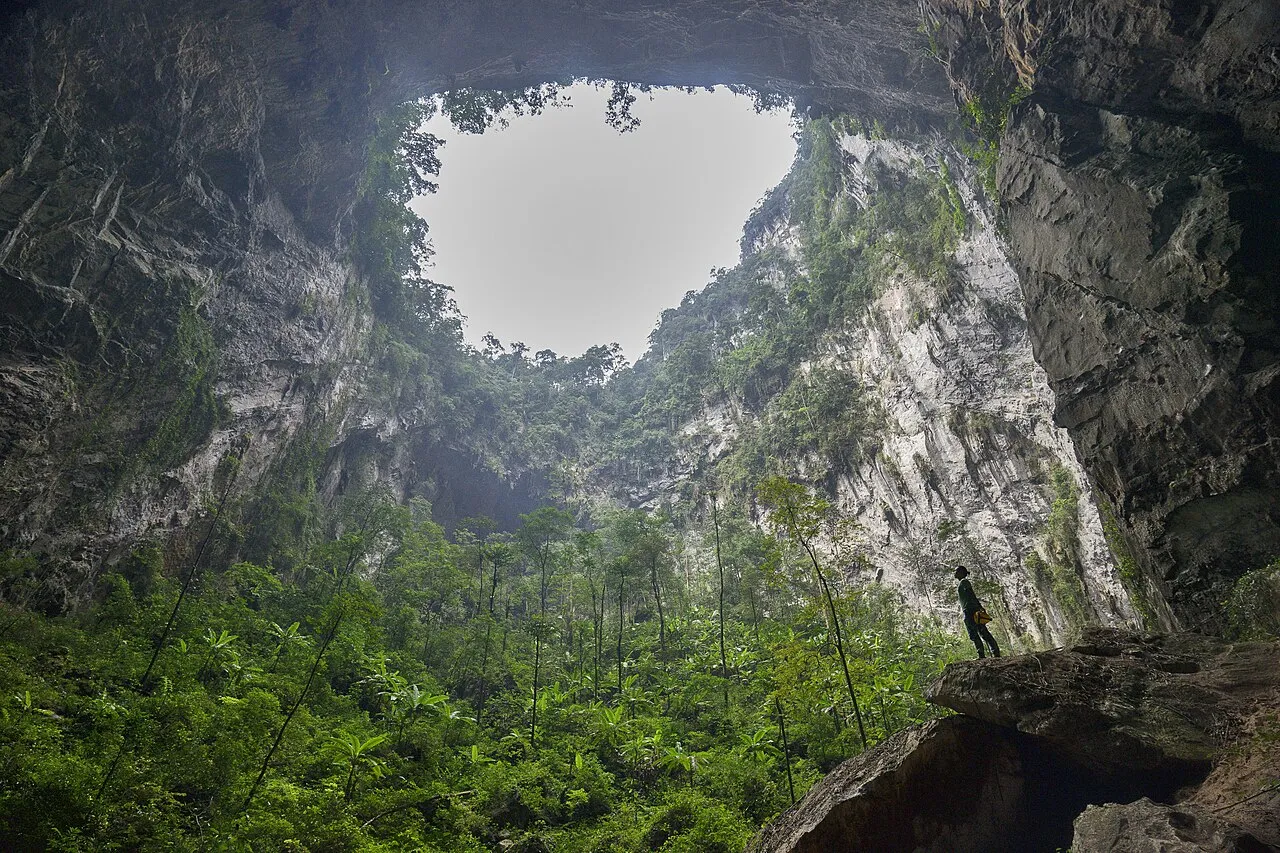
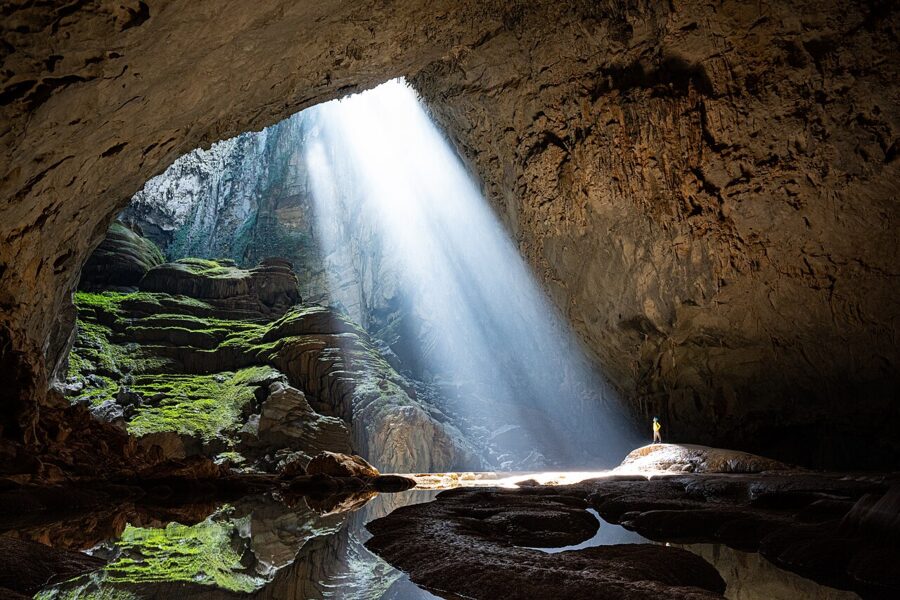
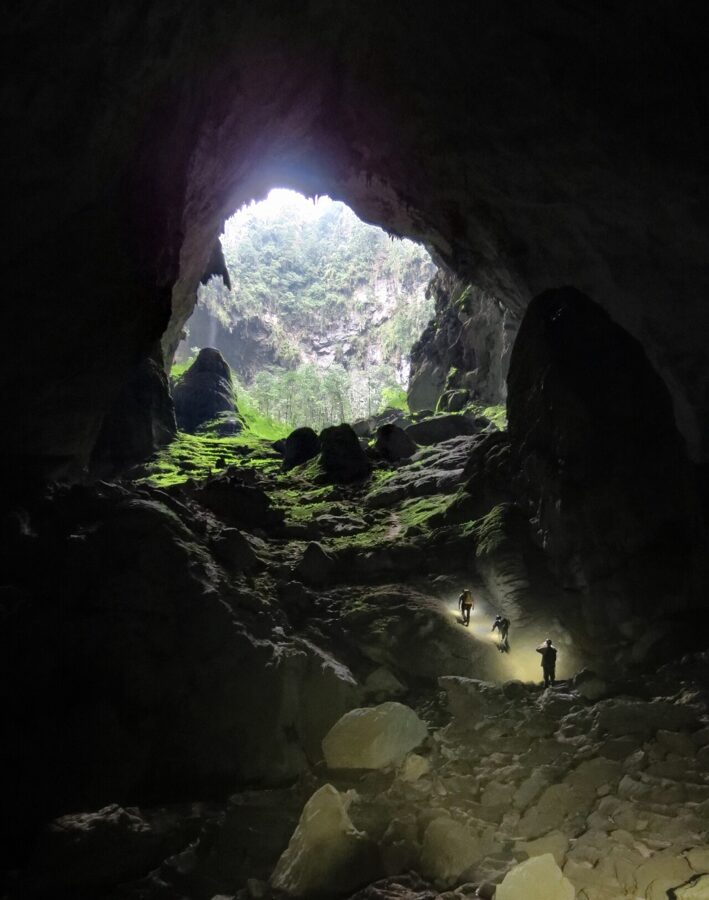
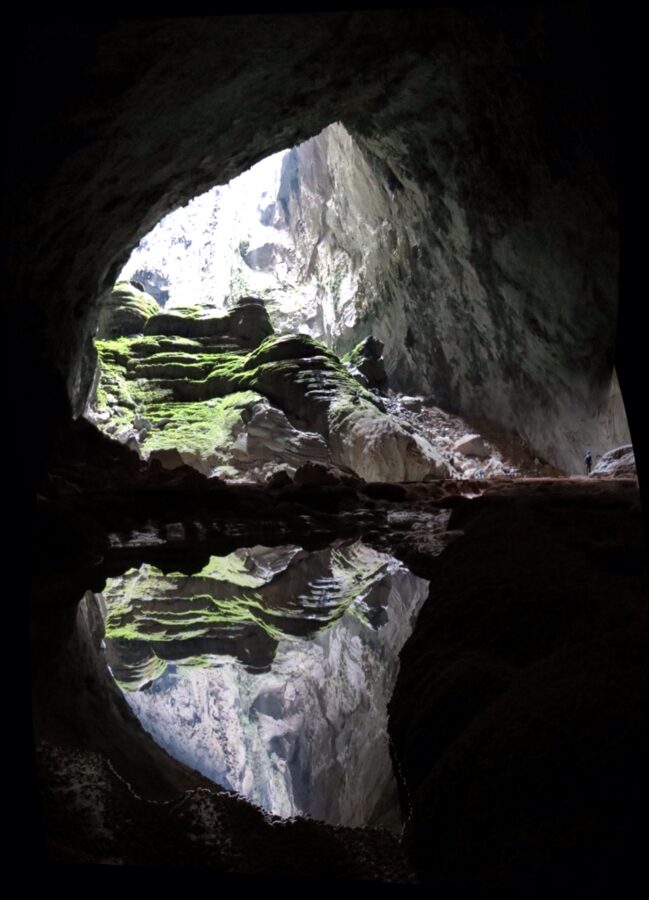
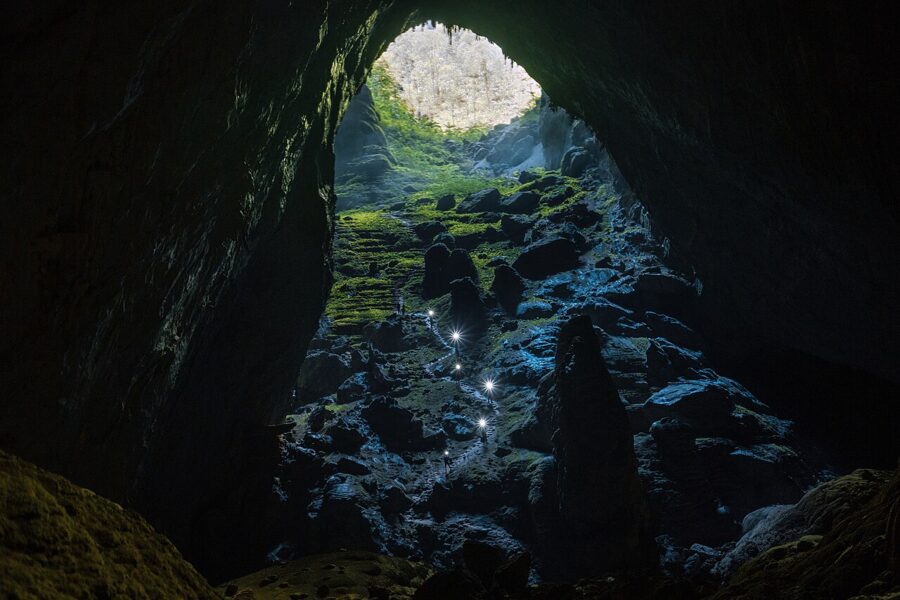
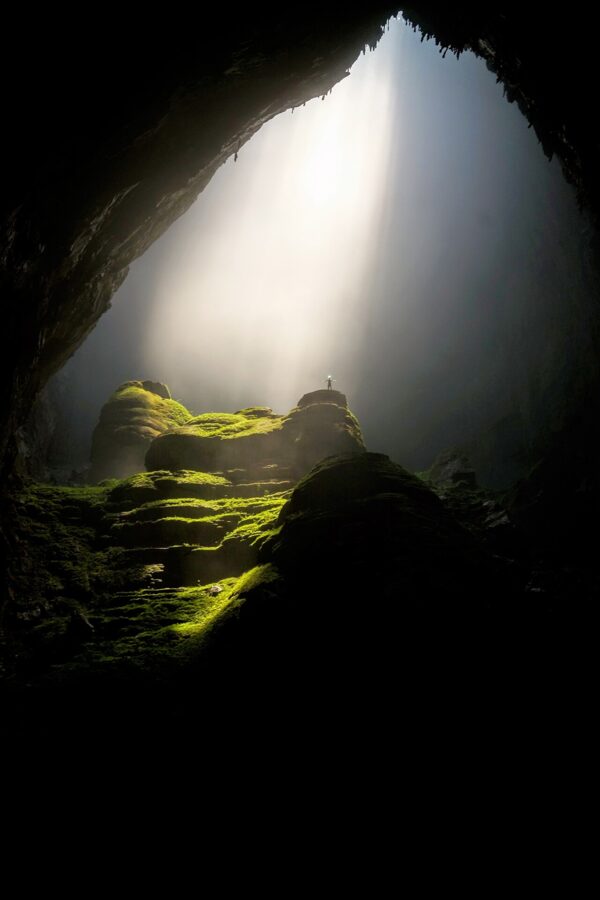
A little before noon on a clear day, the sun climbs high enough to reach the floor of the first doline in Hang Son Doong. A shaft of light drops through a hole in the cave roof, lands on boulders furred with moss, and turns the drifting mist white. The people standing in it are hard to find in the photographs. They are specks at the bottom of a room with a forest in it.
The beam lasts from roughly 11 in the morning until 1 in the afternoon, and the expedition times its third day to be there for it. Above is a ragged circle of sky, framed by cliffs that are the walls of the cave. Behind you the passage carries on into the dark, wide enough to park a jumbo jet, for kilometers.
This is Hang Son Doong (Hang Sơn Đoòng), in Phong Nha-Ke Bang National Park in central Vietnam: the largest known cave passage on Earth by volume. One company is licensed to take you inside, the trip costs VND 80 million (about US$3,000) as of 2026, and every place is booked through 2028. Most people who come to Phong Nha will not see it, and the caves around it are still worth the journey.



In this case7 parts
The largest cave passage anyone has found
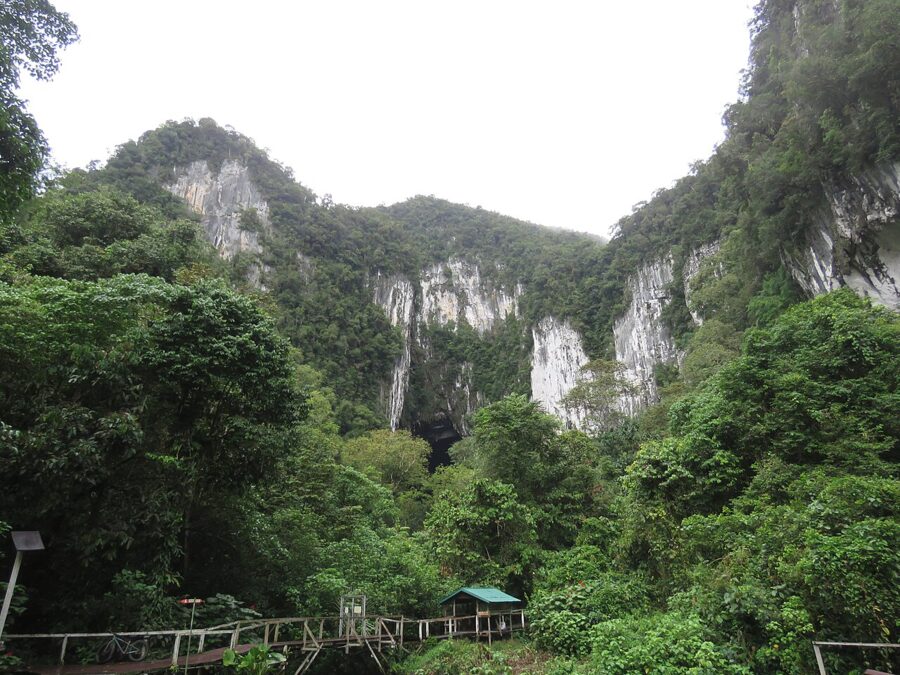
Son Doong is a river cave in limestone, in the forested hills near the border with Laos. Its main passage runs for more than 5 km (3 miles) and reaches about 200 meters (650 feet) in height and 150 meters (490 feet) in width; the whole system is about 9 km long. The British-Vietnamese survey of 2009 and 2010 put the volume at about 38.5 million cubic meters, and Guinness World Records lists it as the largest cave passage in the world.
The record is for a passage, one continuous tunnel. Son Doong’s cross-section is about twice that of Deer Cave in Malaysia, the previous holder, and Hang En, which the expedition walks through on its first day, is usually ranked third. National Geographic’s 2011 report said a New York block of 40-story buildings would fit inside.

For proportion, the bone-lined galleries of the Catacombs of Paris that visitors walk run for about 800 meters. Son Doong’s main passage is more than six times as long. In 2019 three British divers from the Tham Luang rescue in Thailand, Jason Mallinson, Rick Stanton and Chris Jewell, explored a flooded link to neighboring Hang Thung, which adds about 1.6 million cubic meters.

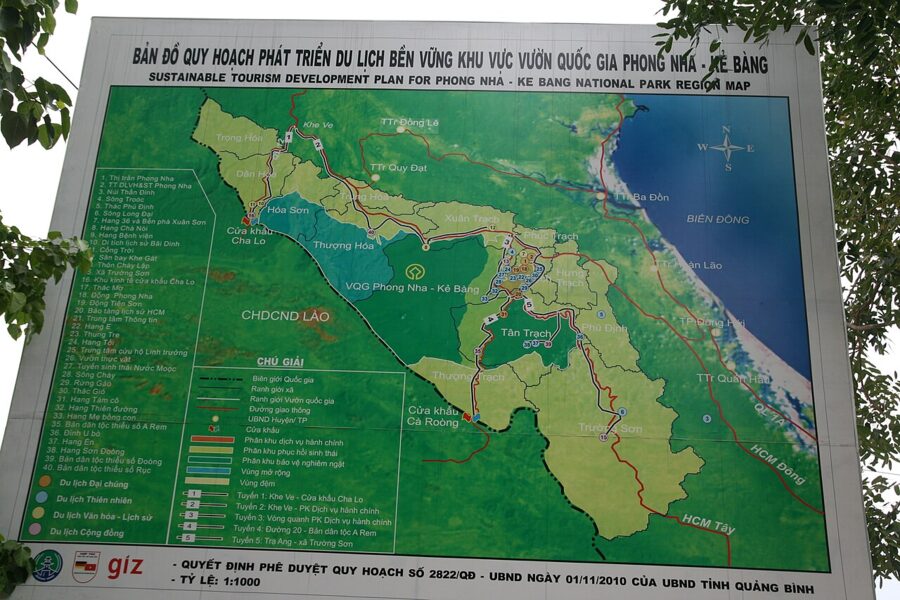
UNESCO inscribed the park in 2003 for its geology, extended the listing in 2015 for its biodiversity, and in 2025 joined it with Hin Nam No in Laos as one transboundary site. Since July 2025, when Quang Binh province was merged into Quang Tri, the park has been in Quang Tri. Older guides and booking pages still say Quang Binh; it is the same place.
How a river hollowed out a mountain
The rock is old and the cave is young. Oxalis Adventure, the operator, gives the limestone of the massif an age of 400 to 450 million years and dates the cave, from its sediments, at about 2 to 3 million; National Geographic gives 2 to 5 million.
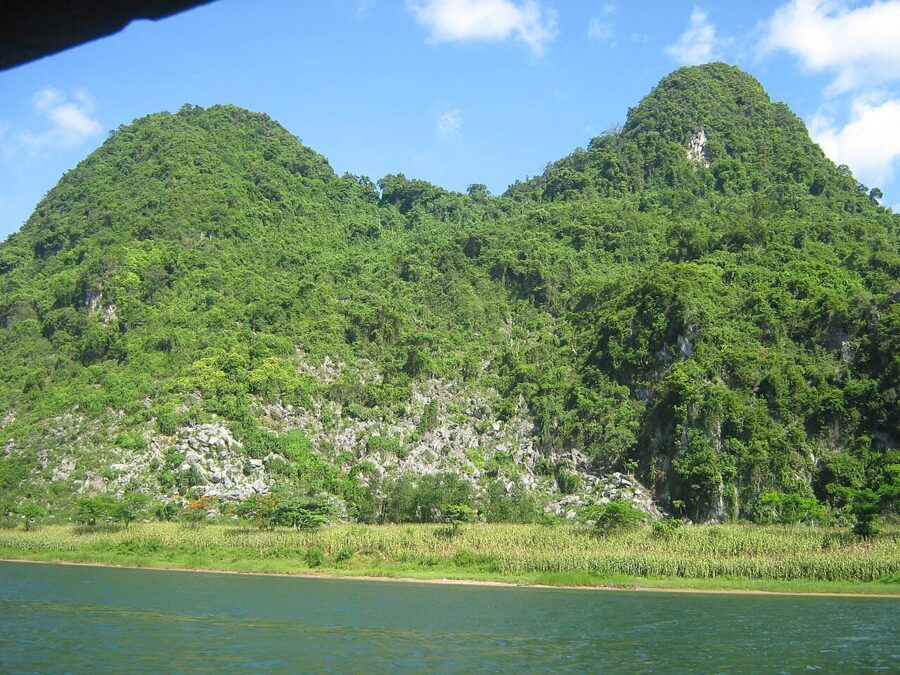

The hills were lifted when the Indian and Eurasian plates collided, 40 to 50 million years ago. Later, two rivers, the Rao Thuong and the Khe Ry, sank underground along a fault. Water dissolved and scoured the broken rock of the fault zone and carried it off, and over a few million years the tunnel widened into the passage you see now.

Two collapses and a forest underground
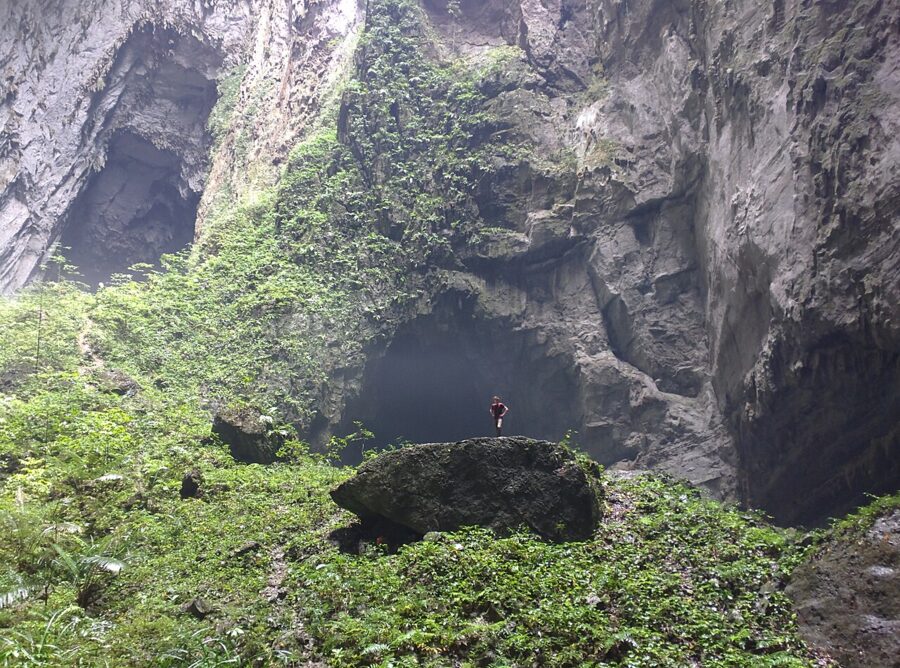
Where the limestone over the passage was thin and faulted, the roof fell in. Two collapses opened the dolines, and the holes let in light, rain and seeds. A doline is ground that gave way, the same family of feature as the Darvaza gas crater, except that nobody drilled here and the floor is forest, not fire.
The first doline is at least 90 meters (300 feet) across. The returning team in 2010 named the view from it Watch Out for Dinosaurs: caver Jonathan Sims and a teammate, both fathers of four-year-olds, thought it looked like Conan Doyle’s The Lost World. The second doline is wider still, and its jungle got a pun for a name, the Garden of Edam.
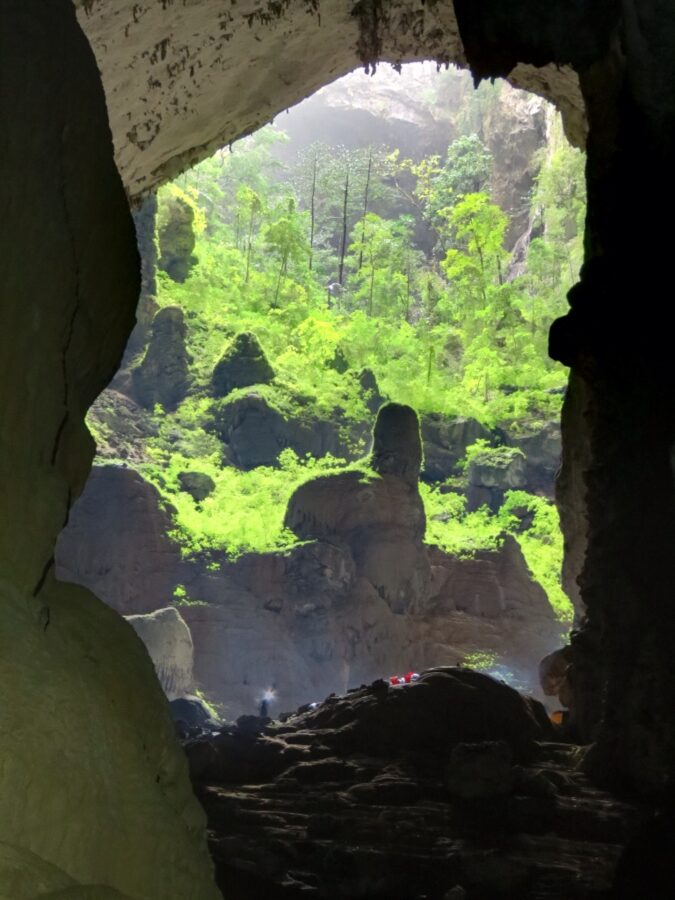

Away from the dolines the cave is dark, and Oxalis lists blind fish, transparent shrimp and white scorpions among its animals, with seven species new to science. Isolation does the work here that the sea does on Socotra Island. Near the openings moss covers everything, and the green stops where the daylight does.
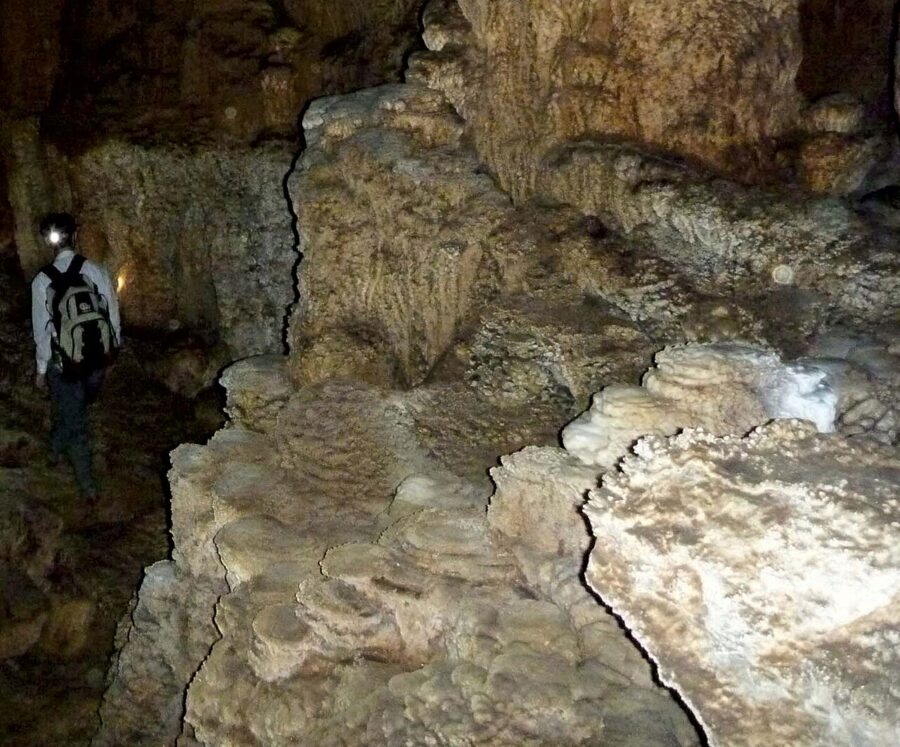

The cave even has weather. Air from the dolines meets the cooler air of the passage, and the 2010 team saw wisps of cloud near the ceiling. That moisture is why the sunbeams show so clearly.
Pearls, a paw and a wall
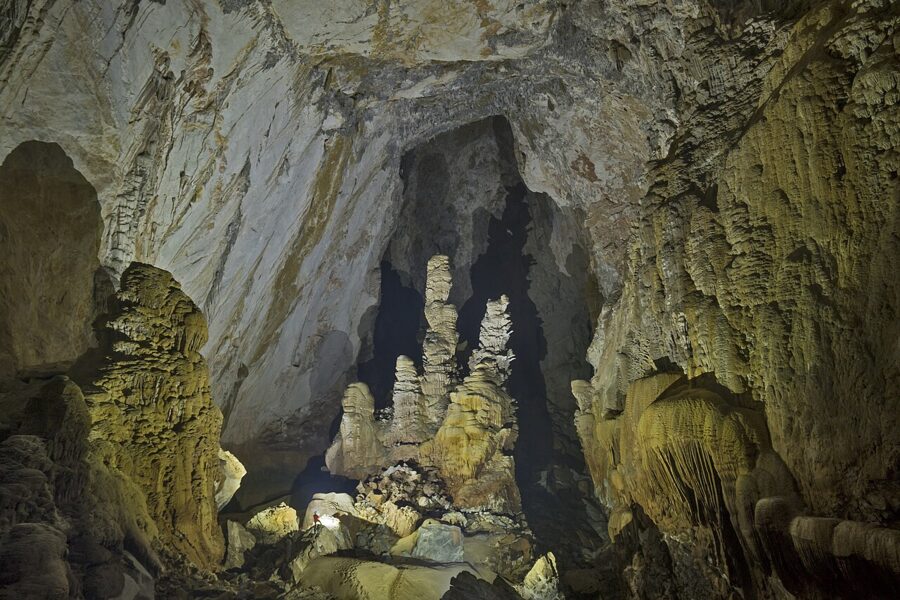
Early in the cave stands a stalagmite shaped like a dog’s paw. Sims rejected Hand of God as too corny and called it the Hand of Dog; Oxalis puts it at about 80 meters tall.

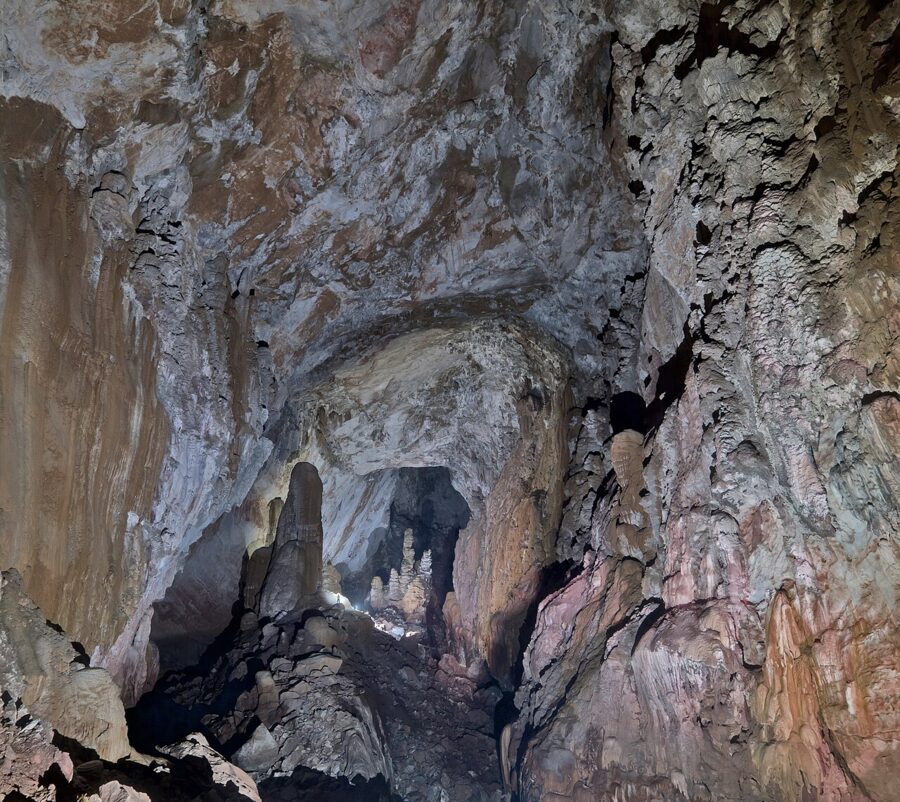
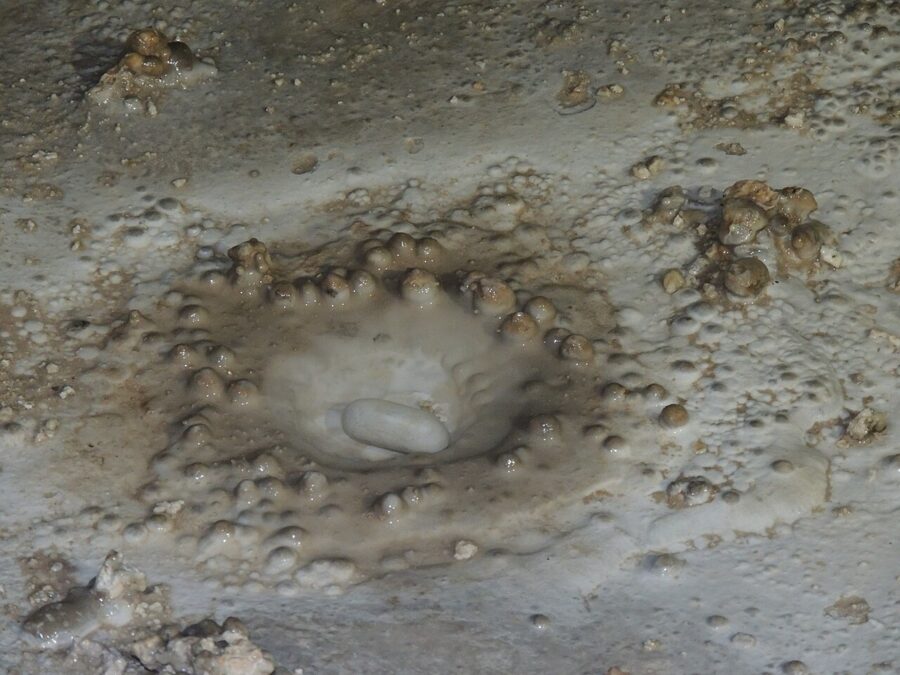
Toward the far end the route crosses a field of cave pearls. A pearl starts as a grain in a shallow pool; dripping water keeps it turning while calcite coats it, so it grows round instead of cementing in place. Most cave pearls are marble-sized and these are nearer baseballs, perhaps because drips falling from so high hit hard enough to keep big ones moving.
At the end stands the Great Wall of Vietnam, a barrier of muddy calcite. Oxalis gives the climb as about 90 meters, an 18-meter steel ladder and then some 70 meters of rock on fixed ropes; National Geographic called the wall about 200 feet (60 meters). In 2009 it ended the expedition.

Ho Khanh, the Limberts and the wall
In 1990 Ho Khanh, a local man who knew this border forest from hunting and searching for agarwood, was caught by a storm and sheltered under a rock face. From an opening nearby came a strong, cold wind carrying mist, the breath of a big cave. He went back several times afterward and could not find it.
Howard and Deb Limbert had arrived in Phong Nha that same year with a small British caving team. Their expeditions found Hang En in 1994 and the Khe Ry river cave a few years later, then spent about a decade looking for the cave they were sure lay where the Khe Ry and En waters vanished. In 2007 Limbert met Ho Khanh and heard about the windy entrance.
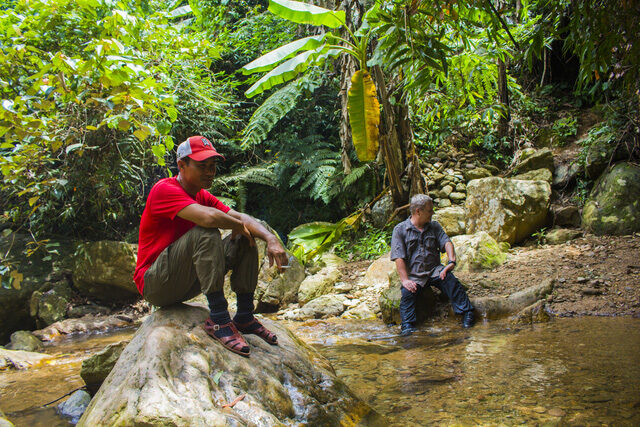

Ho Khanh relocated the entrance in 2008. In April 2009 he guided the Limberts’ British Cave Research Association team to it, and they surveyed about 4 km (2.5 miles) before the Great Wall stopped them. They came back in March 2010, more than two dozen people including seven British cavers, scientists, a film crew and porters, climbed the wall and finished the survey.
The expedition as it runs in 2026
One operator, one price
Oxalis Adventure’s Son Doong expedition is the only way in. The company, based in Phong Nha village, took its first paying group inside in August 2013 and says it is the only licensed operator. There is no day trip and no short version, so a cheap “Son Doong tour” is a tour of somewhere else.
The price is VND 80,000,000 (about US$3,000) per person as of 2026. That covers VAT, the entrance and environmental fee (US$600), a park management fee (US$20), transfers from Dong Hoi, two nights in lodges, meals, safety gear and the travel insurance Vietnamese law requires. The insurance pays at most VND 50 million (about US$1,900) a claim, so buy your own.
Each group of 10 guests goes with a cave expert, a guide, six safety assistants, two cooks and 18 porters. Counting those 28 people and the rope work, I think the price is defensible, though not a bargain.
Who can go
Guests must be 18 to 70. In the past 12 months you need at least one overnight forest or mountain trek of 8 km a day with 1,000 meters (3,300 feet) of total climb, and you must be able to run 5 km outdoors in 45 minutes and climb five flights of stairs without stopping. Oxalis turns away people with high blood pressure, diabetes, or heart and joint conditions, and a consultant interviews every applicant before any invoice goes out.

Six days, four of them on foot
Oxalis sells it as six days and five nights, counting arrival and the drive home:
- Arrival. Reach Dong Hoi by 3 pm for the Phong Nha Caves Exploration Museum, which holds the explorers’ hand-drawn maps, a compulsory safety briefing and a kit check.
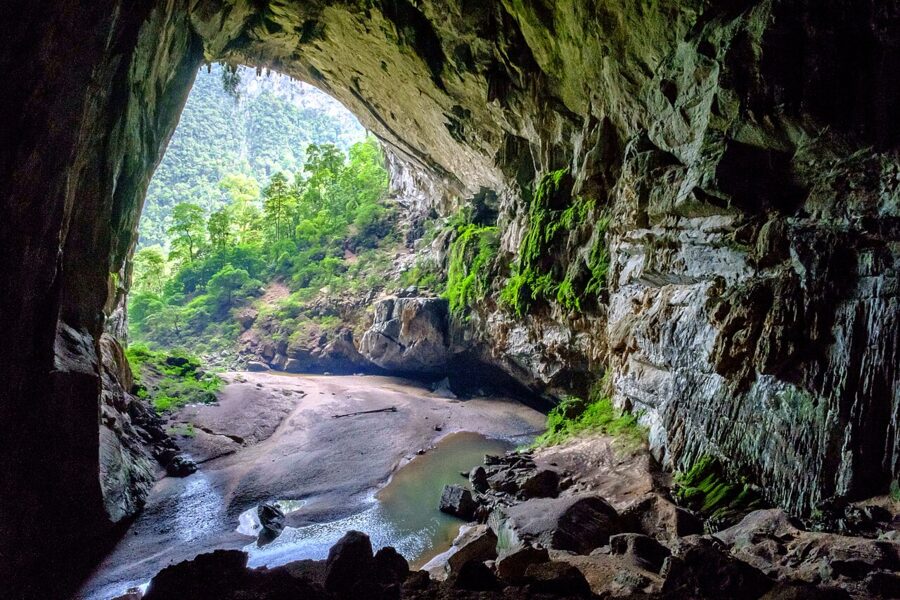
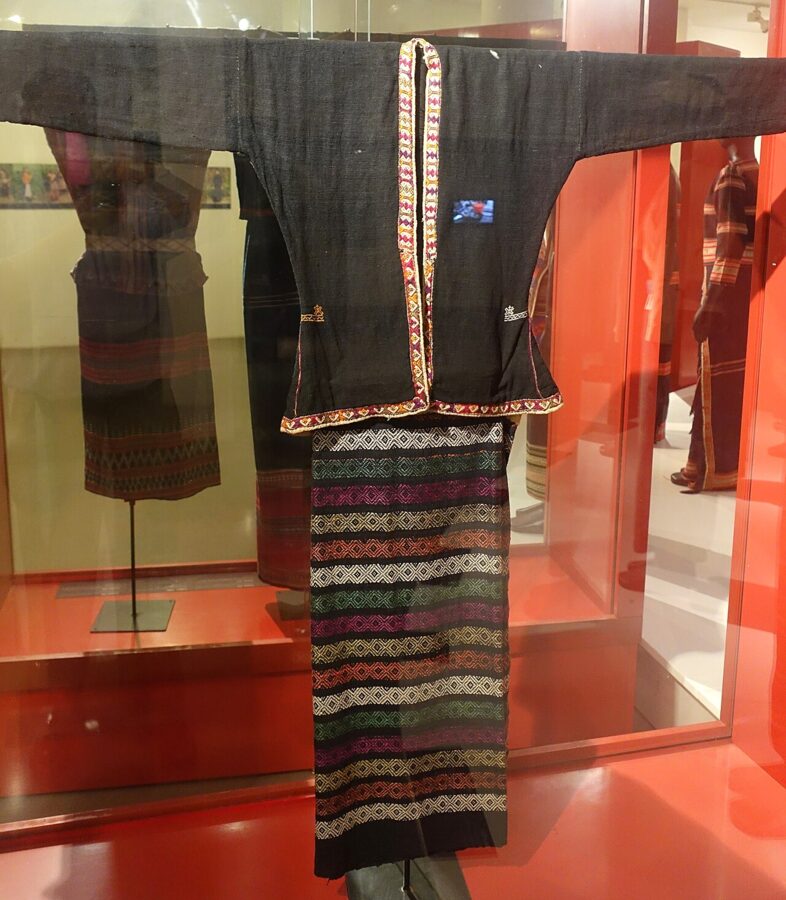
- Day 1. About 14 km of jungle with some 30 knee-deep river crossings, through Doong village of the Bru-Van Kieu people, lunch at Hang En, camp near the Son Doong entrance.
- Day 2. A harnessed descent of about 80 meters to the cave floor, past the Hand of Dog to camp at the first doline.
- Day 3. Fixed ropes, the Wedding Cake stalagmite, the midday light, then the Garden of Edam and camp at the second doline.
- Day 4. The cave pearls, an underground lake, the Great Wall, and the walk out to a farmstay.
- Day 5. Back to Dong Hoi by midday.
In all, about 28 km of jungle trail, 9 km inside caves, some 50 river crossings and three nights camping, two inside Son Doong. Porters carry the camps; you carry a daypack.
Season, numbers and the waiting list
Tours run from January to August. From September the rains raise the river inside and the cave closes until the new year. Groups are capped at 10 and the year at 1,000 guests, up from 224 when the province approved the first tours in 2013.
By September 2026, 9,552 people had made the trip, four in five from abroad, and Oxalis said every place was taken through 2028. If you want to go, apply for the first season that opens and build the trip around the date.
Book only with Oxalis. In October 2026 it warned about fake booking sites with lookalike names (oxadventur.com, oxadventura.com, oxadventure.shop) that buy search ads; the real process takes no money until a consultant has cleared you. Cancel more than 90 days ahead and you lose a VND 7 million (about US$265) fee; at 45 days out Oxalis keeps half, and inside that, all of it.
The cable car that nearly came
In 2014 Quang Binh province let the developer Sun Group survey a cable car route to Son Doong. The province defended it as a way out of poverty, and the investor said the last station would stand 300 meters from the cave mouth. Opposition was loud in Vietnam and abroad, and Sun Group dropped it.
The idea moved next door. In summer 2017 Prime Minister Nguyen Xuan Phuc approved in principle a cable car to Hang En, a project taken up by FLC Group, and a Save Son Doong petition led by Huong Le passed 170,000 signatures, Mongabay reported in 2018.

In April 2019 the province’s vice chairman said no company would build a cable car to Son Doong, because it lies in the park’s core zone, and the World Heritage Committee welcomed Vietnam’s stated intention not to build to Son Doong or Hang En.
No cable car runs to either cave as of late 2026, but the pressure remains. In October 2026 Radio Free Asia reported that Quang Tri had approved a Sun Group project at U Bo and Thac Chuoi in the park complex, on about 167 hectares mostly of forest, with plans inside Hang Thang and Hang Ruc Mon caves. It also said UNESCO had written to Vietnam in May 2025 about a possible cable car revival in the park.
The caves you can actually visit
The rest of the park takes walk-up visitors, and two of its caves, Phong Nha and Paradise, would justify the trip on their own. Prices are as of 2026, from the park’s pages and the operators.
| Cave | How you go | Price per person | Time |
|---|---|---|---|
| Phong Nha Cave | Boat, then on foot | VND 150,000, plus VND 700,000 per boat | 2.5 hours |
| Paradise Cave | Cart, climb, boardwalk | VND 270,000 | Half a day |
| Dark Cave and Chay River | Zipline, swim, mud | VND 450,000 | 4 hours |
| Hang En | Trek, camp inside | VND 9,500,000 | 2 days |
| Tu Lan | Trek and swim | From VND 2,000,000 | 1 or 2 days |
Phong Nha Cave by boat
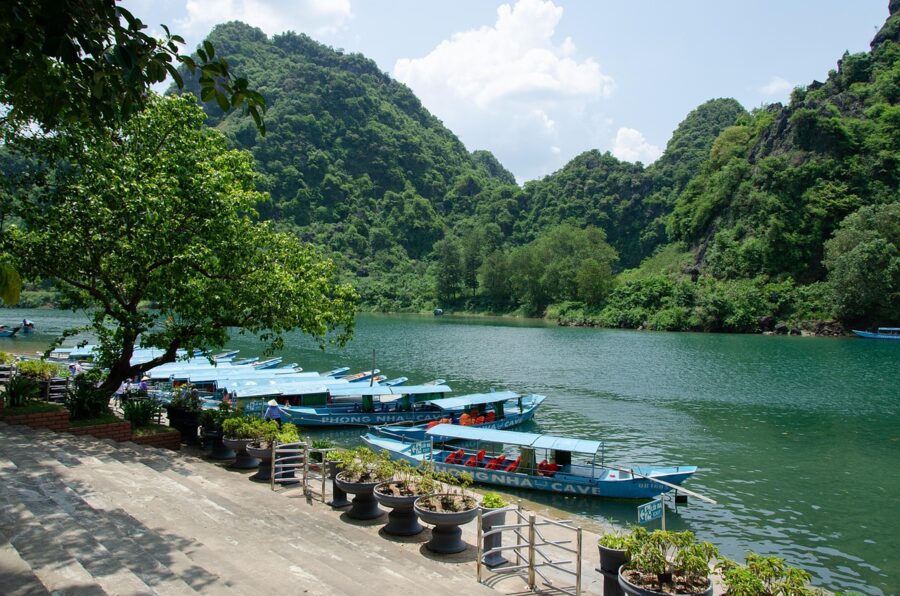
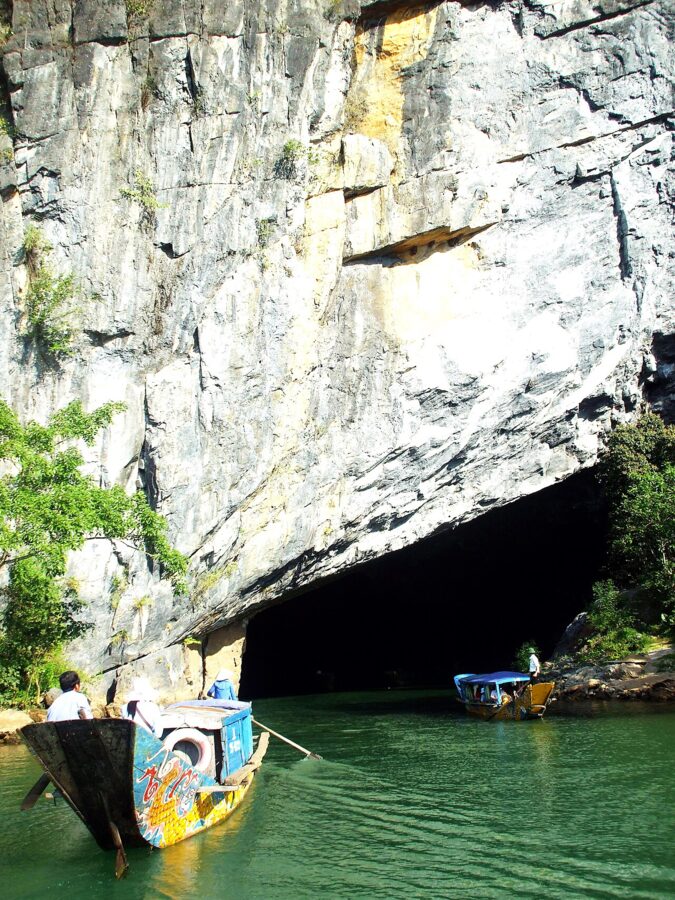
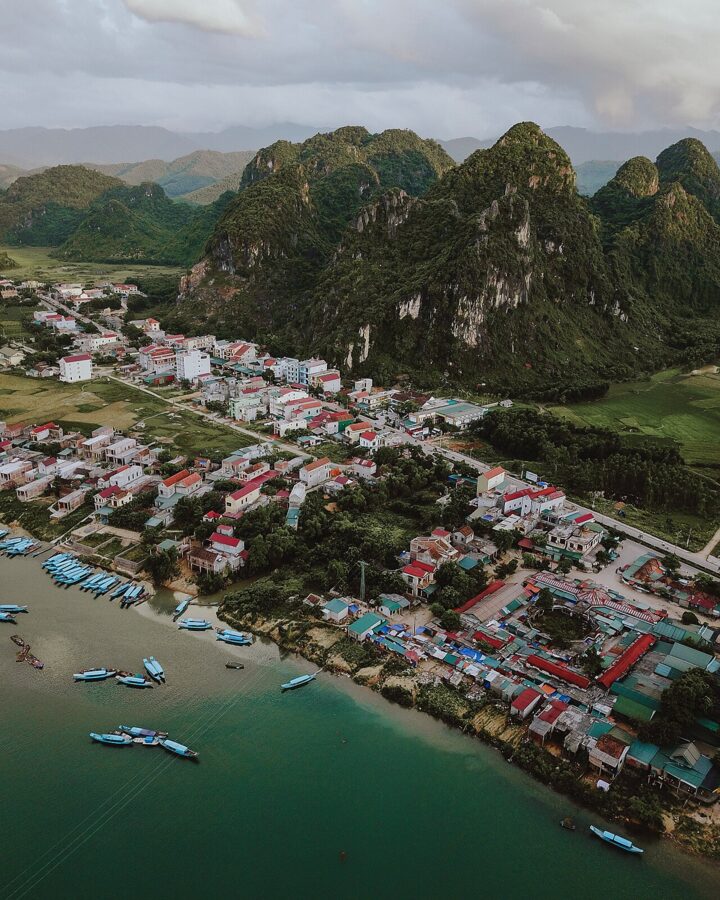
The cave that named the park is a river cave 7,729 meters long, and you enter it the way the river does. Boats run about 30 minutes up the Son River from the village; at the mouth the engine is cut and the boatmen paddle about 1,200 meters in on the underground river. You walk back through two dry chambers, Hang Tien and Hang Cung Dinh.

Phong Nha Cave tickets are VND 150,000 (about US$6), children under 1.3 meters free. The boat is VND 700,000 (about US$26) round trip for up to 12 people, or VND 750,000 with nearby Tien Son Cave; an English-speaking guide is VND 400,000. It opens daily, 7:15 am to 4:30 pm in summer and 7:30 am to 3:45 pm in winter.
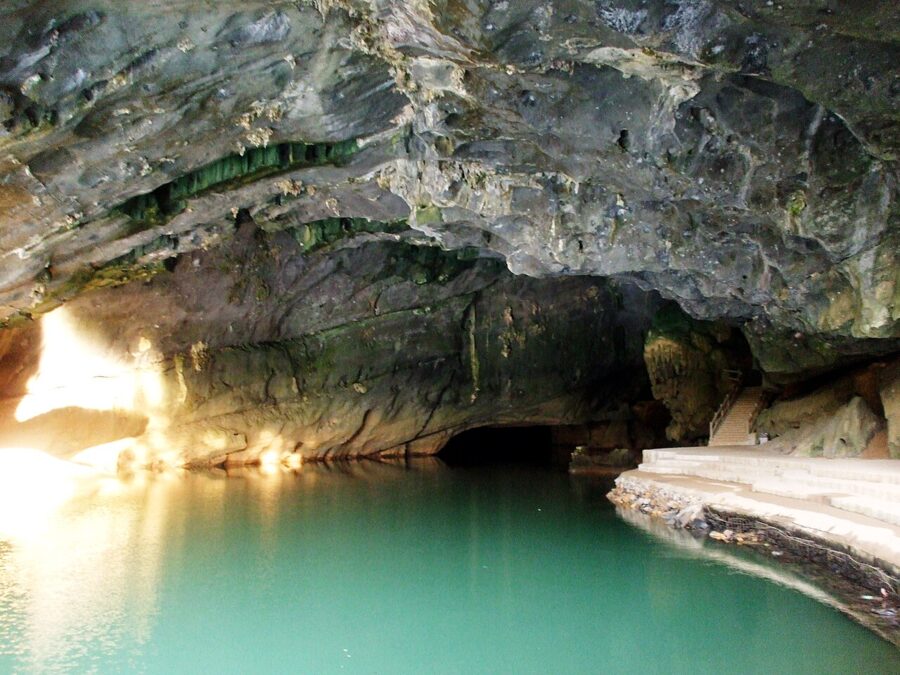

The colored lights on the formations I could do without. I would still go first thing in the morning, because arriving by water through the mouth of a mountain shows you what the rivers did here.
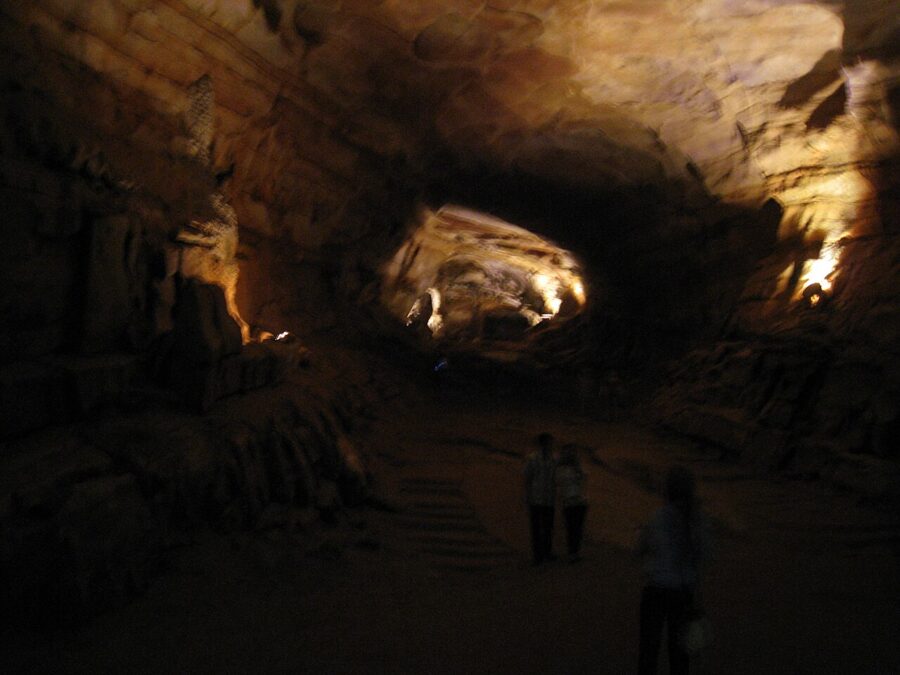

Paradise Cave (Dong Thien Duong)
Found in 2005 by the British cavers, Paradise Cave is a dry cave about 31.4 km long, packed with white formations, and you see its first kilometer from a wooden boardwalk. An electric cart covers 1.6 km under the forest, then you walk about 500 meters uphill to the entrance.
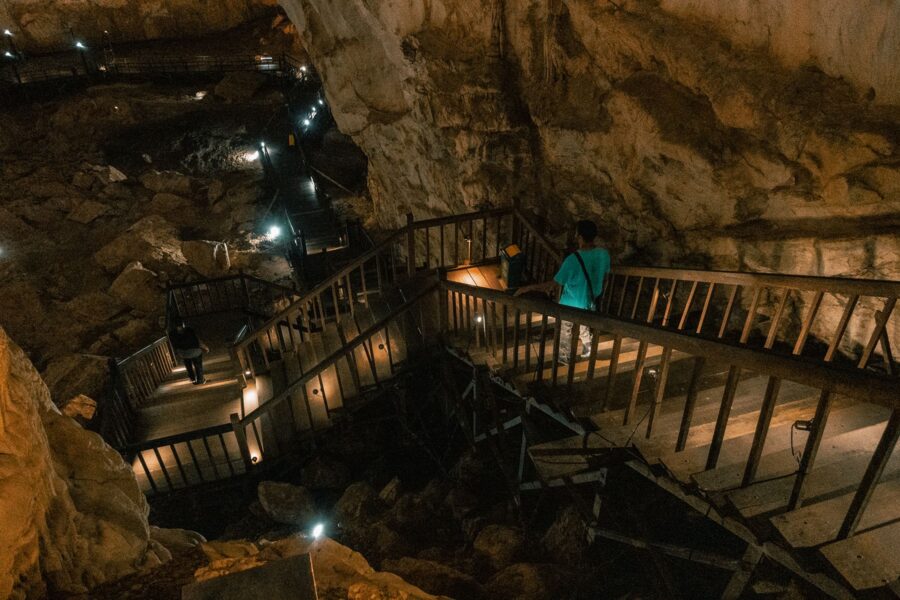
Paradise Cave tickets are VND 270,000 (about US$10) including the cart. A 7 km trip deeper, to a skylight, costs VND 2,000,000 (about US$75) for a day or VND 4,000,000 (about US$150) with a night camped there, over-16s only. If you see one cave in the park, make it this one.
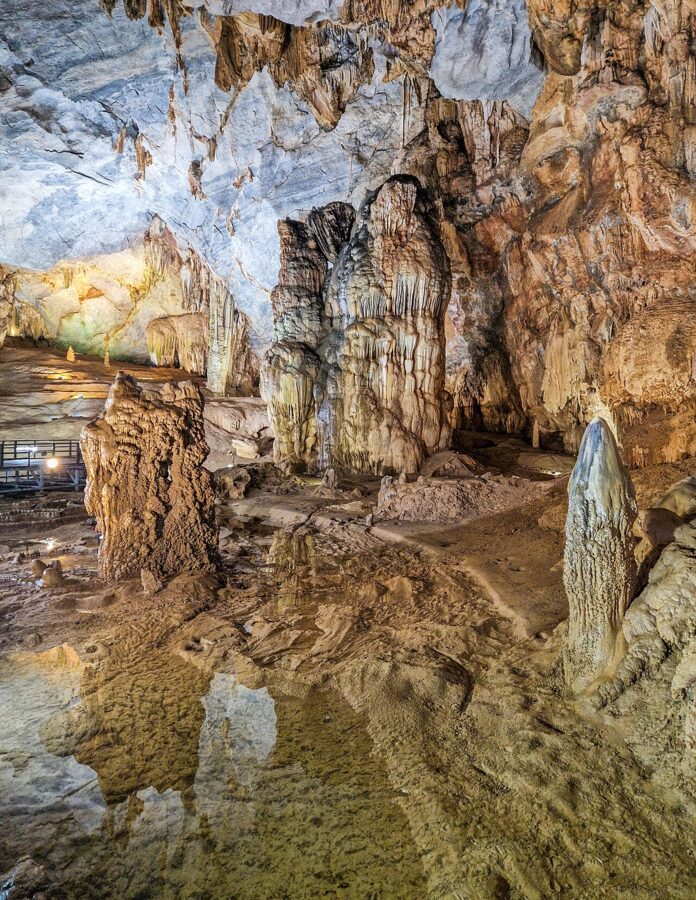

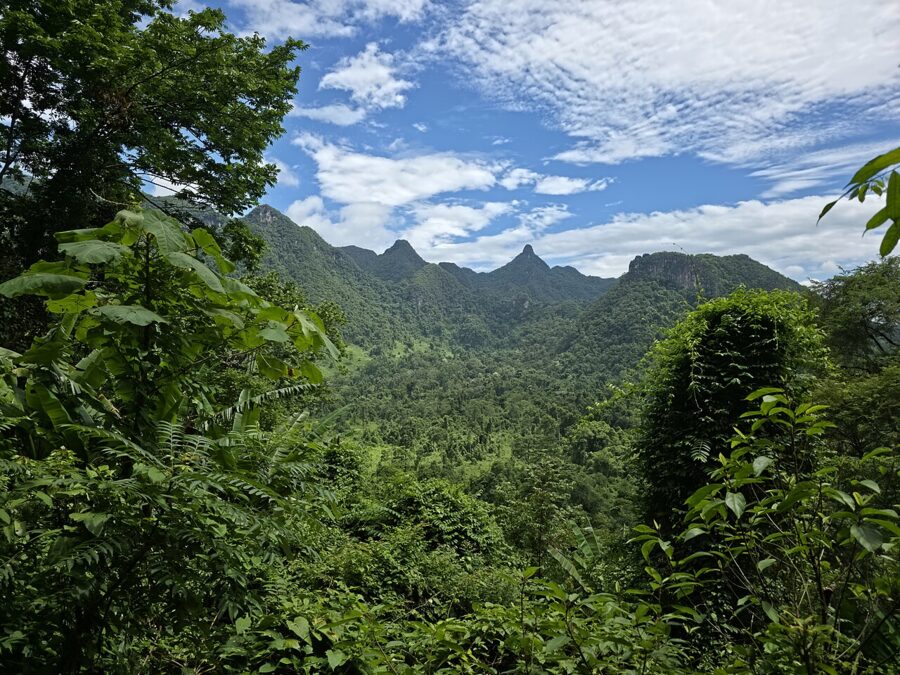

Hang En, a night inside a giant
Hang En is the nearest thing to Son Doong without the waiting list. Oxalis’s Hang En trip is two days for VND 9,500,000 (about US$358), ages 16 to 70, groups of up to 16. You walk 25 km with about 650 meters of climb and camp on a sand beach beside a lake inside the cave, which is 1.6 km long and up to 140 meters high. The season is roughly December to August.
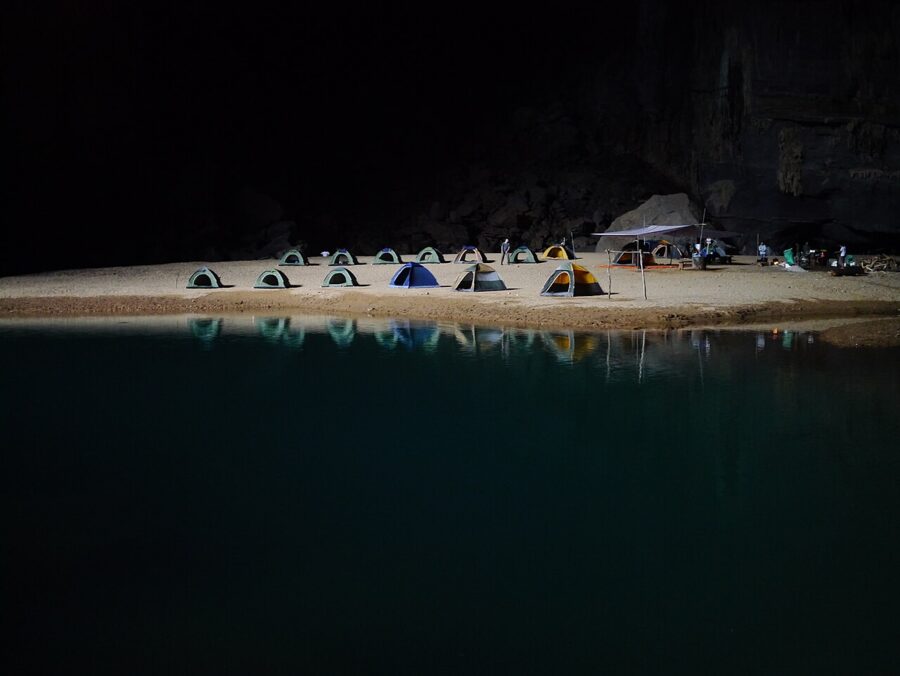
Tu Lan, the swimming caves
The Tu Lan caves lie around Tan Hoa village, about 70 km from Phong Nha, and here you swim through them. The Tu Lan day trip costs VND 2,000,000 (about US$75) year-round: 9 km of trekking, a ladder into Hung Ton Cave and a 150-meter swim along its river in a life jacket.
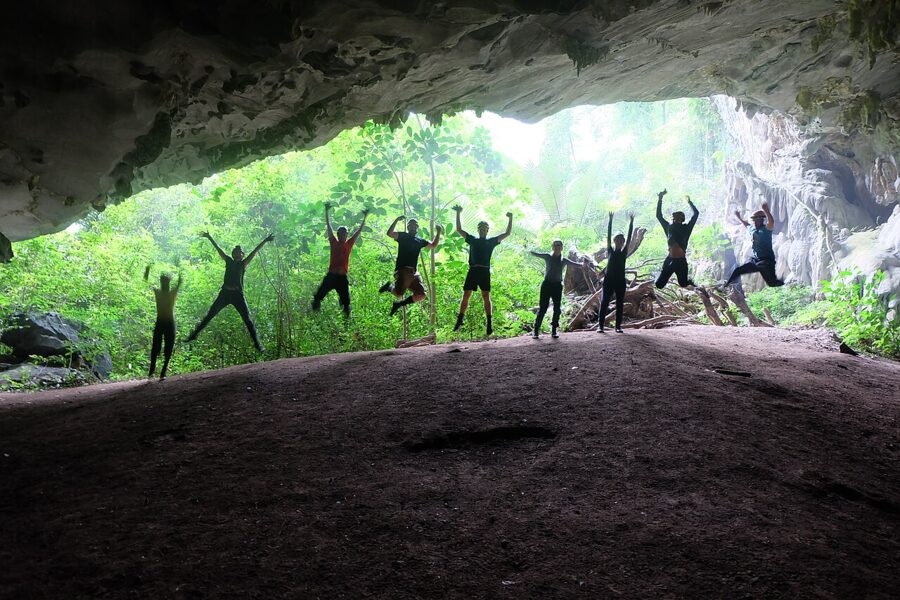

The Tu Lan Cave Encounter adds a jungle camp for VND 6,700,000 (about US$253), with about 1 km of swimming through four caves, mid-November to mid-September. For strong swimmers who want to feel like cavers, this is the trip I would pick.
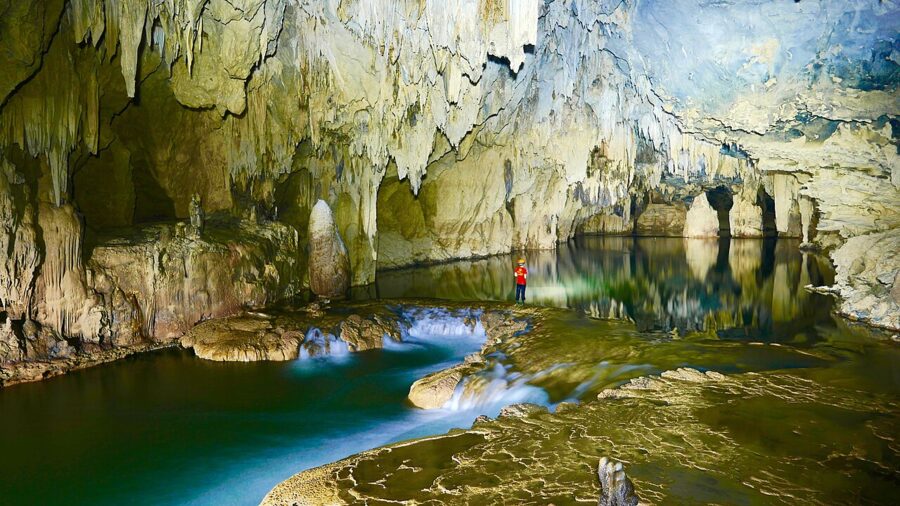

The Dark Cave and the Chay River
Hang Toi, the Dark Cave, is visited for fun, not formations. The Chay River and Dark Cave package is VND 450,000 (about US$17): a 400-meter zipline over the river, a swim into the cave, a bath in natural mud inside, then kayaks. It opens daily, 7:45 am to 4:30 pm in summer and 8 am to 3:30 pm in winter, and closes in storms or floods. Good with children; skip it if you came for geology.
Getting to Phong Nha
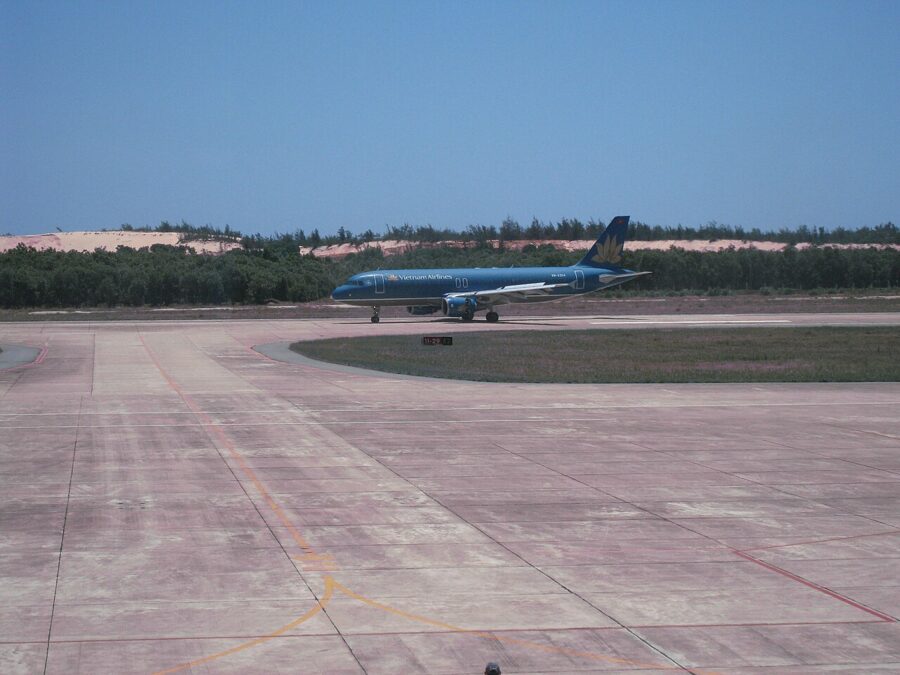
Dong Hoi Airport (VDH) has direct flights from Hanoi and Ho Chi Minh City, and since August 16, 2026 Sun PhuQuoc Airways has flown to Cam Ranh. There is no direct flight from Da Nang; take the train or a bus.

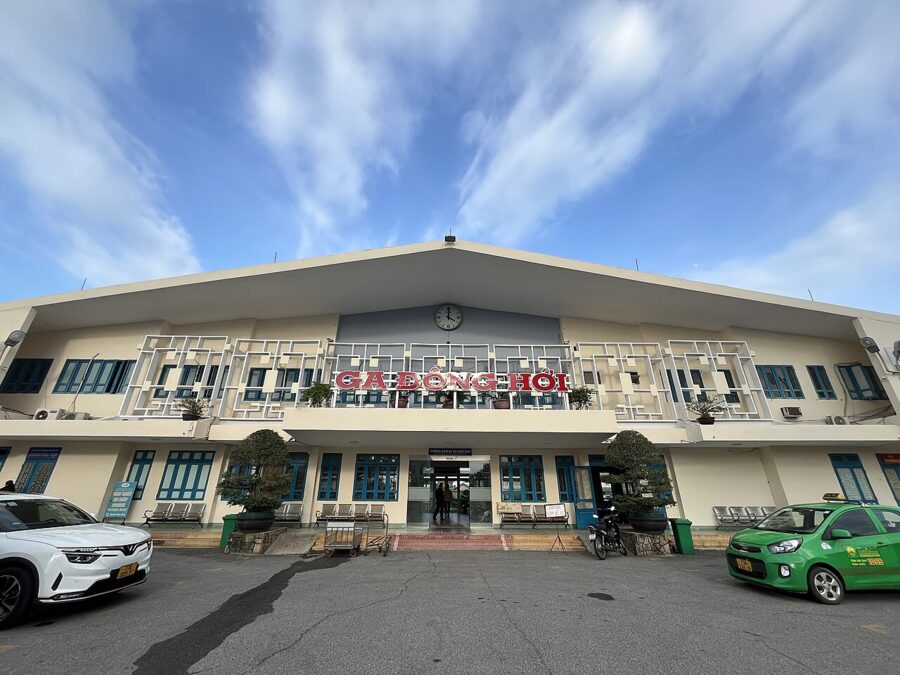
Dong Hoi station is on the North-South Railway, and the SE trains between Hanoi and Ho Chi Minh City stop there; some leave Hanoi in the evening and arrive in the morning. Phong Nha village is about 45 km away, under an hour by car. Bus information is patchy, so take a taxi or a transfer from your lodging; Oxalis collects its guests in Dong Hoi.


Give the park three days, in the dry months from about January to August. From September the rains come, Son Doong closes, and the park suspends the Chay River route whenever storms or floods arrive.
The sun will come down through the first doline tomorrow at about 11, whether a group is standing there or not. If your name is on the list, bring a headlamp and leave the cave pearls where they lie. If it isn’t, take the first boat to Phong Nha Cave and listen for the engine to stop.